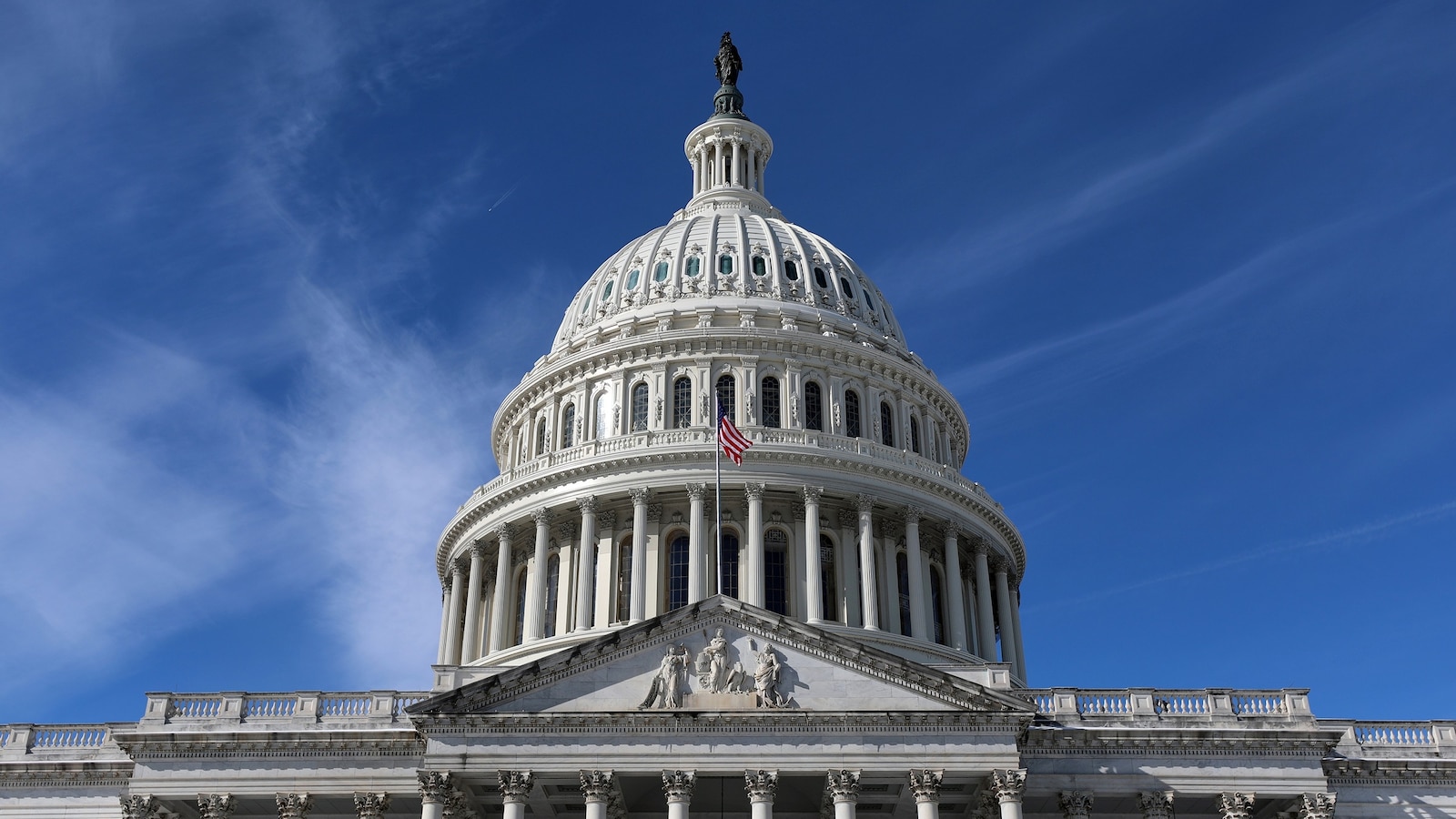
The House will hold votes Tuesday on a funding package to reopen the government after a weekend partial shutdown, with Speaker Mike Johnson facing an extremely tight margin—he can afford only one Republican defection if all members vote. The Senate-passed agreement separates DHS funding from five other appropriations bills and provides a two-week DHS extension to negotiate Democratic demands for ICE restrictions (including required body cameras and a ban on masks); Democrats signaled they will not expedite the package and some hard-line Republicans sought to attach a proof-of-citizenship election measure (the SAVE Act). The short-term funding deadline and narrow vote arithmetic create continued political risk and potential short-lived market volatility until the votes conclude.
Market structure: The immediate winners are vendors of law‑enforcement hardware/services (e.g., AXON) if ICE body‑camera mandates survive—this can create a 2–5% incremental addressable market for bodycams over 12 months. Losers in a short shutdown scenario are small government services contractors and transit‑sensitive sectors (airlines, airports) that face cash‑flow timing hits and lower near‑term volumes; primes (LMT/RTX) have stronger backlog and pricing power so downside is muted. The two‑week DHS extension materially reduces the probability of an immediate large GDP shock, but keeps a political risk premium in equities and skews short‑dated volatility higher.
Risk assessment: Tail risk is a failed House procedural vote leading to an extended partial shutdown (2+ weeks) — ~5–15% chance — which could shave 0.1–0.3% off quarterly GDP growth and push 10‑yr yields down 10–30bps as Treasuries rally. Hidden dependencies: small contractors’ receivables and payroll are sensitive to stop‑work orders; suppliers of security hardware face order timing but also potential procurement policy volatility. Catalysts in the next 48–72 hours (procedural vote, any attachments like SAVE Act) will drive >75% of the near‑term price action.
Trade implications: Use event‑driven, short‑dated trades: buy 7–10yr Treasuries (IEF) as a 2% hedge for 1–6 weeks if shutdown risk materializes; establish a 1–2% tactical long in AXON on passage/confirmation of body‑cam rules (target +15% in 3 months, stop −8%); trim 3–5% airline exposure or buy 30–45 day puts on JETS if funding fails past 7 days. Pair trade: long LMT (1–2%) vs short SAIC (1–2%) for 1–3 months to capture relative resilience in primes vs small services firms.
Contrarian angles: Consensus treats this as a near‑term political skirmish; it underprices policy upside for body‑cam suppliers and overprices broad risk‑off if the two‑week extension holds. Historical parallels (2013 shutdown) show small contractors suffer much more than primes — a persistent mispricing to exploit. Unintended consequence: a mandated body‑cam policy can raise litigation/operational costs for agencies, capping gross margins for vendors — size positions accordingly and cap risk with tight stops.
AI-powered research, real-time alerts, and portfolio analytics for institutional investors.
Request DemoOverall Sentiment
mildly negative
Sentiment Score
-0.25
