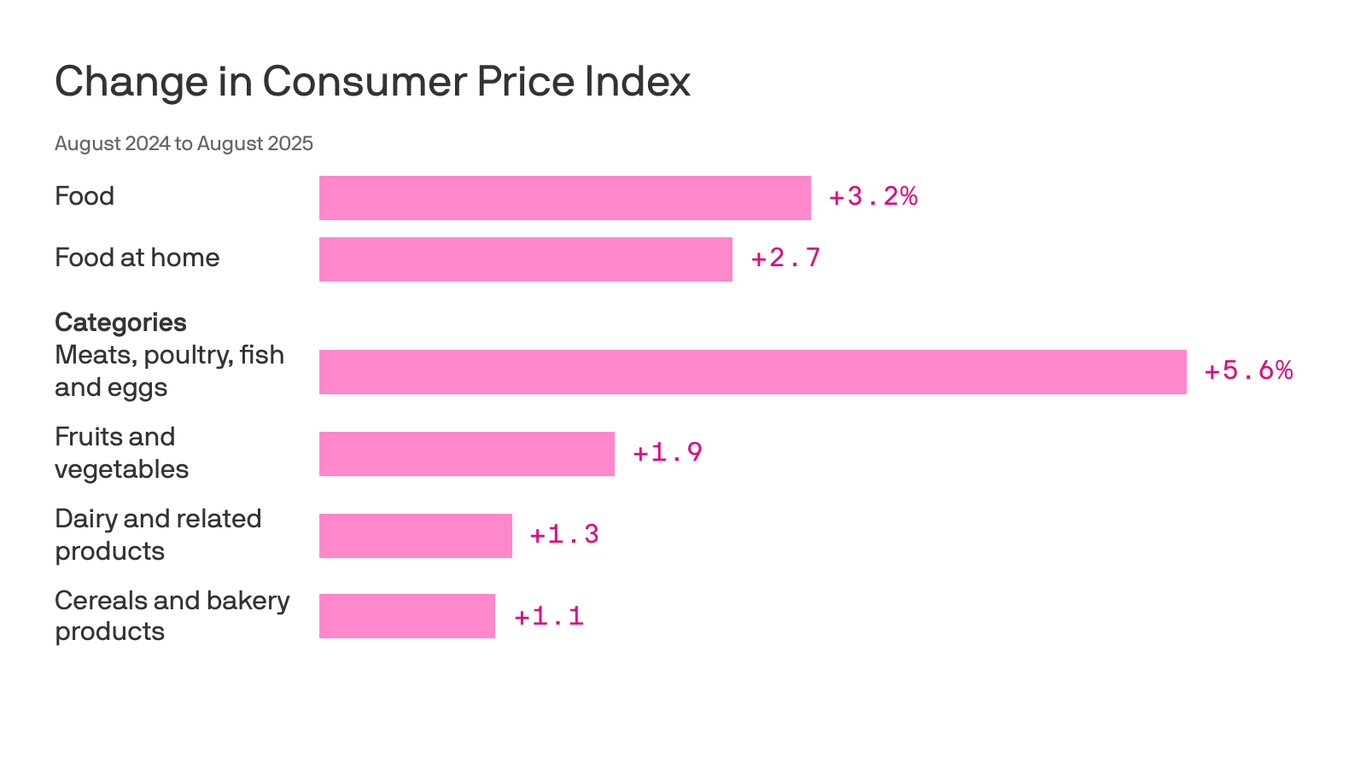
U.S. grocery prices saw a significant acceleration in August, with the food-at-home component of the Consumer Price Index rising 0.6% month-over-month, marking the largest increase since August 2022. This surge, exemplified by substantial year-over-year hikes in categories like coffee (+20.9%) and uncooked beef steaks (+16.6%), is attributed to factors including tariffs raising input costs, as well as weather and labor shortages. While retailers like Kroger struggle to absorb costs and avoid passing them to consumers, the persistent inflation poses challenges for households and carries political implications for the Trump administration, though potential tariff reductions could offer future relief.
The U.S. food-at-home Consumer Price Index (CPI) registered a 0.6% month-over-month increase in August, the most significant monthly jump since August 2022, signaling a re-acceleration of grocery inflation. This trend is quantified by substantial year-over-year price hikes in key categories, including coffee (+20.9%), uncooked beef steaks (+16.6%), apples (+9.6%), and bananas (+6.6%). The drivers are multifaceted, with President Trump's tariffs cited as a source of increased input costs for machinery and fertilizer, compounded by external pressures such as adverse weather and farm worker shortages. Grocery retailers are navigating a difficult environment of thin margins and rising wholesale costs. While Walmart (WMT) has reportedly passed on some price increases, Kroger (KR) is positioning itself competitively by framing price hikes as a 'last resort' and highlighting price cuts on over 3,500 items. The persistence of this inflationary spike remains uncertain, as acknowledged by economists and a White House official who noted the potential for future tariff reductions, though any consumer relief from such policy changes would be months away. This inflation data presents a political challenge for the Trump administration, whose economic polling numbers have weakened, despite their official stance that the August data does not constitute a trend.
AI-powered research, real-time alerts, and portfolio analytics for institutional investors.
Overall Sentiment
moderately negative
Sentiment Score
-0.50
Ticker Sentiment
