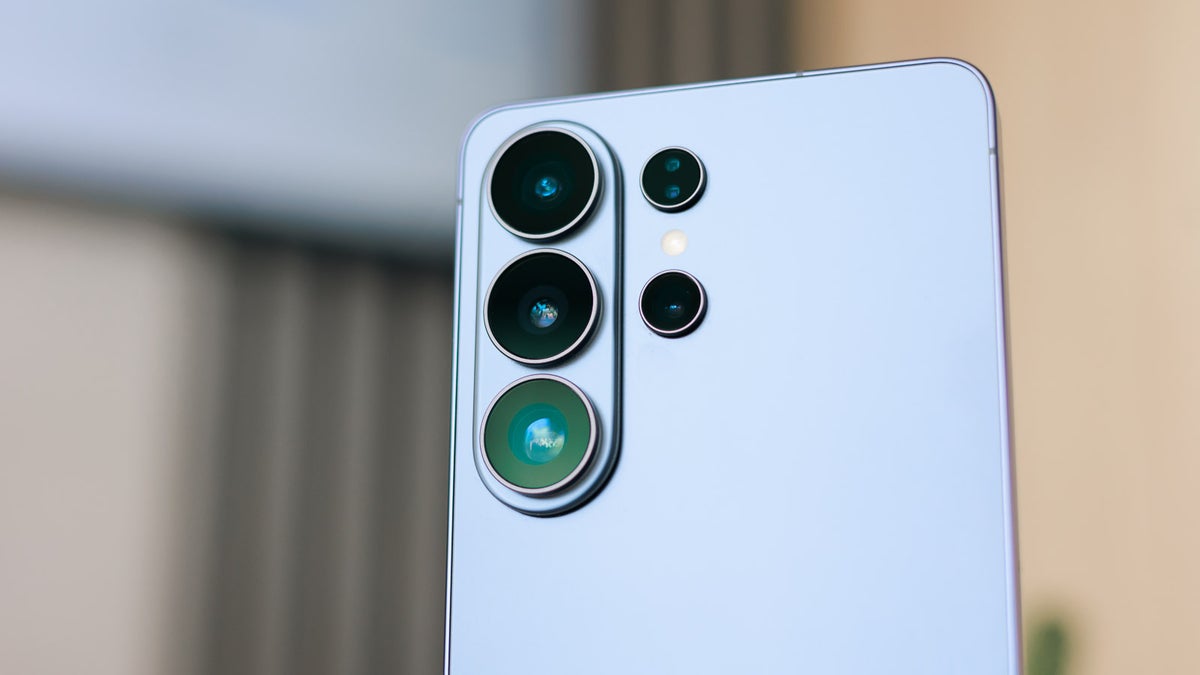
Samsung’s Galaxy S27 Ultra is rumored to gain a new 200MP main sensor, a variable aperture lens, and LOFIC technology, while potentially dropping the 3x zoom camera. The article frames these as early-stage leaks rather than confirmed product details, with Samsung’s return to variable aperture highlighting a feature it first used in the Galaxy S9 in 2018. Market impact should be limited until specifications are confirmed.
This is less about one phone rumor and more about Samsung signaling it is willing to reintroduce a proven mechanical feature into a spec race that has become increasingly software-led. If a variable aperture ships alongside a larger 200MP sensor, the meaningful second-order effect is not just better low-light or portrait quality; it is a higher ceiling for sensor utilization, which improves the marketing durability of the flagship camera stack and raises the bar for rivals whose differentiation is already narrowing. The biggest beneficiary is likely Sony at the component layer rather than any handset OEM. A successful return of variable aperture on an ultra-high-resolution module increases the probability that the premium Android camera roadmap leans harder on large-format sensors, stacked architectures, and adjacent optics complexity, all of which support higher content-per-device and reduce commoditization. The loser is Apple on narrative timing: even if it eventually matches the feature, Samsung moving first would blunt the “innovation gap” story that often drives upgrade urgency in the Ultra tier. The key risk is execution drift: variable aperture only matters if Samsung can keep thickness, yield, and calibration under control at scale. If the feature ships but produces inconsistent real-world gains versus computational tuning, the market will treat it as a spec headline rather than a demand driver, and the cycle impact will fade quickly after launch leaks. That makes the catalyst horizon long-dated — months to years — with little near-term fundamental read-through beyond supplier chatter. Contrarian view: the market may be overestimating Apple’s influence and underestimating Samsung’s need to defend its camera leadership independent of Cupertino. If the rumored larger sensor and LOFIC stack are real, the optics feature becomes additive rather than gimmicky, which argues for a more durable premiumization cycle in Android flagships than consensus likely prices in today.
AI-powered research, real-time alerts, and portfolio analytics for institutional investors.
Request DemoOverall Sentiment
neutral
Sentiment Score
0.12
Ticker Sentiment
