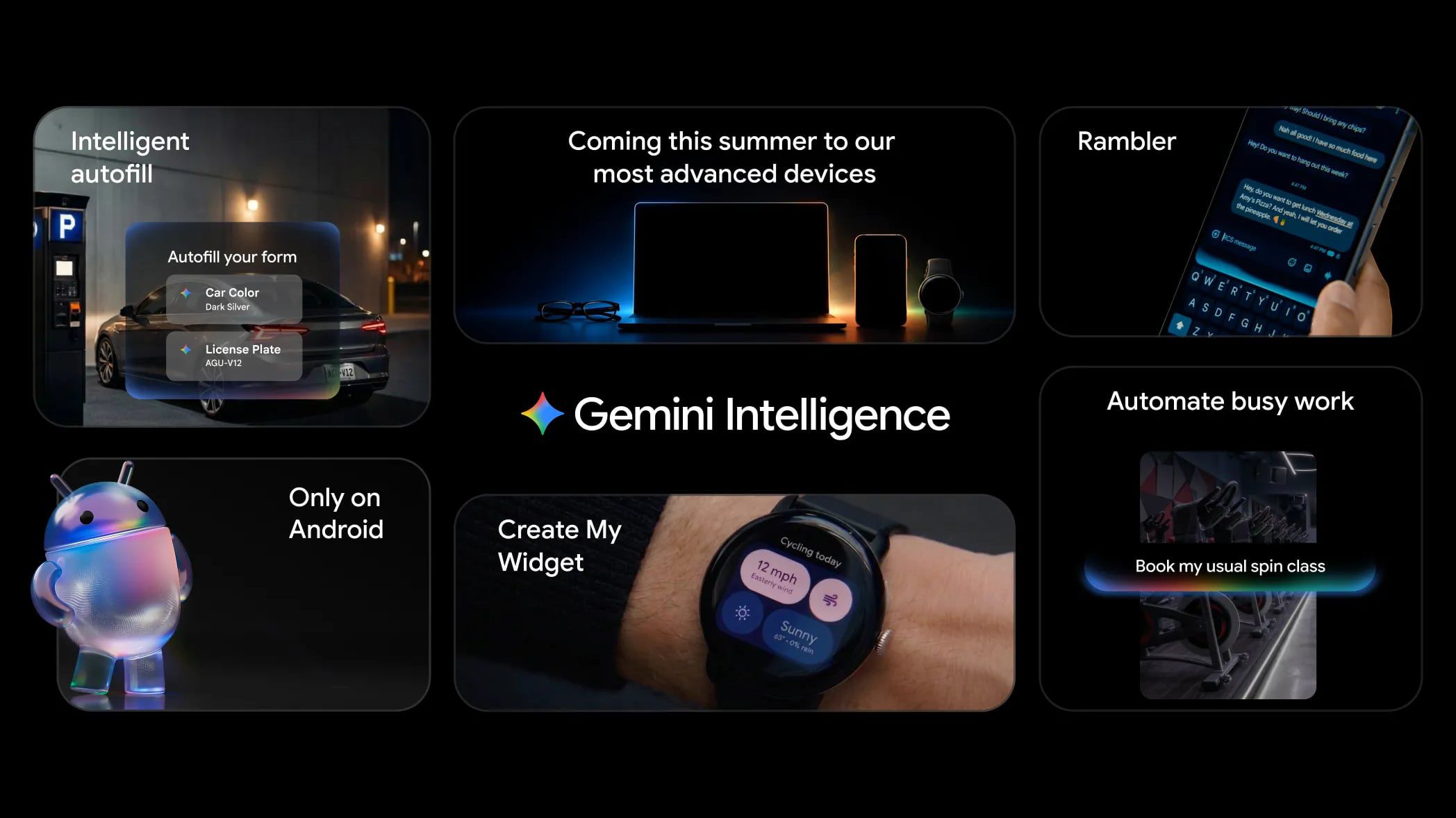
Google previewed Android 17 with expanded Gemini Intelligence, including autonomous task execution, screen-aware context, Chrome automation, and new AI-driven features across phones, cars, and wearables. The rollout begins this summer on the latest Samsung Galaxy and Google Pixel devices, with Gemini in Chrome available in late June and broader Android 17 features reaching stable release in June. The update strengthens Google's consumer AI and ecosystem positioning versus Apple ahead of iOS 27.
This is a real distribution fight, not just a feature announcement. The first-order beneficiary is GOOGL: moving the interface from search/app navigation to agentic task completion increases time spent in Google surfaces and raises the switching cost of default placement across phones, browsers, cars, and wearables. The second-order implication is that Google is trying to collapse multiple software intermediaries — app stores, browsers, native app workflows, and even parts of the assistant market — into a single intent layer, which could pressure standalone mobile utility apps and some web commerce discovery traffic.
The most important near-term risk for AAPL is not feature parity; it is narrative parity. If Android can credibly market itself as the more useful AI phone for 12-18 months, Apple risks losing the premium ecosystem halo even before its own rollout matures. That said, Apple’s installed base and privacy positioning still matter: if Google’s on-device claims hit friction in consumer trust or battery/performance tradeoffs, the market may be overpricing an immediate competitive step-function.
META is a quieter winner because anything that makes Android capture and edit more creator content improves the supply of shoppable, shareable inventory flowing into Instagram. Better capture quality and simpler editing can lift content volume and engagement without Meta funding the underlying OS innovation. The underappreciated loser is the “middle layer” in mobile: task-specific apps, mobile search affiliates, and certain browser-adjacent monetization paths could see intent siphoned away as Chrome and Gemini reduce the need to open separate apps.
Catalyst timing matters: Chrome integration in late June is the first proof point, while the broader cross-device rollout is a months-long adoption curve. The trade is more about confidence in Google’s AI monetization arc than immediate revenue, so any disappointment in performance, latency, or user uptake could reverse the move quickly. Conversely, if early Pixel/Samsung adoption metrics show meaningful usage, this becomes a multi-quarter multiple expansion story for GOOGL rather than a one-day product pop.
AI-powered research, real-time alerts, and portfolio analytics for institutional investors.
Request DemoOverall Sentiment
mildly positive
Sentiment Score
0.45
Ticker Sentiment
