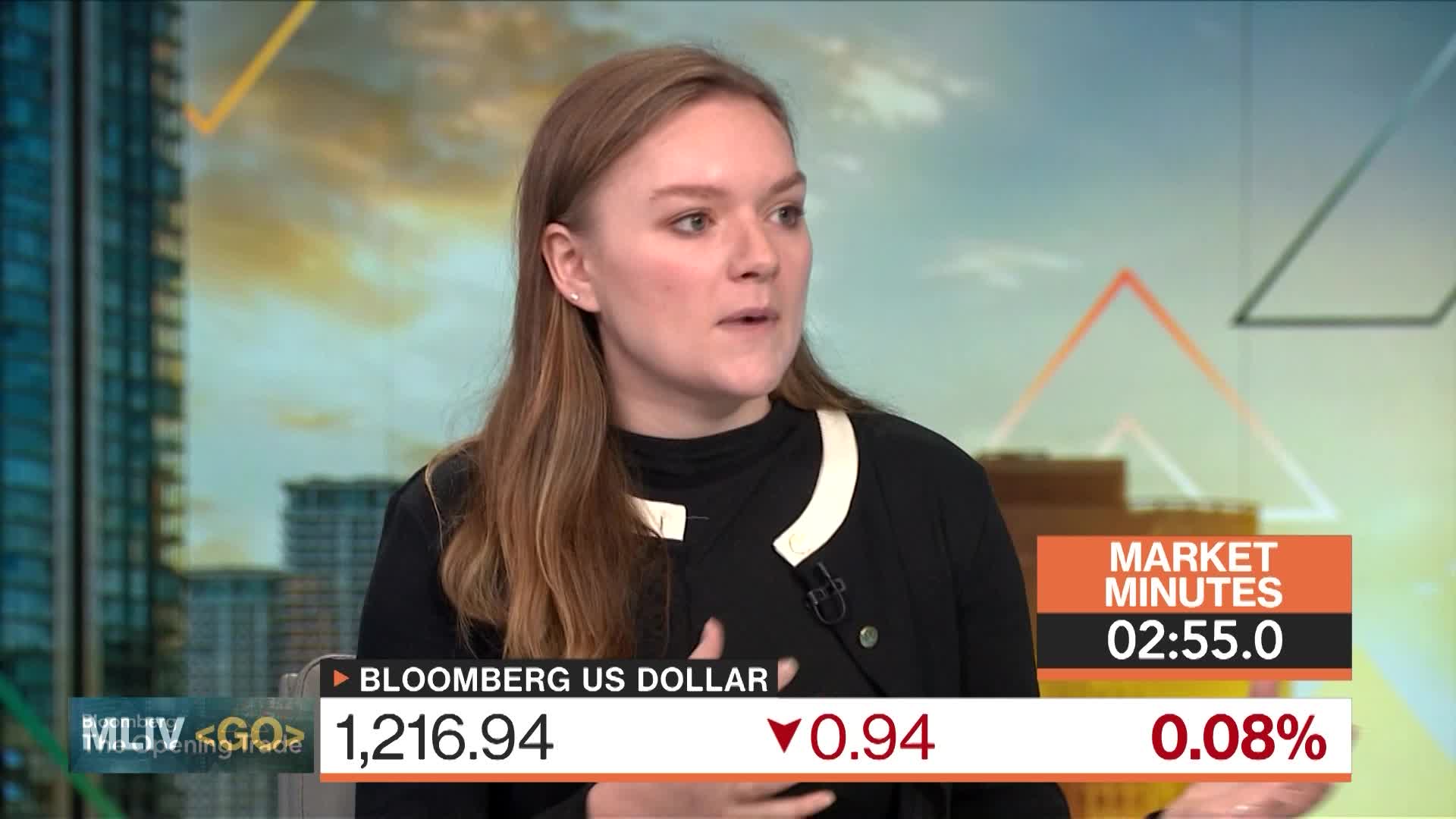
Investors are sitting in record cash—money market fund balances at all‑time highs—driving a cautious, risk‑off tone despite equity rallies in parts of Europe (S&P +3.83% in euro terms; German markets nearly +20%; IBEX +41%). The market is largely priced for a Fed cut in December but forward guidance could prove hawkish and leaves the terminal rate near ~3%; attractive cash yields are keeping flows on the sidelines. A sustained year‑end rally likely needs positive economic signs, while a failure by the Fed to deliver cuts would likely bolster the dollar given U.S. growth, yield differentials and ongoing inflows.
Market structure is bifurcating: winners are cash/money-market instruments, short-dated U.S. Treasury bills and USD-sensitive assets (banks, front-end yield strategies) because cash yields are attractive and flows remain parked; losers are long-duration growth stocks and FX-exposed European cyclicals (IBEX/Spain) that benefitted mainly from a weaker dollar and priced-in fiscal optimism. Supply/demand: record MMF balances are a latent demand source but not yet a velocity shift — expect large, lumpy inflows into risk only after clear macro beats or dovish guidance reversal; otherwise marginal demand props short-term rates. Cross-asset: a hawkish surprise or Fed non-cut re-prices front-end yields up ~25–50bp, strengthening USD (pressure on EUR, commodities, gold) and steepening/flattening dynamics in the curve depending on growth data.
Tail risks include an unexpectedly large Fed cut (equity melt-up), a German/EU fiscal surprise (sharp European equity re-rating), or sudden global liquidity shock that forces rapid MMF deployment out of cash; each has >1% probability but >10% market impact. Timing: immediate (days) — Fed December guidance and one/two high-frequency US data releases; short-term (weeks) — visible MMF-to-risk flows and 2s/10s repricing; long-term (quarters) — European growth disappointment if fiscal fails to materialize. Hidden dependencies: ETF rebalancing, FX-hedged flows, and corporate buybacks that can flip demand quickly. Key catalysts: Dec Fed meeting, US CPI/PCE and payrolls, German fiscal announcements.
Trade implications: tactically favor USD long via UUP or short EUR via FXE and underweight Europe (EWP/IBEX exposures) while favoring US financials (KBE/JPM) for 1–3 month plays; hedge equity-duration risk with put spreads on QQQ/SPY into Fed windows. Options: buy Jan ’26 1–2 month put spreads on QQQ (delta ~0.20) sized 1–2% AUM to cap downside if yields jump >25bp; consider short-dated call spreads on IBEX/Spain ETFs to capture currency-driven mean reversion. Rotate portfolio from long-duration tech to short-duration value/financials over 1–3 months, keeping 3–5% cash buffer for flow-driven opportunities.
Contrarian view: consensus underestimates persistence of high cash yields — risk assets may stay depressed until explicit positive macro (not just absence of bad) arrives, so broad Santa-rally bets may be premature. The European outperformance looks overdone and FX-driven; a 10–20% downside to IBEX-linked names is plausible if EURUSD firming occurs. Historical parallel: late-cycle periods with sticky money-market balances (2015–16) saw delayed risk rotation; unintended consequence of crowding into short-duration US assets is sudden cross-asset volatility if MMFs unwind into equities simultaneously, amplifying moves.
AI-powered research, real-time alerts, and portfolio analytics for institutional investors.
Request DemoOverall Sentiment
mildly negative
Sentiment Score
-0.25
Ticker Sentiment
