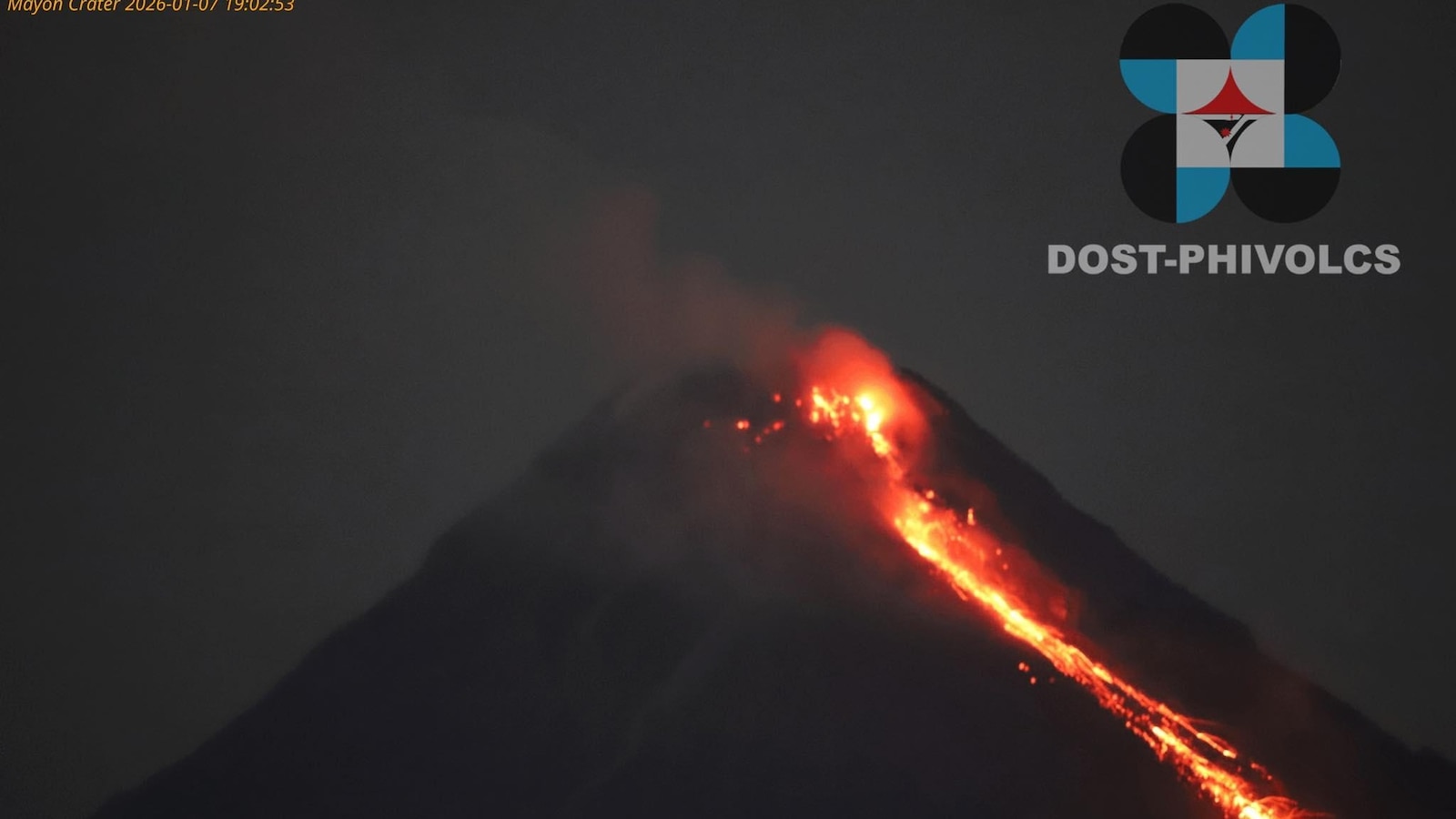
Philippine authorities raised Mayon Volcano's 5-step alert to level 3 after intermittent rockfalls (some as large as cars) and pyroclastic flows prompted the evacuation of roughly 2,800 residents from 729 households within a 6-kilometer permanent danger zone and about 600 additional voluntary evacuees to government shelters. The 2,462-meter volcano — a major local tourism draw with 54 recorded eruptions since 1616 — poses localized downside risk to tourism, quarrying and agriculture, but officials say a larger explosive event is uncertain given the lack of a seismic spike and elevated sulfur-dioxide emissions.
Market structure: Immediate winners are emergency construction/materials suppliers and heavy-equipment providers (local demand for cement/aggregate to rise 10-30% in weeks if dome collapse requires rebuilding); reinsurers and specialty catastrophe capacity can reprice risk modestly. Direct losers are local tourism, smallholder agriculture and informal quarry businesses; displaced populations and blocked access will shift tourist demand to competing SE Asian destinations, pressuring local hotels/airlines for 1-3 months.
Risk assessment: Tail risk is a level‑5 eruption with widescale ashfall causing >10k displacements and measurable sovereign stress — low probability (<5% in next 3 months) but high impact (bond spread widening >50–100bp). Timeline: days = evacuation/tourism cancellations; weeks–months = insurance claims and reconstruction capex; quarters–years = potential outmigration and depressed land values. Hidden dependency: concurrent typhoon or seismic spike would compound losses and lengthen recovery.
Trade implications: Tactical hedges (FX and EM equity puts) are preferred short-term; selective longs in reinsurers and construction/materials for 3–12 months capture repricing and rebuild demand. Cross-asset: expect modest PHP weakness, slight EM equity underperformance, and short-term widening of Philippine sovereign spreads; commodities exposure scoped to cement/aggregate not oil.
Contrarian angle: Market may over-rotate away from Philippine assets despite frequent historical eruptions; if no SO2 or seismic spike within 30 days, tourism recovery often occurs within 6–12 months — creating a buy-the-dip window. Reconstruction demand can create 6–18 month earnings upside for global materials names often overlooked by EM sellers.
AI-powered research, real-time alerts, and portfolio analytics for institutional investors.
Request DemoOverall Sentiment
moderately negative
Sentiment Score
-0.35
