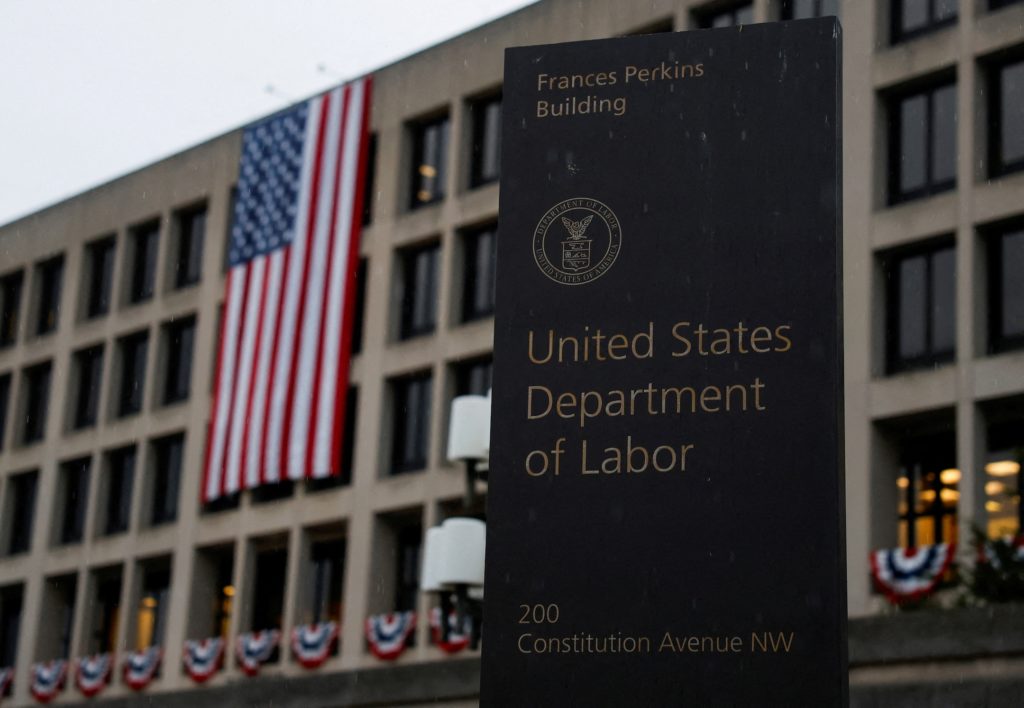
January payrolls rose by 130,000 and the unemployment rate edged down to 4.3% from 4.4%, but significant downward revisions show the U.S. added only 181,000 net jobs in 2025—about 400,000 fewer than previously reported and far below 2024’s 1.4 million gain. Employment gains are concentrated in health care, social assistance, construction and professional services while information technology, financial services and federal employment declined; corporate layoffs have surged (Challenger report: layoffs up 118% year-over-year in January) as firms pursue AI-driven labor efficiencies. Policy uncertainty (tariffs, immigration cuts) and reduced labor supply are cited as drag factors, raising downside risks to GDP growth and complicating the Fed’s outlook on inflation and labor-market health.
Market structure: The revised print (130k jobs in Jan; only 181k net in 2025) signals a tilted recovery where healthcare, construction and professional services are net hirers while IT, financials and federal payrolls are contracting. Expect relative outperformance for defensives (healthcare, staples) and balance-sheet strong industrials; consumer discretionary and logistics (AMZN, UPS) face demand and margin pressure over the next 3–12 months.
Risk assessment: Tail risks include a sharper-than-expected real GDP slowdown (Q2–Q4 2026 growth <0.5% q/q annualized) or persistent inflation from labor scarcity if immigration remains constrained; either forces abrupt policy shifts. Short-term (days–weeks) market moves will be data-driven around next two payrolls and two CPI prints; medium-term (3–9 months) depends on Fed forward guidance and corporate earnings revisions.
Trade implications: Position for bond rally and defensive equity skew: buy Treasuries if yields drop 15–25 bps after next payroll surprise to downside, and rotate 2–4% portfolio weight into healthcare (XLV/UNH). Short or hedge high-beta tech/logistics names (AMZN, UPS) while using defined-risk options to limit drawdown; favor pair trades (long XLV, short XLK) beta-neutral.
Contrarian angles: The market may over-penalize large-cap tech on headline layoffs while underpricing AI-driven revenue upside beyond 12–18 months. Consider small opportunistic long-dated call exposure to best-in-class AI beneficiaries (AMZN) sized <1–2% as a convexity bet, but only after short-term downside protection is in place.
AI-powered research, real-time alerts, and portfolio analytics for institutional investors.
Request DemoOverall Sentiment
moderately negative
Sentiment Score
-0.50
Ticker Sentiment
