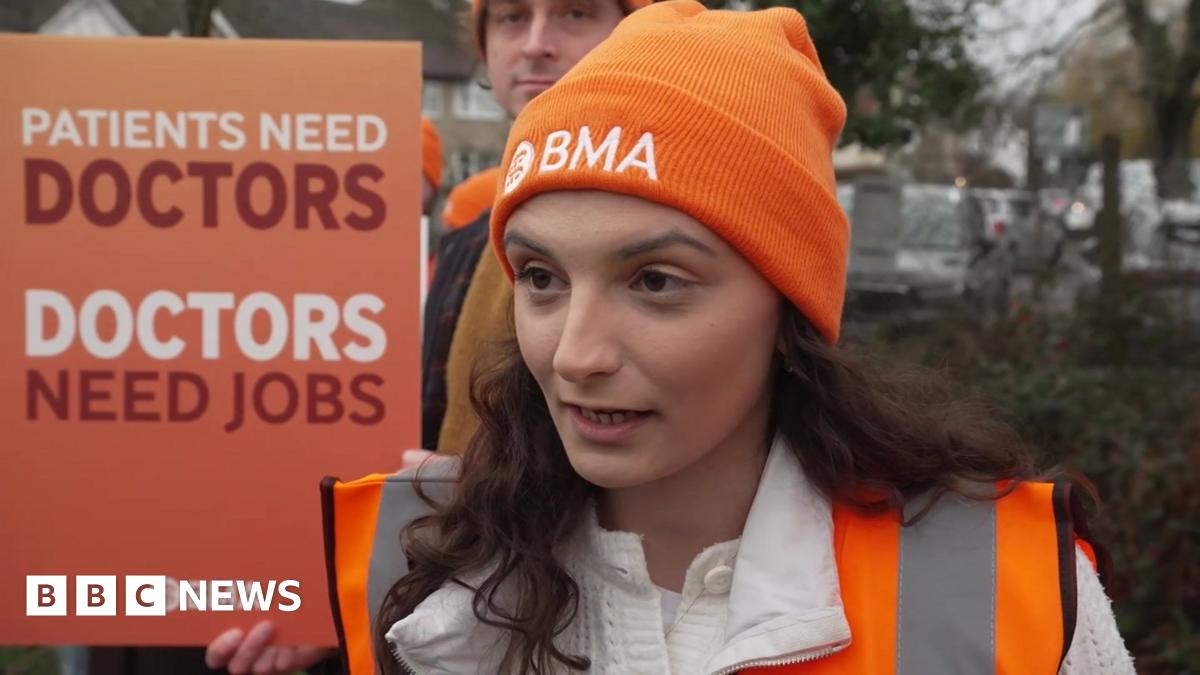
Resident doctors in England began a five-day strike alleging the government has ignored reasonable demands on pay and training amid a long-running dispute; the BMA says pay is about 20% lower in real terms than in 2008 and this is the 14th walkout. Health Secretary Wes Streeting says the government has offered a 28.9% pay rise, will prioritise UK-trained graduates and introduce emergency legislation to add 4,000 specialty training places, but striking trainees call the package insufficient as competition for specialty posts has surged (30,000 applicants for 10,000 places in 2025), leaving some at risk of unemployment. The standoff highlights acute pressure on the NHS training pipeline, morale and hospital staffing and poses operational risks if recruitment and retention are not resolved.
Resident doctors in England initiated a five-day walkout at 07:00 GMT, the 14th in a protracted dispute over pay and training; the British Medical Association says real pay for trainee doctors is about a fifth lower than in 2008. Participants cite severe workload and a training bottleneck that threatens employment for some trainees, illustrated by one trainee's account and the statistic that 30,000 applicants competed for 10,000 specialty places in 2025.
The government has offered a 28.9% pay rise, pledged emergency legislation to add 4,000 specialty training places and to prioritise UK-trained graduates, while characterising the package as sufficient to avert strikes. Trainees and the BMA consider the measures too little or too late, signaling continued labour relations risk and uncertainty over implementation timing and scale.
Operationally, the dispute amplifies near-term staffing and morale risks across the NHS and poses medium-term recruitment/retention pressures if training capacity or pay settlement proves inadequate; the event is politically charged and regulatory steps are already being signalled. Available market signals show moderately negative sentiment and a low-to-moderate direct market impact (market_impact_score 0.25), implying sector-specific but not systemic financial contagion absent further escalation.
AI-powered research, real-time alerts, and portfolio analytics for institutional investors.
Request DemoOverall Sentiment
moderately negative
Sentiment Score
-0.45
