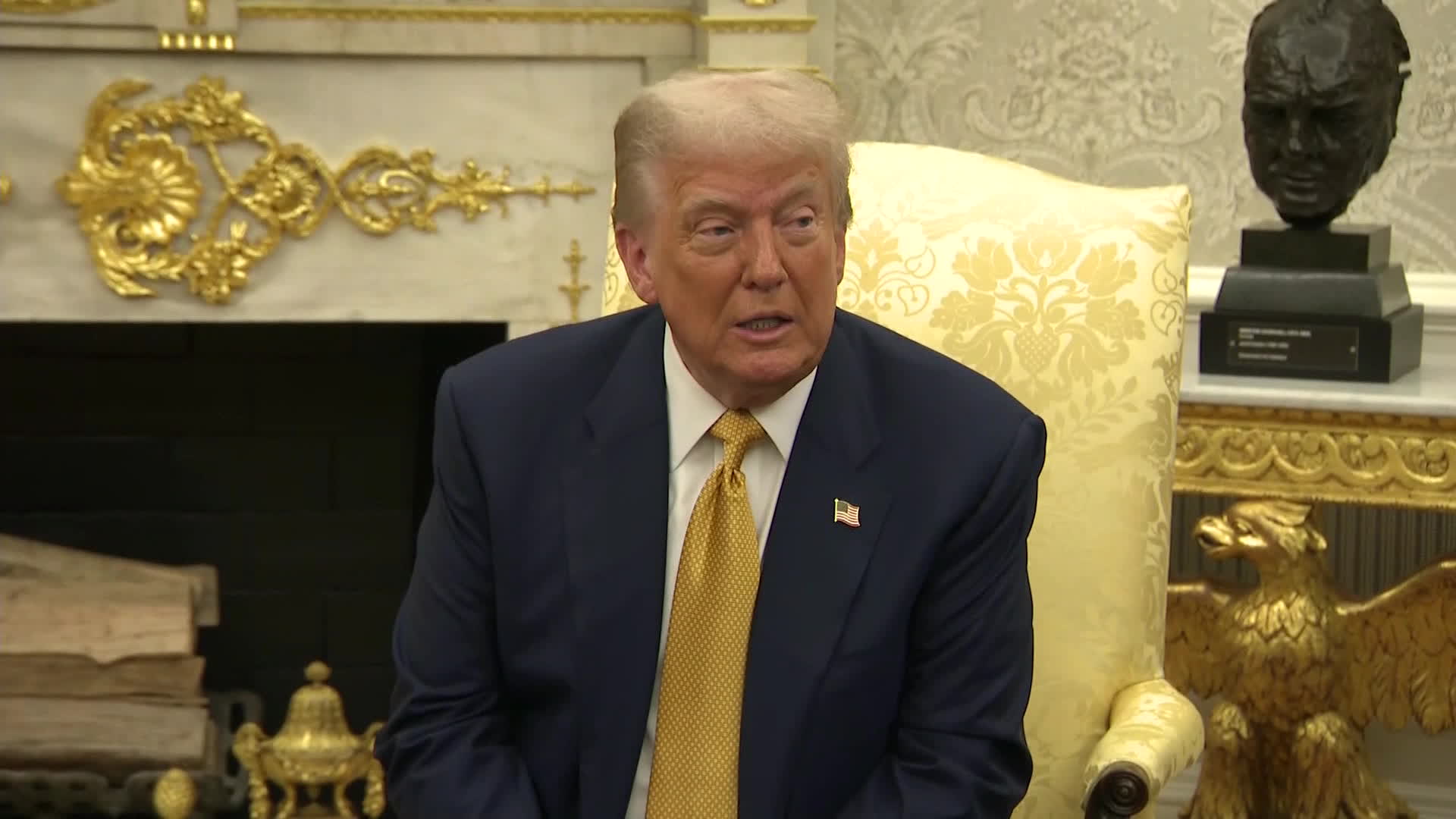
President Donald Trump publicly accused Federal Reserve Chair Jerome Powell of potentially maintaining high interest rates for political reasons, reiterating his call for rate cuts and criticizing Fed building renovations. This highlights ongoing political pressure on the Federal Reserve's monetary policy independence.
Former President Donald Trump has publicly accused Federal Reserve Chair Jerome Powell of maintaining high interest rates for political reasons, a direct challenge to the central bank's operational independence. This statement, which also included a repeated call for lower rates and criticism of Fed building renovations, introduces a significant political variable into the monetary policy outlook. The associated signals, indicating a 'moderately negative' sentiment and 'uncertain' tone, reflect the market's potential unease with the politicization of the Fed. While the immediate market impact is rated as low, the event underscores a key risk factor for investors: the potential for political pressure to influence or be perceived as influencing future rate decisions, thereby complicating forecasts based solely on economic data and the Fed's dual mandate.
AI-powered research, real-time alerts, and portfolio analytics for institutional investors.
Request DemoOverall Sentiment
moderately negative
Sentiment Score
-0.30
