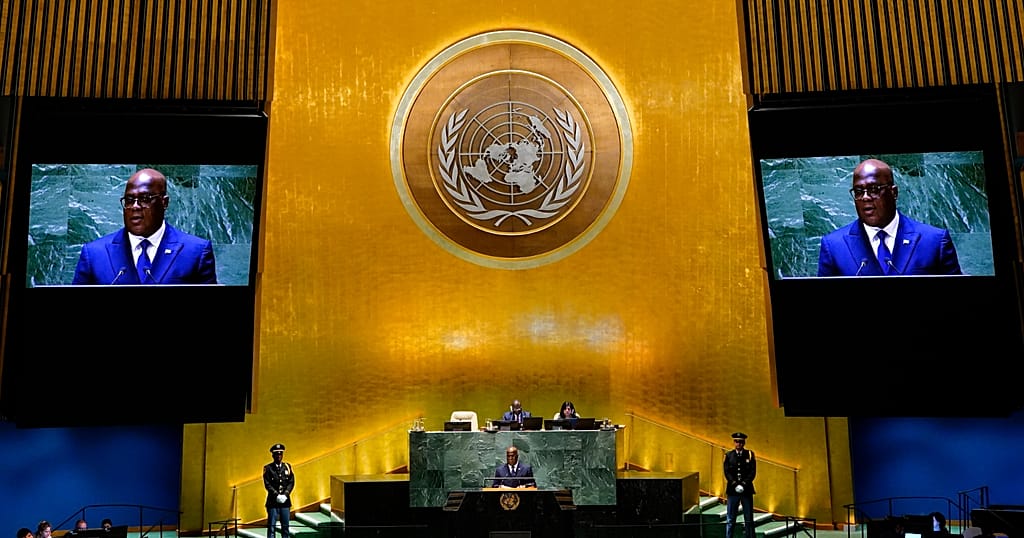
The United Nations Security Council has elected five new non-permanent members for 2026–2027: Bahrain, Colombia, the Democratic Republic of Congo (DRC), Latvia and Liberia. The DRC returns to the Council for the first time in 35 years and Liberia for the first time since 1961; DRC representatives say they will push discussions on peacekeeping and seek diplomatic leverage to help end the conflict with Rwanda-backed M23 rebels in eastern Congo. For investors, the development is primarily geopolitical: it could affect regional stability and policy coordination related to peacekeeping and security in the DRC—factors relevant to country risk and commodity exposures tied to eastern Congo—but is unlikely to be a direct market mover in the near term.
Market Structure: The UNSC seats for DRC and Liberia increase political visibility for eastern Congo risks — the direct winners are battery-metal and copper producers with DRC exposure (potential tightening of cobalt/copper supply by ~5–15% in severe disruption scenarios), while frontier sovereign credit and regional FX (RWF, CDF, LRD) are exposed to risk premia widening. Cross-asset mechanics: expect copper/cobalt price upside, EM sovereign spreads +150–500bps in stress, higher vols in EM FX and commodity options over 3–12 months.
Risk Assessment: Tail risks include a Rwandan/DRC spillover, UN-mandated sanctions or mine access restrictions, and abrupt artisanal mining shutdowns; low-probability scenarios could move cobalt +40% and force producers to halt output. Time horizons: immediate (days) = volatility spikes in EM FX/credit; short (weeks–months) = commodity tightening and repricing of miners; long (quarters–years) = potential structural re-routing of supply chains and increased Chinese diplomatic mitigation. Hidden dependencies: Chinese state-owned miners and logistics bottlenecks are the real margin controllers — UNSC politics may not translate into instant supply cuts.
Trade Implications: Favor selective exposure to DRC-exposed miners and copper miners ETF while hedging EM beta — use 6–12 month call spreads on COPX/GLEN.L for upside and 3–6 month puts on EEM to protect EM downside. Rotate 1–3% portfolio weight into battery-metal names (Glencore GLEN.L, Ivanhoe IVPAF) and African logistics/defense services (Babcock BAB.L) with strict 10–12% stop-losses; target +20–30% on commodity-driven trades.
Contrarian Angles: The market may underprice credit relief if the DRC uses the UNSC seat to secure concessions — sovereign spreads could compress 200–400bps on credible peace progress, creating a buy-the-rally opportunity in distressed DRC/Liberia paper. Conversely, consensus might understate Chinese influence which could mute supply shocks, making pure commodity longs risky without hedges; historical parallels (2012–13 DRC flare-ups) show 20–40% metal spikes followed by mean reversion within 9–12 months.
AI-powered research, real-time alerts, and portfolio analytics for institutional investors.
Request DemoOverall Sentiment
neutral
Sentiment Score
0.00
