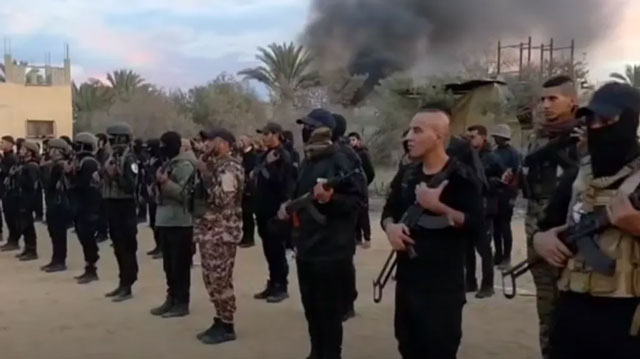
A loose network of new armed groups—ranging from clan-based factions to criminal gangs and emergent militias—has taken control of roughly 53% of Gaza territory under Israeli control, and Prime Minister Benjamin Netanyahu has acknowledged covert Israeli backing he says "saves soldiers' lives." Leaders such as Yasser Abu Shabab and Hossam al-Astal run camps and claim contacts with U.S. representatives while admitting coordination with Israel to bring supplies, even as allegations mount of looting, criminality and past Islamic State links and civilians express alarm. The Palestinian Authority has rejected proposals to absorb these fighters into any future police structure under the U.S. plan, and analysts warn Israel may be repeating historical mistakes—risking fractured Palestinian unity, long-term blowback from armed proxies and complications for post-conflict stabilization and governance.
A constellation of newly formed armed groups now controls roughly 53% of Gaza territory that is under Israeli control, and Prime Minister Benjamin Netanyahu publicly acknowledged covert Israeli backing, saying it "saves soldiers' lives." Key local leaders cited in the report include Yasser Abu Shabab (Popular Forces near Rafah) and Hossam al-Astal (Counter-Terrorism Strike Force near Khan Younis), with al-Astal claiming coordination with Israel to bring in supplies and alleged contact with "US representatives" that U.S. officials have not confirmed.
Civilians are divided between seeking shelter in militia-run camps and expressing alarm at criminality and illegitimacy; allegations include looting of aid trucks and reported past Islamic State links for some members, while Israeli gunfire continues to threaten residents near these enclaves. The Palestinian Authority has rejected integrating these fighters into any future police structure and PA officials warn Israel's demands may not benefit Palestinians.
Security analysts draw an explicit parallel to historical proxy risks, cautioning that foreign-armed militias can produce long-term blowback and complicate governance. Market signals attached to the story show moderately negative sentiment and a modest market-impact score (0.3), indicating heightened geopolitical risk that could impede post-conflict stabilization and complicate the U.S.-brokered plan for an International Stabilisation Force and new policing arrangements.
AI-powered research, real-time alerts, and portfolio analytics for institutional investors.
Request DemoOverall Sentiment
moderately negative
Sentiment Score
-0.50
