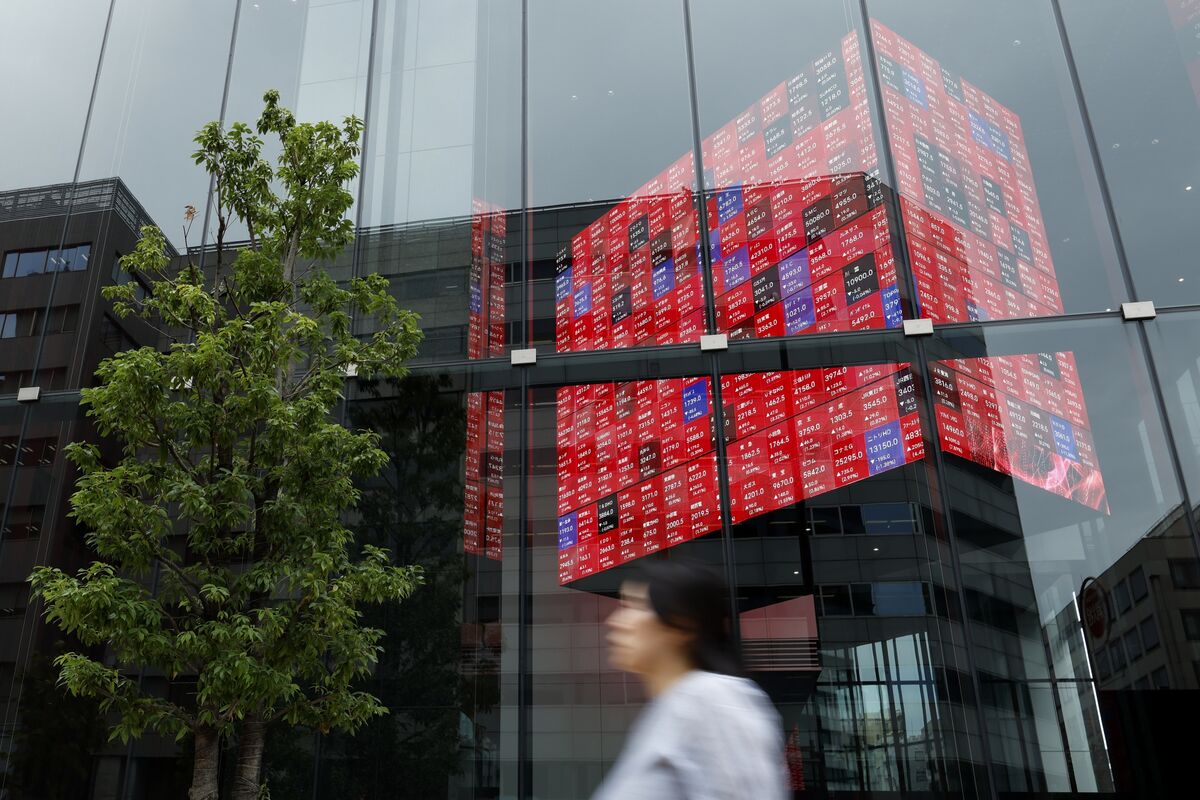
Foreign investors purchased a net ¥1.75 trillion ($11.9 billion) in Japanese cash equities and futures in the week ended August 15, marking the largest weekly inflow since November 2014, as benchmark indexes ascended to record highs. The majority of these transactions were in futures, indicating potential hedging strategies amidst market volatility. Despite this, some market participants anticipate continued strong demand for Japanese shares.
Foreign capital inflows into Japanese equities have surged to an 11-year high, with overseas investors purchasing a net ¥1.75 trillion ($11.9 billion) in cash equities and futures contracts during the week ending August 15. This record demand, the largest since November 2014, coincided with Japanese benchmark indexes reaching all-time highs, indicating a strong correlation between foreign investment flows and market momentum. A critical detail, however, is that the bulk of these transactions occurred in futures markets. This suggests that while overall sentiment is strongly positive, a significant portion of the activity may be driven by sophisticated hedging strategies or short-term tactical positioning in a volatile market, rather than purely long-term, bullish conviction in cash stocks.
AI-powered research, real-time alerts, and portfolio analytics for institutional investors.
Request DemoOverall Sentiment
strongly positive
Sentiment Score
0.75
