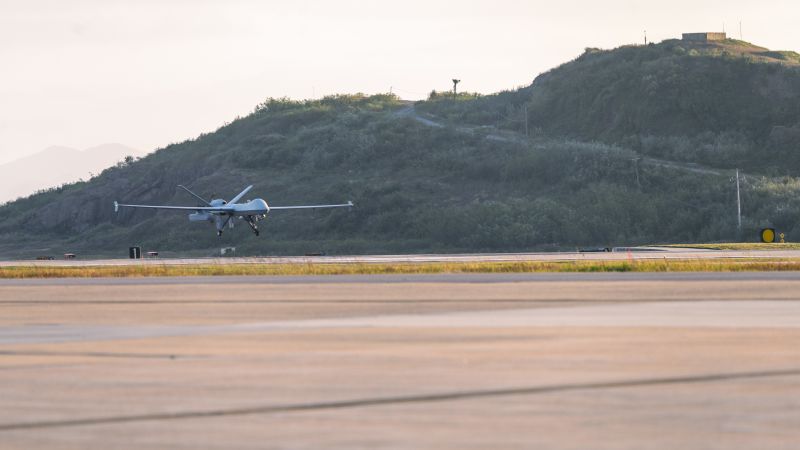
An MQ-9 Reaper drone assigned to Kunsan Air Base's newly activated 431st Expeditionary Reconnaissance Squadron crashed near Maldo-Ri Island off South Korea's west coast early Monday; the 8th Fighter Wing reported no injuries or property damage and the cause is under investigation. The incident involves a high-value ($~28M unit cost) remotely piloted asset with an extended ~1,600-mile range that supports ISR across the Indo-Pacific, and comes amid heightened regional tensions and a noted higher Class A mishap rate for MQ-9s (+15% vs. manned aircraft), posing operational and forward-presence implications for U.S. forces and defense stakeholders.
Market structure: Expect near-term beneficiaries among avionics/sensor and spare-parts suppliers (LHX, TDY, FLIR legacy businesses) and defense integrators that win rapid-replacement and hardening work (RTX, NOC). Platforms makers (LMT) face reputational/operational scrutiny that can compress aftermarket service margins by 5–10% if flight hours are reduced and inspections increase. Macro spillovers: a localized bump in safe-haven bids could push 2s/10s down 5–15bp and lift USD by ~0.3–0.6% if tensions expand.
Risk assessment: Tail risks include a temporary fleet grounding or congressional hearings that delay deliveries and spike lifecycle costs >10% for MQ-9-class programs; worst-case escalation (6–12 months) could reallocate regional budgets to air defenses and ISR alternatives. Immediate window (days): volatility and news-driven flow; short-term (weeks–months): aftermarket orders and contract awards; long-term (quarters–years): procurement shifts toward attritable UAS and secure comms. Hidden dependencies include satellite bandwidth, sensor supply chains (specialty optics), and DoD readiness metrics that can amplify demand or clamp operations.
Trade implications: Prefer medium-conviction longs in sensor/integration plays (LHX, TDY) and defense-focused ETFs (ITA) for 6–12 month exposure; avoid outright large-cap platform shorts without catalyst. Options: consider 3–6 month call spreads on LHX/TDY to capture re-rates around contract awards, sizing to 1–2% notional. Pair trade: long LHX (1.5% portfolio), short LMT (1.0%) for 3–6 months to capture relative aftermarket upside.
Contrarian angles: Consensus fear of permanent MQ-9 pullback understates DoD’s incentive to quickly replace capability — that implies a 6–12 month procurement tailwind for suppliers, not primes only. Historical parallels (past UAV mishap clusters) show 8–14 week spikes in spare orders and tech upgrades; overreaction that short-circuits suppliers could create mispricings. Watch for unintended consequence of accelerated buy of alternative ISR (satcom/mini-UAS) benefiting niche vendors.
AI-powered research, real-time alerts, and portfolio analytics for institutional investors.
Request DemoOverall Sentiment
mildly negative
Sentiment Score
-0.30
