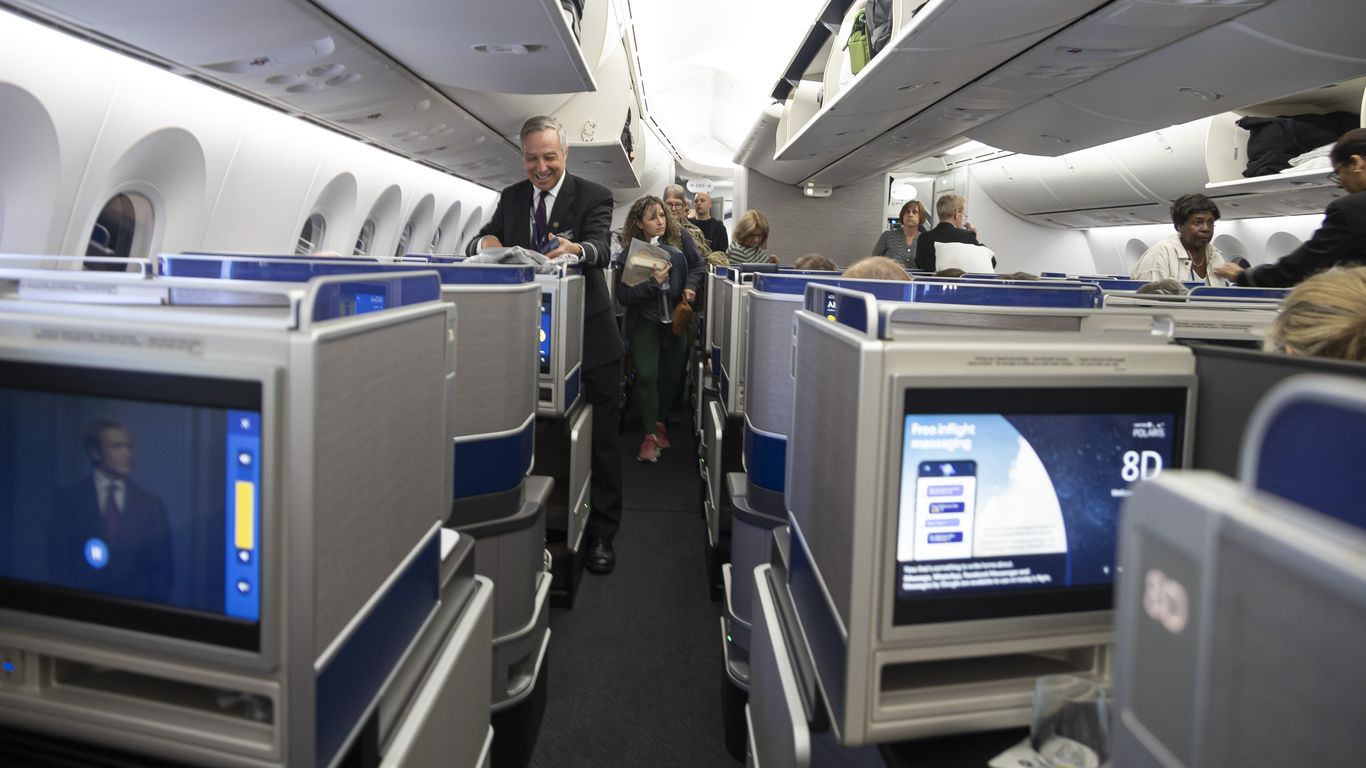
United Airlines is splitting its Polaris long‑haul business-class product into three paid tiers—Base (no seat selection, changes, refunds or lounge access), Standard (seat selection, changes and lounge access, no refunds) and Flexible (all perks). The airline is also introducing premium economy 'Relax Row' offerings in coach; fuel now accounts for roughly 30% of airline costs (Deutsche Bank) amid rising prices from the Iran war, pressuring carriers to boost ancillary revenue. Expect modest revenue upside for legacy carriers that can unbundle premium inventory, while budget airlines (Spirit, Frontier) face greater margin pressure and potential competitive repricing.
United’s tiering of a once-bundled premium product is classic price discrimination — it lets revenue managers segment willingness-to-pay within a fixed high-yield seat base without adding capacity. If only 10–20% of Polaris passengers migrate to higher-fee tiers at an incremental $75–$200 each, that is a low-capex way to lift unit revenue on long-haul flown seats by mid-single-digit percent within 6–12 months, materially offsetting a multi-month step-up in fuel costs.
Second-order winners include loyalty programs (higher ancillary margin per enrolled traveler), premium-amenity suppliers (mattress pads, bedding, bespoke toys) and airport lounge operators that can reprice access; losers are pure ULCC models and corporate travel policies that will pressure subsidiaries to cap reimbursable ancillaries. Over time this compresses the competitive moat of low-cost carriers on premium routes, forcing them either to add higher-margin products (capital intensive) or concede corporate traffic.
Main risks are behavioral and regulatory: visible consumer backlash or corporate travel policy pushback could cap uptake rates, while macro weakness that reduces discretionary and corporate travel would reverse benefits quickly (3–9 months). A bigger fuel shock or capacity response from competitors that adds premium seats would also dilute per-seat gains — monitor unit revenue and corporate bookings as near-term triggers.
AI-powered research, real-time alerts, and portfolio analytics for institutional investors.
Overall Sentiment
neutral
Sentiment Score
0.00
Ticker Sentiment
