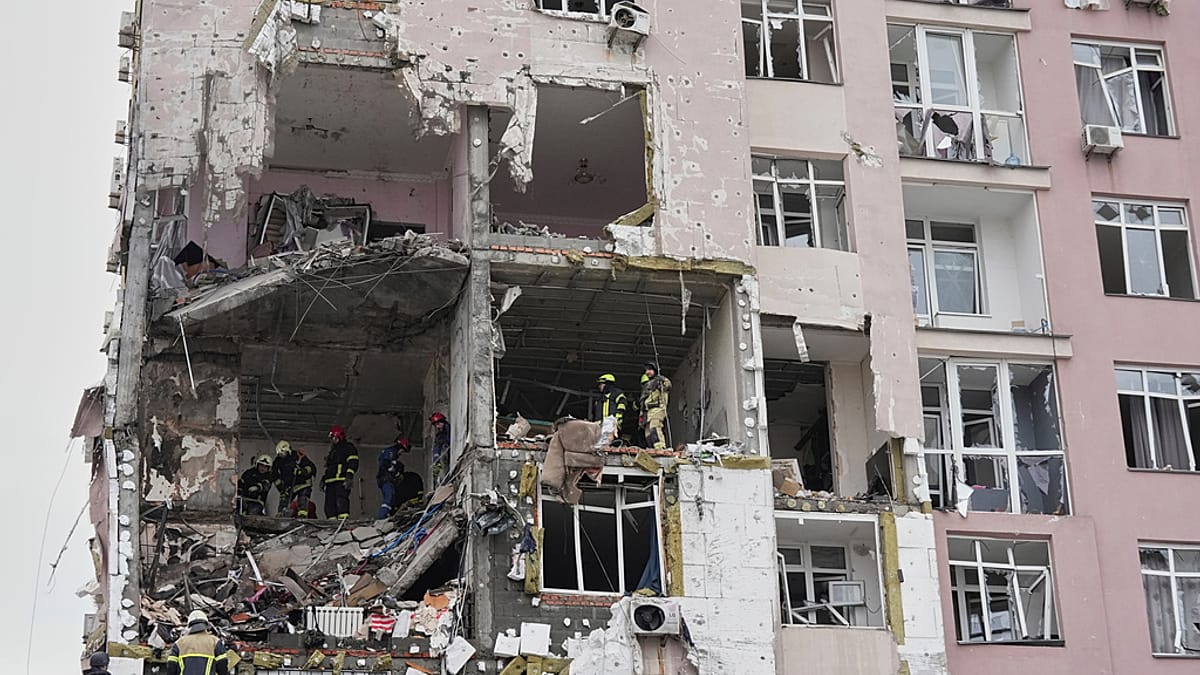
Ukraine reported that Russia launched more than 200 attack drones overnight on New Year’s Eve, primarily targeting energy infrastructure; Ukraine’s air force said air defenses downed or suppressed 176 of 205 drones, with 24 strike drones recording hits across 15 locations. Regional governors reported a handful of civilian casualties and damage to residential buildings; the strikes underscore continued escalation even as Zelensky says a peace deal is '90% ready' and European and US envoys pursue talks and security guarantees. The combination of active strikes on power assets and ongoing diplomatic engagement implies heightened near-term geopolitical risk with potential implications for European energy markets and investor risk sentiment.
Market structure: Immediate winners are defense prime contractors (backlog & upgrade cycles) and commodity suppliers (spot gas/oil margins); losers are local Ukrainian energy operators, European utilities exposed to grid damage, insurers and nearby sovereign/credit names. Pricing power shifts toward firms that can supply reserve power, grid hardening, and munitions — expect defense revenue re-rating pressure into 6–24 months and power/gas spreads to widen through winter months.
Risk assessment: Tail risks include escalation to attacks on NATO supply/logistics or Black Sea shipping (low-probability, high-impact) and large-scale cyberattacks on EU grids; either would spike energy and defense implied vol 30–100% within days. Time horizons: days — volatility and FX safe-haven flows; weeks–months — winter fuel drawdowns and credit spread widening; 12–24 months — defense capex realization and rerouted supply chains. Hidden dependencies include European repair labour, insurance sublimits, and interconnector availability that can amplify shortages quickly.
Trade implications: Tactical long defense equity/volatility and long European gas/oil exposure are rewarded if strikes persist. Conversely, trim European utility exposure and local EM sovereign credit; pair trades can capture relative re-rating (defense long vs utilities/insurers short). Use short-dated volatility instruments to capitalize on discrete catalysts (peace talks, meetings) in 7–30 day windows.
Contrarian angles: Consensus may overpay for permanent escalation; a material peace step (30–60 days) would reverse flows and punish defense/energy longs — hedge with staggered put protection or sell short-dated call spreads. Historical parallel: 2022 spikes delivered 6–18 month outperformance for defense but large mean reversion after political breakthroughs; size positions expecting 15–35% moves and plan hard stop/triggers tied to diplomatic milestones.
AI-powered research, real-time alerts, and portfolio analytics for institutional investors.
Request DemoOverall Sentiment
moderately negative
Sentiment Score
-0.60
