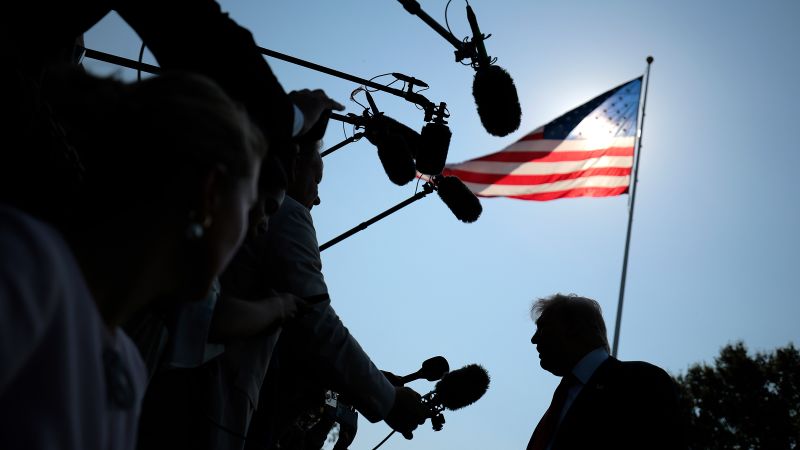
President Trump has significantly altered his stance on the Gaza conflict, withdrawing U.S. negotiators from ceasefire talks due to Hamas's perceived lack of good faith and now urging Israel to escalate its military campaign to 'finish the job.' This pivot, despite a worsening humanitarian crisis, signals reduced U.S. pressure on Israel, though some interpret it as a tactical move to pressure Hamas. While regional mediators assert talks can resume, the U.S. shift has created uncertainty in the peace process, further complicated by key allies like France adopting tougher positions and planning to recognize a Palestinian state, adding to geopolitical complexity in the region.
The United States has signaled a significant pivot in its Gaza policy, moving from actively brokering a ceasefire to publicly endorsing an escalation of Israel's military campaign. President Trump's withdrawal of negotiators and his call for Israel to "finish the job" represents a stark reversal from recent optimism, with the administration officially blaming the breakdown on Hamas's perceived lack of good faith. However, this definitive stance is contrasted by conflicting signals from regional mediators Egypt and Qatar, as well as an Israeli official, who suggest negotiations have not fully collapsed, raising the possibility that the US withdrawal is a high-stakes tactical maneuver designed to pressure Hamas. This policy shift dangerously elevates geopolitical risk amid a spiraling humanitarian crisis, which is drawing sharp condemnation from key European allies. The growing diplomatic rift is highlighted by the UK Prime Minister's description of Israel's actions as "indefensible" and France's move to recognize a Palestinian state, indicating a fracturing of the Western diplomatic front.
AI-powered research, real-time alerts, and portfolio analytics for institutional investors.
Overall Sentiment
strongly negative
Sentiment Score
-0.60
