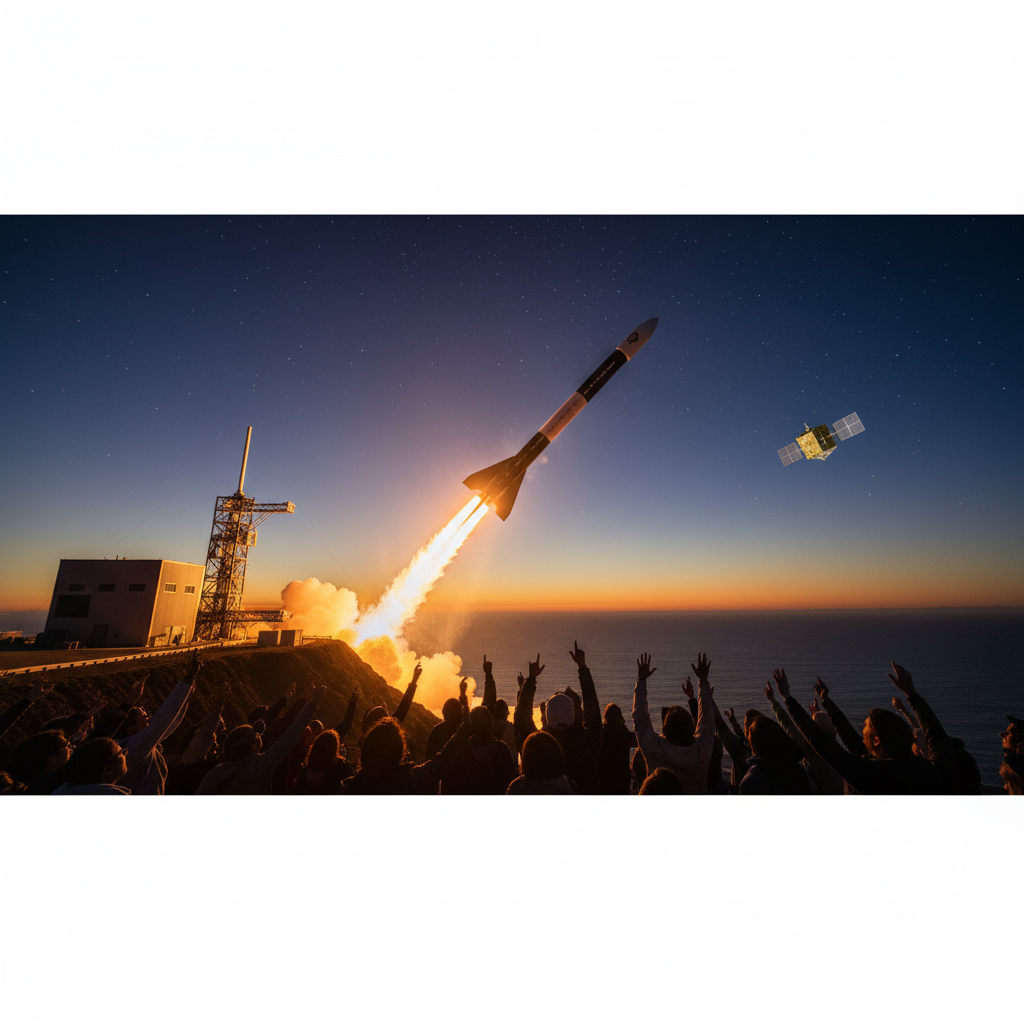
Rocket Lab completed its final scheduled 2025 Electron launch on Dec. 21, deploying QPS-SAR-15 for Japan-based iQPS and marking a record 21 Electron launches in 2025 with 100% mission success. The mission (F79) brings Rocket Lab’s total launches for iQPS to seven, with five additional Electron launches planned from 2026, and follows recent contract momentum including an $816M SDA award; the operational cadence and flawless reliability bolster backlog conversion prospects and could support near-term revenue growth and investor optimism for RKLB.
Market structure: Rocket Lab (RKLB) is the clear winner — 21 Electron launches and a 100% success rate in 2025 materially raise its credibility as the default small‑lift provider for SAR and national‑security constellations, improving pricing power for dedicated launches versus aggregated rideshares (likely mid‑teens percent premium). Suppliers (satellite buses, smallsat sensors) and range operators in NZ/US also benefit; pure‑play small‑lift competitors face pricing pressure and potential market-share loss. Cross‑asset: improved revenue visibility should modestly tighten RKLB credit spreads and compress equity IV after event-driven spikes; NZD may get a small tailwind vs USD on Kiwi economic activity narratives, commodities irrelevant.
Risk assessment: Tail risks include a major launch failure (single‑event revenue and reputational hit), Neutron program cost overruns/dilution, and US export/regulatory shifts that could cut defense revenue — each could wipe out 30–60% of market cap in adverse scenarios. Near term (days) expect volatility around early‑Q1 2026 launch and upcoming earnings; short term (weeks/months) backlog conversion and SDA milestone updates matter; long term (years) hinge on Neutron commercialization and margin expansion. Hidden dependencies: customer concentration (iQPS/SDA), pad throughput limits and supply‑chain bottlenecks that cap cadence.
Trade implications: Tactical: establish a modest long in RKLB sized to 2–3% of equity risk budget with a 6–12 month horizon to capture backlog conversion; hedge with protective options (see below). Use a defined‑risk options approach — buy 6‑month call spreads to participate upside while selling wings to fund cost, and buy short‑dated puts into major milestone dates. Pair trade: long RKLB vs short a broad aerospace/defense ETF if you want to isolate growth vs legacy‑prime exposure; trim on +30–50% rally or if Q1 2026 launch slips.
Contrarian angles: The market may be underestimating dilution risk from Neutron and the incremental OPEX needed to sustain 20+ annual launches; current sentiment (large one‑day moves) risks overpricing execution continuity. Historical parallels: past space‑tech re‑ratings (post‑execution rallies) have reversed when funding needs emerged — cap raise within 12 months would compress returns. Unintended consequence: higher cadence strains manufacturing and increases cash burn, so buy conviction only with contingency hedges and strict stop rules.
AI-powered research, real-time alerts, and portfolio analytics for institutional investors.
Request DemoOverall Sentiment
strongly positive
Sentiment Score
0.72
Ticker Sentiment
