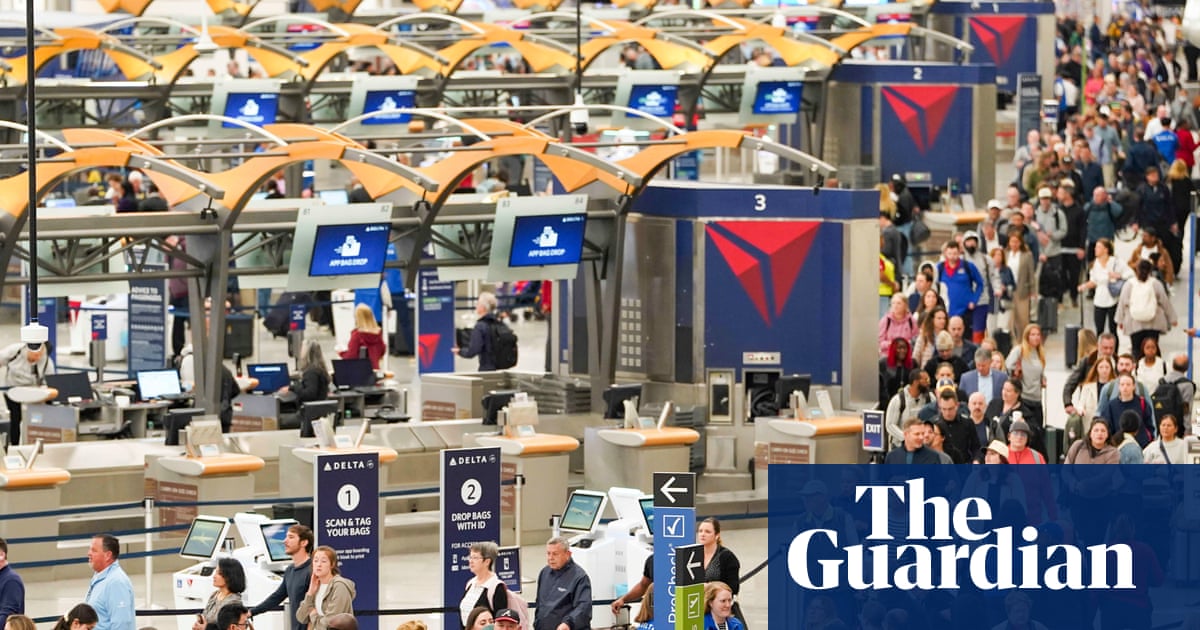
Nearly 500 TSA officers have quit since the Department of Homeland Security shutdown began last month, producing multi-hour security lines (reported 3–5+ hour waits) and widespread missed flights. Consumers are incurring direct rebooking costs (example: >$600) and reducing discretionary air travel amid higher fuel/energy prices, while at least one traveler cited a ~5% paper loss in savings—a combination likely to pressure airline, airport, and travel-leisure revenues and raise regulatory/reputational risks for DHS/TSA in the near term.
A security-staffing shock at airports creates a non-linear reallocation of passenger flows that benefits point-to-point, secondary-airport operators and ground-transport substitutes while imposing outsized short-term costs on hub-dependent legacy carriers and airport concession ecosystems. Expect unmanaged IRROPS at hub airports to force discretionary passengers into alternatives (drive, regional airports, low-cost carriers) over weeks — a behavior change that compresses near-term yields for hub carriers but increases utilization and pricing power for rental fleets and intercity bus/coach providers.
Operationally, airlines will respond by increasing buffer capacity (extra crews, recovery flights) and pushing change/rebooking fees into the market; that reduces variable margin on incremental passengers and elevates short-term opex by a material amount (tens of millions per large network carrier per peak week). Airports themselves face concentrated revenue hits in parking, concessions and parking-operator contracts while smaller airports with spare processing capacity can capture diverted traffic and ancillary revenue quickly.
Key catalysts that would reverse the flow are administrative fixes or temporary pay/hazard adjustments for screening staff (days–weeks), or legislative funding fixes (weeks–months). The tail risk is a multi-month reputational hit that shifts a measurable slice of leisure trips permanently from air to road for price- and convenience-sensitive cohorts, altering seasonal demand curves. Contrarian view: the market may underprice airlines’ ability to monetize chaos through repricing, fee collection and capacity discipline; therefore, short-term dislocations could overstate long-term structural loss for majors while understating the cyclicality and fleet-capex constraints limiting rental-car upside.
AI-powered research, real-time alerts, and portfolio analytics for institutional investors.
Request DemoOverall Sentiment
strongly negative
Sentiment Score
-0.65
