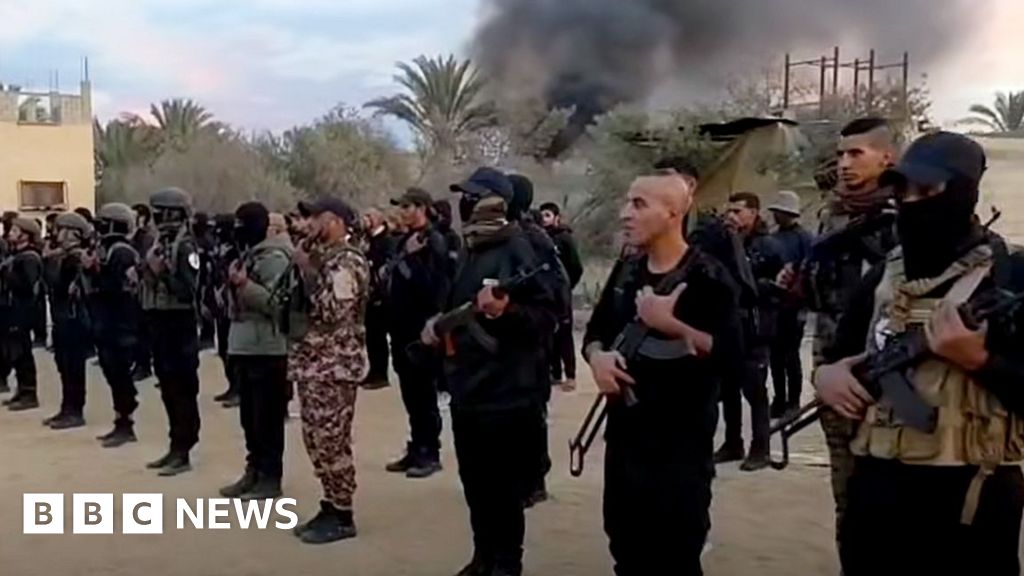
A patchwork of anti-Hamas militias has emerged inside the roughly 53% of Gaza currently under Israeli control, including family-based groups, criminal gangs and small militias that some leaders say coordinate with or receive support from Israel and possibly elements of the Palestinian Authority; Israeli Prime Minister Netanyahu has acknowledged backing some of these groups but they are not part of the US peace plan’s proposed International Stabilisation Force or newly trained Palestinian police. Militia leaders claim discussions with US representatives and coordinate logistics with Israel, while reports link some groups to looting and extremist ties and many Gazans reject them as illegitimate, creating local tensions. For investors and policymakers this fragmentation raises material governance and security risks for any post-conflict reconstruction and stabilization—complicating integration into formal security structures, increasing the likelihood of persistent violence or splintering authority, and creating the risk that armed proxies could turn against their backers, undermining the international peace plan.
A fragmented set of anti-Hamas militias has emerged inside the roughly 53% of Gaza currently under Israeli control, including groups led by Yasser Abu Shabab and Hossam al-Astal; Israeli Prime Minister Benjamin Netanyahu has acknowledged backing some militias while the groups claim coordination with Israeli logistics and, in some cases, contacts with US representatives though a US official said there was "nothing to announce." Astal's militia is described as small—"maybe tens of fighters"—running a well-supplied tent city housing "tens of families," and some groups face allegations of looting aid and ties to extremist actors, heightening local mistrust.
The US peace plan cited in the article proposes an International Stabilisation Force and a newly trained Palestinian police force, but these militias are not formally included and the Palestinian Authority has publicly rejected blanket integration of such fighters, creating a governance gap. Domestic voices in Gaza label the groups as criminal or traitorous, and reports of coordination with Israeli forces introduce political friction between Israel, the PA and international actors.
Analysts quoted in the piece warn of a historical risk that armed proxies could turn on their backers, likening the dynamic to past proxy failures, meaning these groups could complicate disarmament of Hamas, obstruct an orderly handover to technocratic governance, and increase the security and political risk of any reconstruction or aid operations in Gaza.
AI-powered research, real-time alerts, and portfolio analytics for institutional investors.
Request DemoOverall Sentiment
moderately negative
Sentiment Score
-0.50
