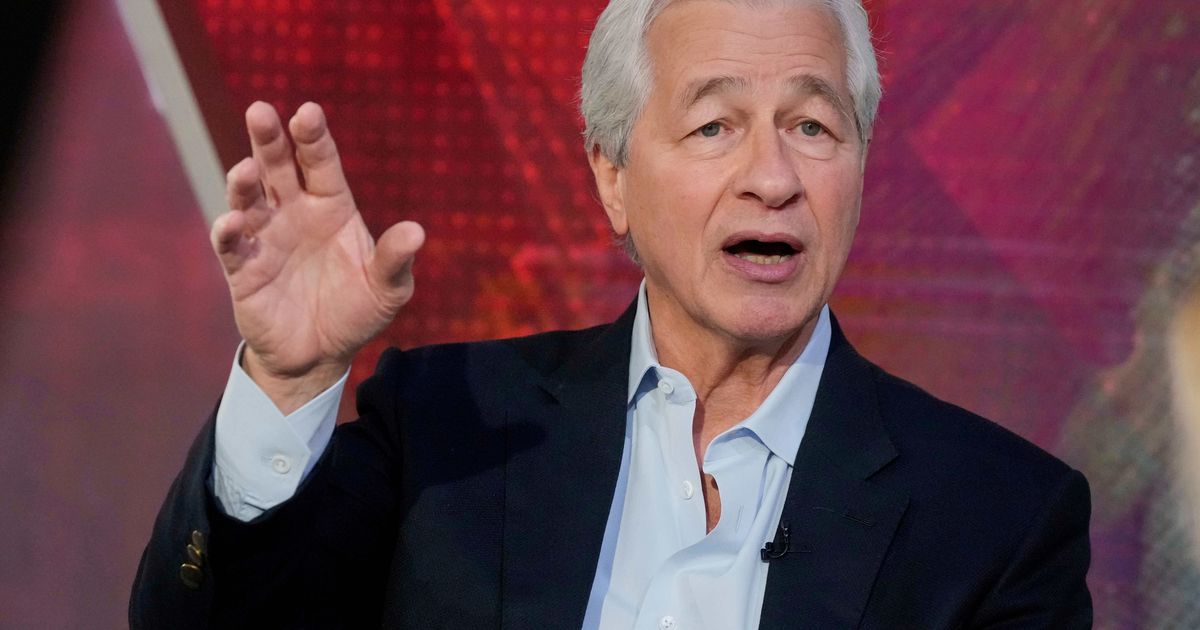
JPMorgan CEO Jamie Dimon warns that the Iran war could disrupt global energy and commodity markets, creating renewed upside inflation pressure that would raise gasoline and manufacturing costs and could force the Fed to keep rates higher for longer. He cites supply-chain vulnerabilities (shipbuilding, food, farming) but notes the U.S. economy remains generally resilient; monitor energy/commodity price moves and Fed messaging as potential triggers for broader market volatility.
A Middle East energy disruption propagates through the economy via three levers: immediate crude price shock, freight/insurance-driven supply delays, and asymmetric retail pass-through (fuel and diesel hit first). Empirically a sustained $10/bbl shock typically translates into ~0.15–0.30 percentage points added to core inflation over 6–12 months as transport and industrial input costs work through inventories and margins.
Secondary effects concentrate in the real-economy plumbing: higher freight and tanker rates (spot VLCC/SMALL MR rates can spike 20–60% in weeks) extend lead times, boost working capital needs for downstream manufacturers, and inflate agricultural and metal input costs with a 1–3 quarter lag. Financially, the fiscal/monetary response pathway is clear — persistent commodity-driven inflation increases the odds the Fed holds a higher-for-longer stance, which would bias 2–10y yields +25–75bp over 3–12 months and widen IG credit spreads by 20–60bps in stress episodes.
The market’s current pricing likely embeds only a near-term premium; tail outcomes (prolonged tanker-exclusion, choke-point escalation) remain low-probability but high-impact, creating asymmetric payoffs for option structures and pair trades. Conversely, a rapid coordinated SPR release or material non-OPEC supply response can unwind much of the move within 30–90 days — making time and size of exposures critical and arguing for defined-loss option overlays rather than unconstrained directional positions.
AI-powered research, real-time alerts, and portfolio analytics for institutional investors.
Overall Sentiment
neutral
Sentiment Score
-0.05
Ticker Sentiment
