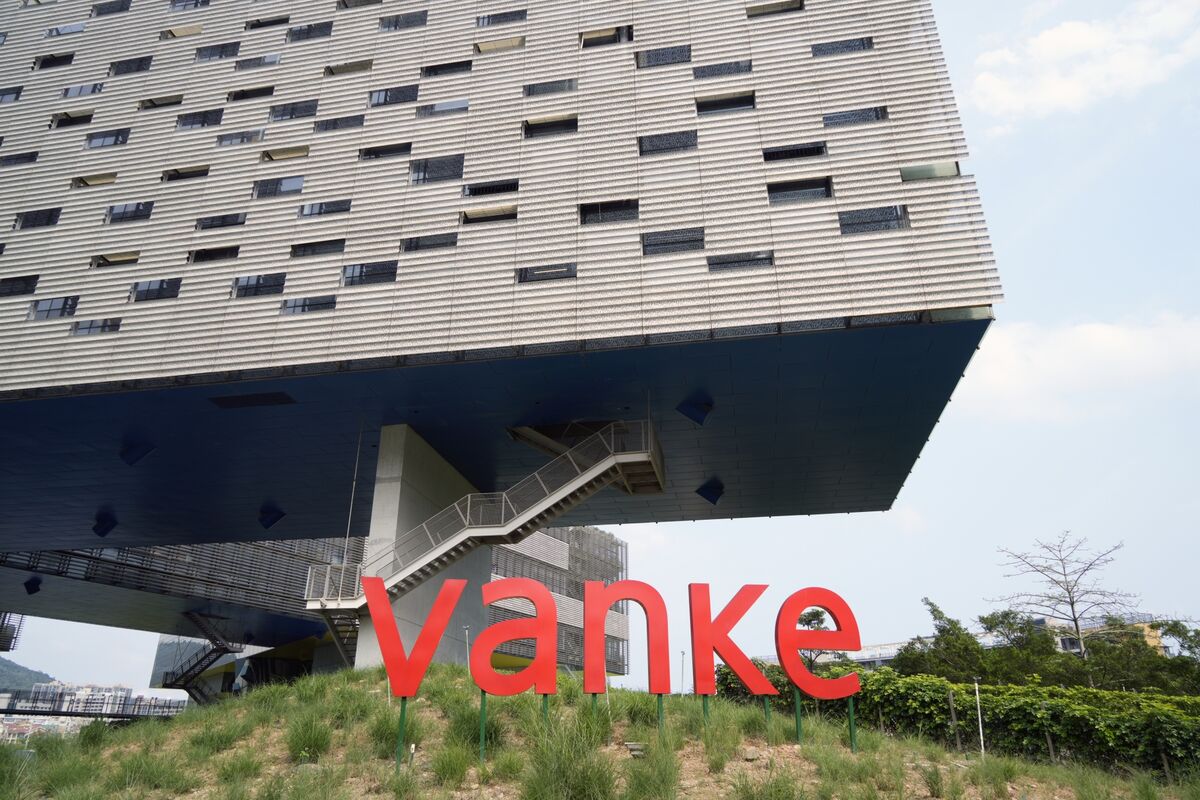
China property developer Vanke is seeking to delay a second onshore bond payment as its liquidity crisis intensifies, signaling escalating stress within the company and the broader real-estate sector. The move heightens credit-risk concerns for bondholders and lenders, likely widening spreads and increasing scrutiny of China property credits and related financial counterparties.
Market structure: The Vanke bond-delay signal accelerates differentiation across Chinese real estate — winners will be state-backed or cash-rich developers (e.g., 0688.HK China Overseas) and onshore sovereign creditors; losers are levered private developers and their unsecured bondholders, with credit spreads likely to widen another 200–500bp in weeks. Liquidity premium and secondary-market haircuts will rise, increasing funding costs and favoring buyers of discounted distressed paper and buyers of onshore government paper.
Risk assessment: Tail risks include contagion into local government financing vehicles and a 10–30% deeper local-home-price decline in lower-tier cities, which could prompt bank provisioning and tighten credit for 3–12 months; immediate risk is continued missed payments over the next 7–30 days. Hidden dependencies: land-sale revenue shortfalls and trust-product rollovers are second-order failure points that can trigger covenant breaches across corporate and municipal balance sheets. Catalysts to reverse: visible PBOC/State Council market-support within 2–8 weeks would sharply compress spreads; further large-scale missed coupons would worsen stress.
Trade implications: Favor long onshore safe paper and FX (buy CGBs/2–5yr onshore bonds and long USD/CNH) and short high-beta offshore property credits and equities (HK developers) for 1–6 month horizons. Use options to buy asymmetric protection: 3–6 month put spreads on FXI/HSI or single-name puts for tactically hedging equity exposure while selling nearer-term premium. Rebalance if PBOC liquidity injection >RMB300bn or if a major developer posts a definitive default.
Contrarian angles: Consensus underprices potential state-led consolidation: a policy-backed consolidation could leave a small number of state-favored developers with >50% market share in affordable/mid-tier segments over 12–24 months. The knee-jerk short in all China property may be overdone — selectively long 6–12 month bonds/convertibles of large SOE developers (0688.HK) trading >400bp tighter post-rescue could deliver outsized returns if support arrives. Historical parallels: 2014–15 property slowdowns recovered after targeted liquidity; however, current leverage is higher and triggers are bond-market driven, not mortgage-driven, so size positions accordingly.
AI-powered research, real-time alerts, and portfolio analytics for institutional investors.
Request DemoOverall Sentiment
strongly negative
Sentiment Score
-0.70
