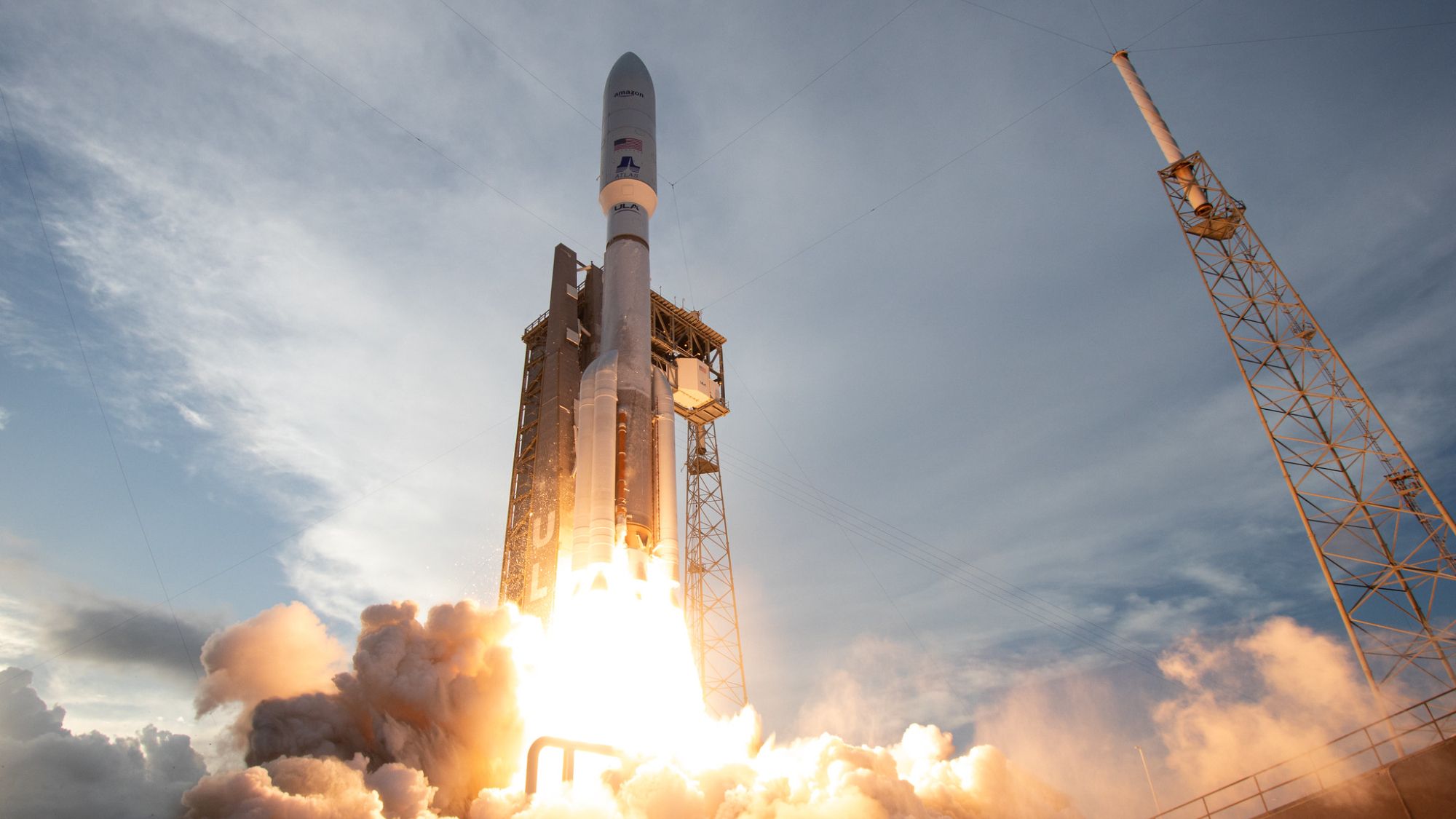
United Launch Alliance's Atlas V is scheduled to launch 27 Amazon Leo (formerly Project Kuiper) satellites from Cape Canaveral during a 29‑minute window opening at 3:49 a.m. ET on Dec. 15, marking the fourth Atlas V flight for the program and bringing Amazon's flown total to 153 satellites across six missions (plus an earlier two‑satellite test). Project Leo aims for roughly 3,200 LEO satellites delivered over more than 80 launches using a mix of providers (ULA’s Atlas V and upcoming Vulcan Centaur, SpaceX Falcon 9, Arianespace’s Ariane 6 and Blue Origin’s New Glenn), positioning it as a major capital‑intensive rival to SpaceX’s Starlink—which already operates over 9,000 satellites and has launched more than 3,000 in 2025—highlighting escalating competition, heavy launch cadence requirements and continued demand for diversified launch capacity.
United Launch Alliance's Atlas V is scheduled to loft 27 Amazon Leo (formerly Project Kuiper) satellites from Cape Canaveral in a 29‑minute window opening at 3:49 a.m. ET on Dec. 15, marking the fourth Atlas V flight for the program and bringing Amazon's flown total to 153 satellites across six missions plus an earlier two‑satellite test in October 2023. Atlas V is described as a venerable, highly dependable vehicle even as ULA phases it out in favor of Vulcan Centaur.
Project Leo aims for roughly 3,200 low‑Earth‑orbit satellites delivered over more than 80 launches using a mix of providers (ULA's Atlas V and Vulcan Centaur, SpaceX Falcon 9, Arianespace Ariane 6 and Blue Origin New Glenn), and SpaceX is already assisting as a launch provider. The article contrasts this plan with SpaceX's Starlink, which operates over 9,000 satellites and launched more than 3,000 satellites in 2025 alone, underscoring substantial competitive pressure and a need for high launch cadence.
The program's multi‑provider strategy reduces single‑launcher dependency but increases coordination and schedule risk, and the Atlas V→Vulcan transition introduces execution risk despite Atlas V's track record. For investors in AMZN, the Dec. 15 launch is an operational milestone rather than an immediate revenue inflection; consistent successful launches and steady deployment cadence will be the principal catalysts to narrow technical and commercial risk.
AI-powered research, real-time alerts, and portfolio analytics for institutional investors.
Request DemoOverall Sentiment
mildly positive
Sentiment Score
0.25
Ticker Sentiment
