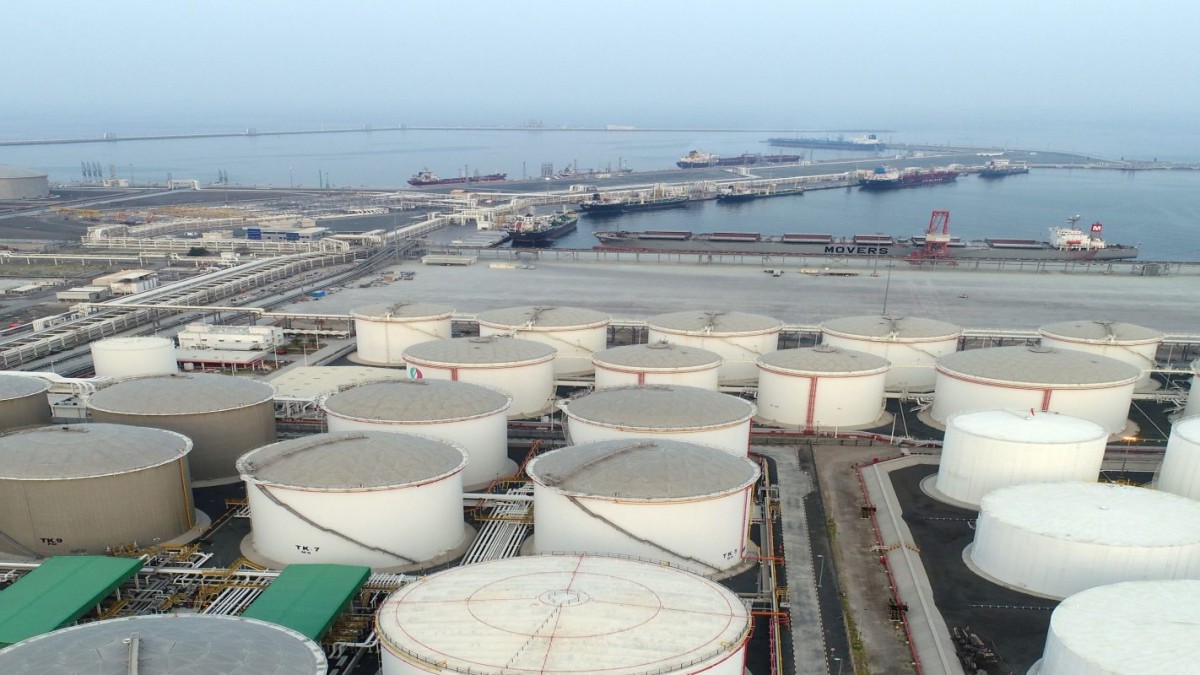
The Fujairah oil hub in the UAE has come under attack again amid the nine-week Strait of Hormuz closure, causing a fire and pushing oil prices higher. Fujairah is a critical export and bunkering node outside the chokepoint, with the ADCOP pipeline capable of roughly 1.5 million bpd nameplate and reportedly near 1.8 million bpd current capacity, but it cannot offset wider Middle East export disruption. The renewed threat to this key shipping lane raises geopolitical and supply-risk pressure on global energy markets, especially flows to Asia.
The market is still underpricing the difference between a temporary tanker-routing shock and a persistent physical-supply shock. Fujairah’s vulnerability matters less for barrels today than for optionality: once the “safe” bypass route is credibly threatened, Asia’s marginal buyers start paying up for nearby non-Middle East crude, and freight/dislocation spreads can widen faster than flat price. That favors Atlantic Basin exporters, floating storage economics, and owners of compliant tonnage, while penalizing any refinery or shipping model exposed to higher bunker costs and longer voyage times.
The second-order effect is on marine insurance and working capital, not just Brent. If vessel captains and insurers treat Fujairah as an extension of the conflict zone, effective capacity at the world’s main bunkering nodes tightens even without a formal blockade, forcing higher inventories and longer cash conversion cycles across the shipping chain. That is bullish for energy infrastructure with storage optionality and for commodity trading firms that can monetize location spreads; it is bearish for import-dependent Asian utilities and refiners that hedge less than a full quarter forward.
Catalyst risk is asymmetric over days, not months: every additional attack or credible claim around the east-coast UAE raises the probability of a broader shipping repricing, even if global supply is unchanged. The reversal case is not simply a ceasefire; it requires a durable restoration of insurer confidence and port operability, which usually lags headlines by several weeks. Consensus may be overfocusing on the oil price headline while missing that shipping and bunkering disruptions can outlast the initial spike and keep refined-product and freight markets elevated after Brent retraces.
AI-powered research, real-time alerts, and portfolio analytics for institutional investors.
Request DemoOverall Sentiment
strongly negative
Sentiment Score
-0.55
Ticker Sentiment
