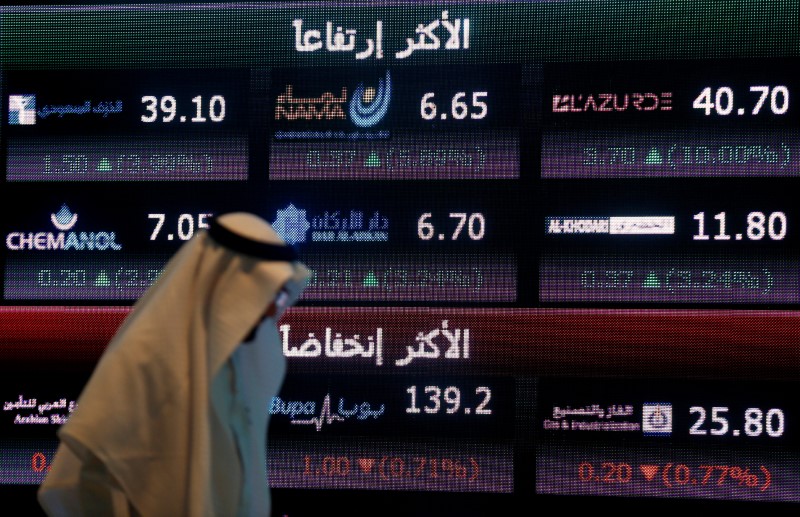
Saudi Arabia's Tadawul All Share fell 0.91%, with decliners outnumbering advancers 215 to 112 as weakness in Cement, Real Estate Development and Transport led the market lower. Crude oil rose 0.70% to $102.65 a barrel and Brent gained 1.87% to $110.19, while gold fell 1.37% to $4,580.66 and USD/SAR and EUR/SAR were essentially unchanged. The headline about Iran and a U.S. warship is geopolitical in nature, but the article's main content is a broad market wrap rather than a direct incident report.
The market is pricing an acute geopolitics premium, but the more interesting second-order effect is that the shock is showing up first in the Gulf’s risk-sensitive segments rather than in the obvious energy bellwethers. That usually means investors are still in the early innings of a repricing of regional transport, consumer, and real-estate cash flows, where even a small increase in shipping insurance, crew/security costs, or inbound tourism friction can compress margins faster than headline oil gains offset them. The oil move matters less for direction than for duration. A short-lived spike helps upstream cash flows, but if tensions persist it becomes a tax on import-dependent Asian refiners and a hidden tightening of global financial conditions via higher freight and input costs. That combination tends to favor volatility sellers in energy only after the first leg lower in risk assets, not immediately; right now, the cleaner expression is through relative losers in sectors with high operating leverage to regional stability. The contrarian read is that this may be an underpriced signal for a near-term insurance and defense-services bid, but an overpriced signal for a sustained crude breakout unless there is a confirmed supply disruption. The denials matter: absent physical damage or an actual chokepoint closure, markets usually fade these episodes within days, while the follow-through in Gulf equities can last weeks because foreign flows and local sentiment react slower than commodities. Net: the best risk/reward is not to chase broad energy beta, but to lean into dispersion trades between geopolitically exposed domestic cyclicals and beneficiaries of heightened security spending and pricing power.
AI-powered research, real-time alerts, and portfolio analytics for institutional investors.
Overall Sentiment
mildly negative
Sentiment Score
-0.12
