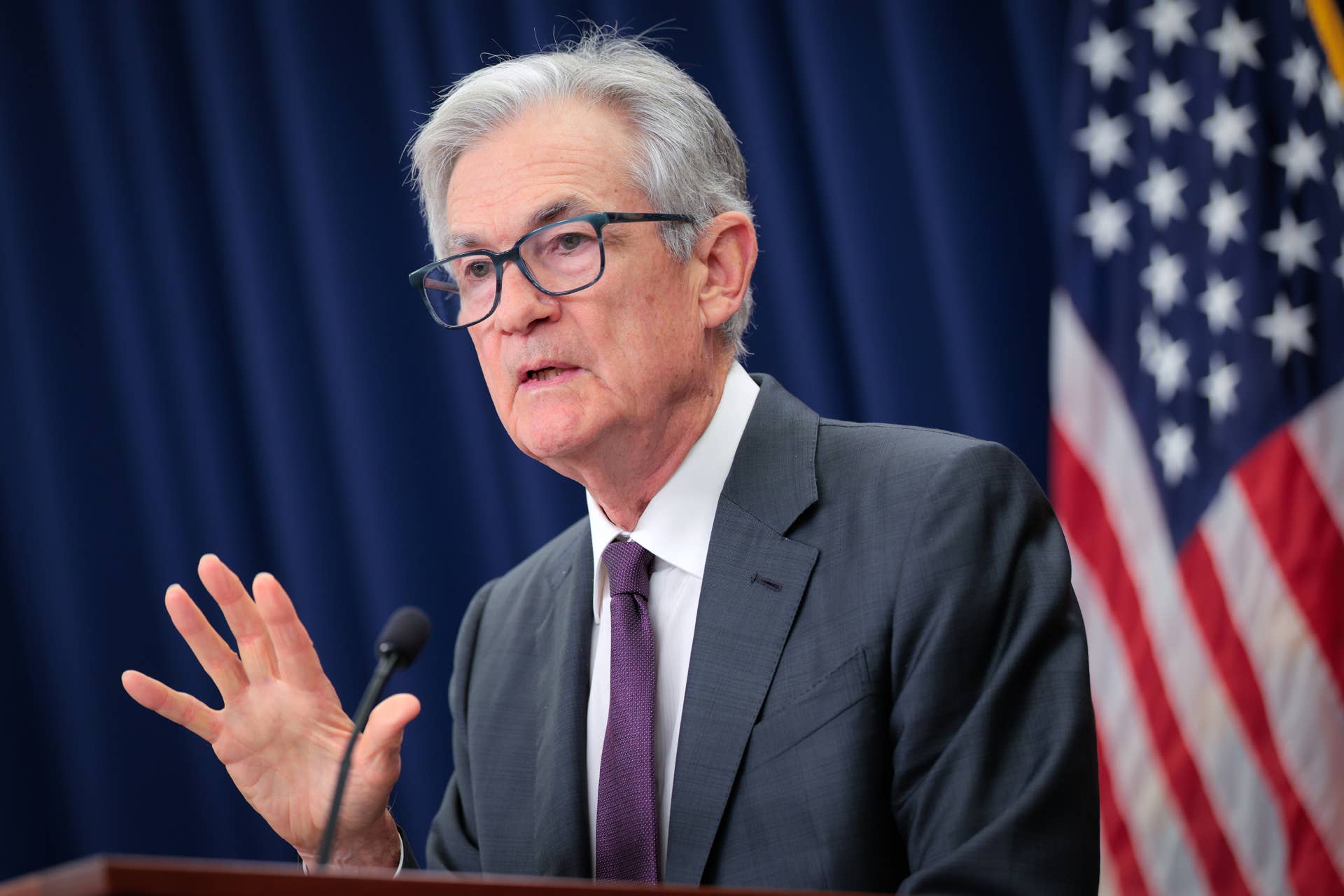
The Federal Reserve cut interest rates by a quarter-point, citing a weakening labor market and broader economic data. Fed Chair Jerome Powell stated that artificial intelligence is not the primary driver of current job market softness, instead attributing it to a 'perfect storm' of factors including weaker consumer spending, increased business investing, tepid economic sentiment, and tariffs. While the labor market shows declining job openings and negative sentiment, unemployment remains stable due to lower immigration and labor force participation, even as AI buildout contributes to strong GDP growth and selectively impacts areas like entry-level hiring.
The Federal Reserve's quarter-point interest rate cut signals a dovish response to a deteriorating economic outlook, primarily driven by a weaker labor market. Fed Chair Jerome Powell attributes this weakness not to artificial intelligence, but to a confluence of factors including softer consumer spending, tepid business sentiment, and the margin-compressing impact of tariffs on domestic suppliers, which has pushed many firms into a 'holding pattern'. This diagnosis is supported by data showing declining job openings, significant downward revisions to payrolls, and consumer sentiment on the job market at its lowest point since 2013. However, the labor market has not fully capitulated; unemployment remains grounded and layoffs have not accelerated, a condition Powell credits to structural factors like lower immigration and labor force participation rather than underlying economic strength. A key bifurcation is evident where the 'AI buildout' contributes significantly to GDP growth and capital spending, yet AI is simultaneously creating headwinds in specific labor segments. For instance, employment for workers aged 22-25 has fallen 13% since 2022 in fields susceptible to automation, indicating a targeted disruption even as the broader macroeconomic impact from AI is not yet the primary concern for the Fed. This complex environment, with conflicting signals from technology-led growth and broad-based consumer weakness, underpins the Fed's forecast for additional rate cuts into 2025.
AI-powered research, real-time alerts, and portfolio analytics for institutional investors.
Overall Sentiment
moderately negative
Sentiment Score
-0.50
