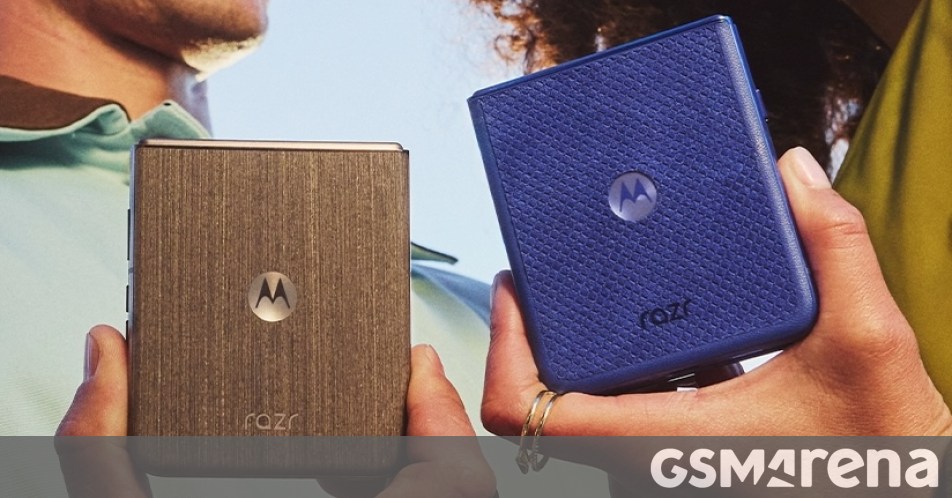
Motorola’s Razr 70 series is set to debut on April 29, with leaks indicating the Razr 70 Ultra will ship with a Snapdragon 8 Elite, a 5,000mAh battery, dual 50MP cameras, a 4-inch cover display, and a 7-inch inner screen. The standard Razr 70 is rumored to include a MediaTek Dimensity 7450X, dual 50MP cameras, a 4,800mAh battery, a 6.9-inch inner display, and a 3.63-inch cover panel. The phones will be marketed as Razr 2026 and Razr Ultra 2026 in the US, but the article is primarily a pre-launch product leak with limited market-moving impact.
This is less about handset volume and more about Motorola proving it can keep premium foldables relevant without a full platform reset. The mix shift toward higher storage tiers and premium materials suggests management is trying to defend ASPs even if unit growth stays modest; that matters because foldables are still a halo category where gross margin expansion can offset lackluster category penetration. The second-order implication is that component suppliers with exposure to hinge, cover glass, and OLED flexibility should see a steadier demand profile, but the real economic leverage likely sits with the chipset and display ecosystem rather than the branded handset seller. Competitive pressure is more interesting than the launch itself. If Motorola can sustain a credible premium line at a lower price point than the category leader, it forces competitors to defend share with either discounting or faster feature cadence, which can compress margins across the Android premium tier over the next 2-3 quarters. The product also reinforces a broader consumer-electronics pattern: foldables are moving from novelty to segmentation, where differentiated colorways and industrial design are increasingly used to harvest fashion-driven demand rather than purely spec-driven demand. The key risk is that foldables remain a status purchase, not a repeat-purchase habit; if launch-day excitement does not convert into sustained sell-through within 30-60 days, the market will quickly discount the launch as inventory channel stuffing. Another reversal catalyst is any sign of battery life, crease durability, or repair-cost issues, which would re-open the affordability-versus-reliability debate and slow category adoption. In that case, suppliers exposed to foldable-specific BOM content would underperform despite apparently strong launch optics. Consensus is probably overestimating the category’s near-term TAM and underestimating the branding value of premium color/material execution. The sharper trade is not a broad foldables basket bet, but a selective long on the enablers of premium Android design quality, paired against names whose valuation already implies rapid foldable share gains. The market tends to chase launch headlines, but the real signal will be preorder conversion and channel inventory commentary over the next 1-2 earnings cycles.
AI-powered research, real-time alerts, and portfolio analytics for institutional investors.
Request DemoOverall Sentiment
neutral
Sentiment Score
0.12
