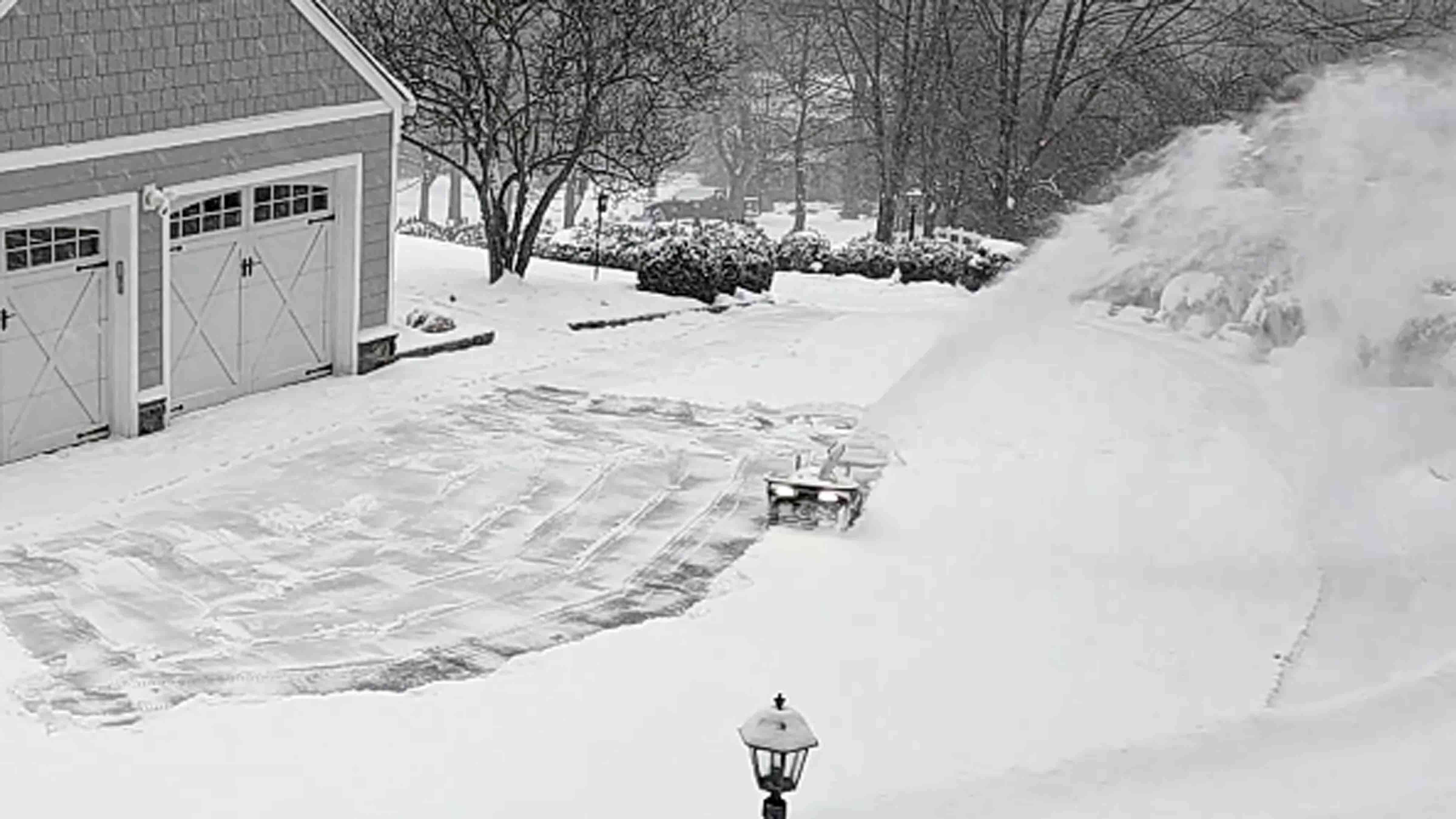
A user report notes the Yarbo robotic snow blower completed a first pass of a driveway and returned to its charging dock, with plans to run continuously throughout an ongoing storm. The item provides a small operational validation of autonomous snow-clearing hardware in adverse weather but contains no financial metrics or company guidance, implying negligible immediate market impact while being a minor signal of consumer-level field testing for home robotics.
Market structure: Short, intense winter storms function as demand accelerants for consumer snow-management automation and adjacent retail channels. Near-term winners: big-box home-improvement retailers (NYSE:HD, LOW) and outdoor-power OEMs (NYSE:TTC, OMX:HUSQ-B) that can turn inventory quickly; battery and sensor suppliers (ALB, LIT, NXPI/STM) capture component share. Pricing power is modest—robots command premium margins (estimated 10–25% higher ASPs than analog gas units) but adoption remains seasonal and replacement-driven, capping upside in any single season.
Risk assessment: Tail risks include product recalls, battery fires, or liability suits that could wipe out small consumer-robot players (0.1–1% probability of severe reputational event annually but >30% downside on affected names). Immediate (days): retail sales spike; short-term (weeks–months): inventory depletion and restock discounts; long-term (2–5 years): adoption growth depends on repeated storm frequency and price declines (~15–25% YoY needed to hit mainstream TAM). Hidden dependencies: concentrated semiconductor/battery supply (single-supplier concentration >20% increases delivery risk).
Trade implications: Tactical trading favors short-dated retail exposure into storms and longer holds on OEMs/component suppliers. Example: buy 30-day call spreads on HD/LOW into a 7–14 day major storm window sized to 0.5–1% portfolio risk; establish 1–2% core longs in TTC and 0.5–1% tactical lithium exposure (ALB or LIT) on 3–12 month horizon. Hedge with 2–3% cash or short-dated puts on small-cap robotics names and cap positions if the next 30-day sales cadence disappoints by >15% versus prior 5-year winter average.
Contrarian angles: The market understates regulatory and insurance cost risk—if one high-profile injury/claim occurs, underwriting costs for homeowner robot liability could rise 200–400 bps, compressing margins. Conversely, consensus underprices the compounding effect of convenience: if adoption accelerates to 20%+ YoY for two consecutive years, mid-cap OEMs (TTC, HUSQ-B) could rerate by 15–30%. Watch for IPO/activity in robotics startups (likely overhyped) and be prepared to short valuations that assume >30% immediate TAM penetration.
AI-powered research, real-time alerts, and portfolio analytics for institutional investors.
Request DemoOverall Sentiment
neutral
Sentiment Score
0.05
