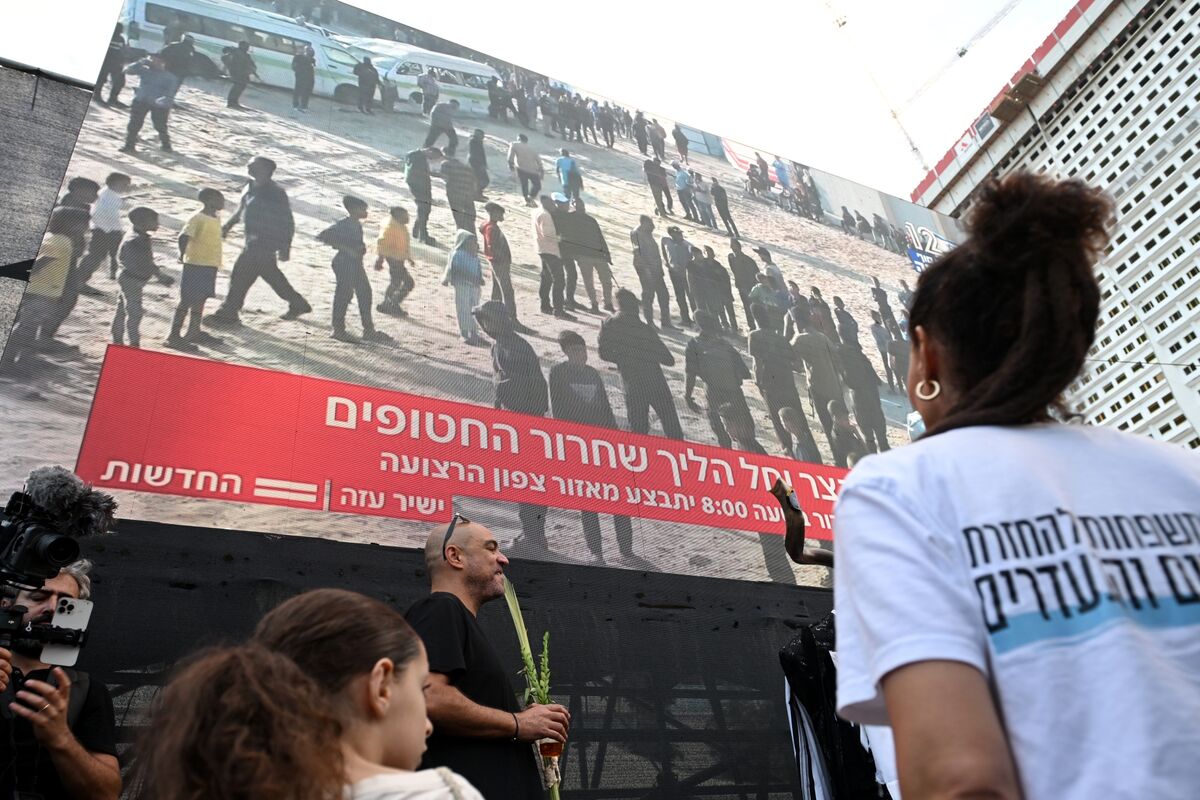
Hamas has released Israeli hostages as part of a Gaza agreement, secured through indirect negotiations brokered by the US, Egypt, Qatar, and Turkey, implementing a 20-point peace plan previously unveiled by Trump. This significant geopolitical development could influence regional stability and investor risk assessments.
Hamas has released Israeli hostages as part of a Gaza agreement, a significant geopolitical development stemming from indirect negotiations. These talks were brokered by the US, Egypt, Qatar, and Turkey, leading to the implementation of a 20-point peace plan initially unveiled by Trump and announced with Israeli Prime Minister Benjamin Netanyahu.
This event is categorized under 'Geopolitics & War' and carries a 'moderately positive' sentiment score of 0.55, indicating a favorable shift in the regional outlook. The associated market impact score of 0.65 suggests a notable potential for influencing broader market conditions and investor risk assessments.
While no specific tickers are identified in the article, such de-escalation typically reduces perceived risk premiums across global markets, particularly those sensitive to Middle Eastern stability. This could foster a more stable environment for international trade and investment flows, with the neutral tone of the reporting emphasizing the factual nature of this development.
AI-powered research, real-time alerts, and portfolio analytics for institutional investors.
Request DemoOverall Sentiment
moderately positive
Sentiment Score
0.55
