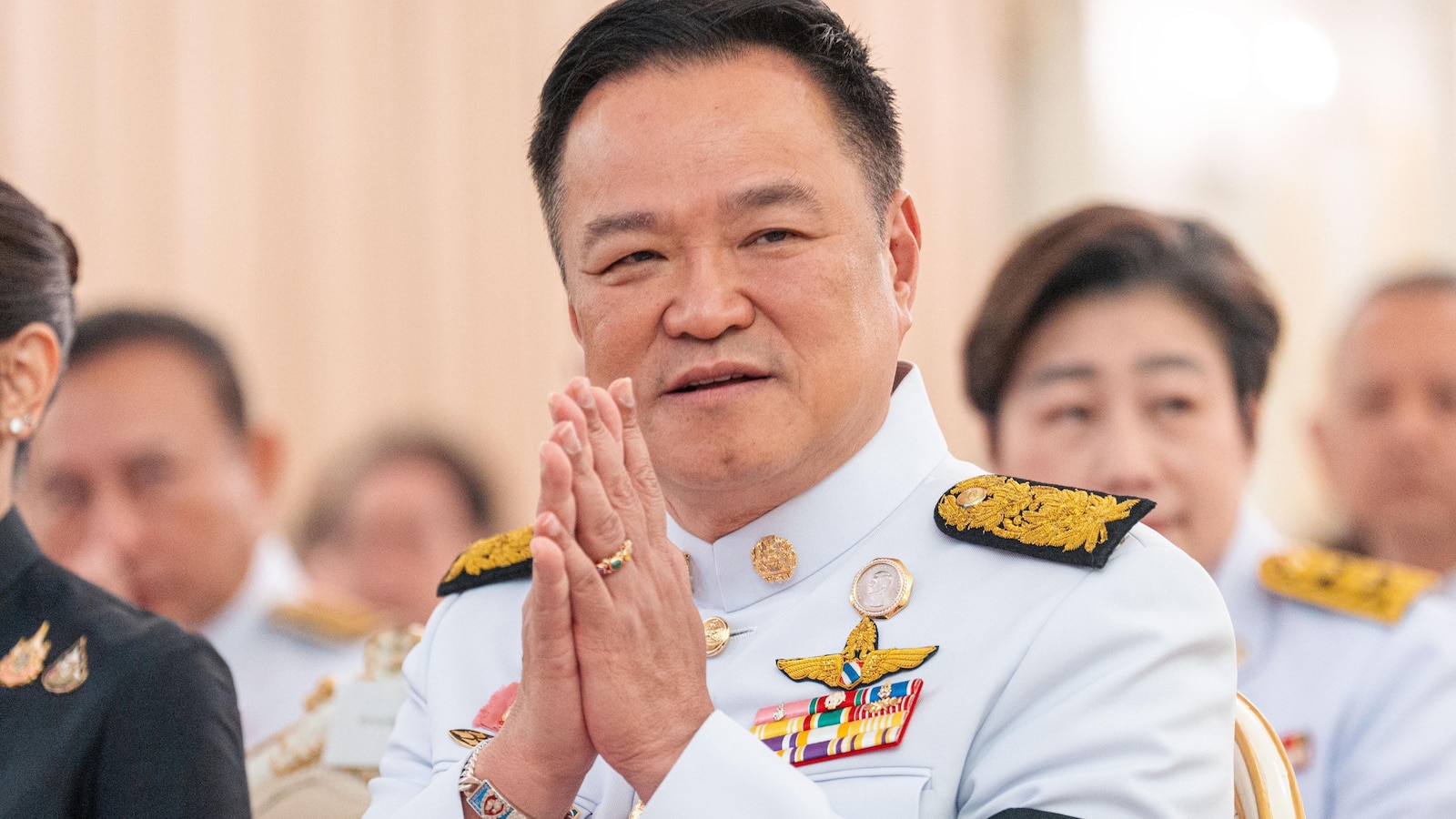
Thailand’s parliament was dissolved Friday after Prime Minister Anutin Charnvirakul, who has led a caretaker government for three months, received royal assent to call new elections to be held 45–60 days later; as caretaker he cannot approve a new budget. The move appears aimed at head‑off a threatened no‑confidence vote after MPs from Anutin’s Bhumjaithai Party supported a constitutional amendment that the main coalition partner, the progressive People’s Party, said violated their agreement for a referendum on a new constitution. The dissolution comes amid renewed, deadly border fighting with Cambodia that has displaced hundreds of thousands and allowed Anutin to take an aggressive, nationalistic stance; the U.S. president has previously threatened to withhold trade privileges to force a ceasefire and has warned that imposition of tariffs could further damage Thailand’s fragile economy.
Thailand’s House of Representatives was formally dissolved Friday after Prime Minister Anutin Charnvirakul received royal assent, triggering elections to be held 45–60 days from publication in the Royal Gazette and placing Anutin in a caretaker role that cannot approve a new budget. Anutin has held the premiership for three months following Paetongtarn Shinawatra’s one-year tenure, and the dissolution follows a threatened no-confidence motion tied to a dispute with the People’s Party over a promised constitutional referendum.
The immediate political catalyst was disagreement after Bhumjaithai MPs backed a constitutional amendment the People’s Party viewed as violating their September agreement; the People’s Party, which holds the largest number of House seats, remains the principal challenger and seeks a constituent assembly-led rewrite. The move is therefore aimed at neutralizing parliamentary pressure ahead of a vote and preserving political leverage into the election period.
Concurrent geopolitical risk is material: renewed large-scale fighting with Cambodia has killed about two dozen people and displaced hundreds of thousands, while the U.S. (per the article) has previously and reportedly may again threaten to withhold trade privileges or impose tariffs. The provided signals show a moderately negative sentiment (–0.5) and modest market-impact score (0.45), reflecting elevated short-term political, fiscal and trade-policy uncertainty that can pressure Thai growth and risk assets until a ceasefire and post-election clarity are achieved.
AI-powered research, real-time alerts, and portfolio analytics for institutional investors.
Request DemoOverall Sentiment
moderately negative
Sentiment Score
-0.50
Ticker Sentiment
