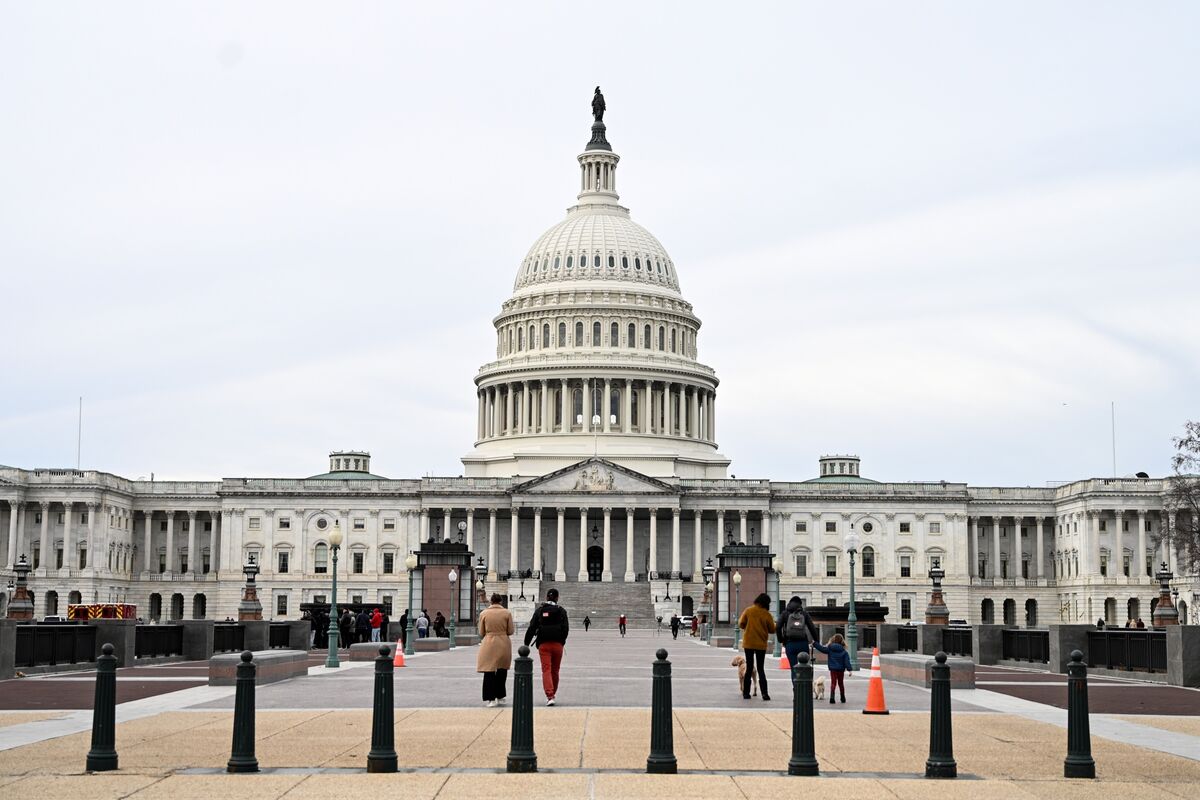
A coalition of tech companies, supported by the White House AI chief, failed to secure inclusion of a federal preemption of state AI laws in the must-pass defense bill after House Majority Leader Steve Scalise said the defense bill "wasn't the best place" for such a provision. The setback leaves the prospect of a patchwork of state AI regulations intact and raises the prospect that industry and the administration will seek alternative legislative vehicles to achieve federal preemption, a development that preserves regulatory uncertainty for U.S. technology firms.
Market structure: Failure to secure federal preemption keeps the U.S. in a likely multi-jurisdictional regulatory regime, which raises barriers to entry and benefits large cloud/AI incumbents (MSFT, GOOGL, AMZN, META, NVDA) over small pure‑play AI vendors (e.g., C3.ai) across a 6–24 month horizon. Pricing power shifts toward firms that can absorb compliance costs and standardize tooling; expect consolidation in enterprise AI procurement and incremental margin pressure for smaller vendors. Cross-asset: expect a modest rise in equity volatility for AI names, modest safe‑haven demand into Treasuries on legislative uncertainty (basis moves of 5–15 bps possible in short windows), and limited commodity impact except for sustained GPU demand supporting NVDA fundamentals.
Risk assessment: Tail risks include aggressive state laws fragmenting data flows (high impact, low prob, 12–36 months) or a sudden federal preemption pass that abruptly benefits incumbents (catalyst risk). Short-term (days–weeks) market moves will be driven by headline risk around must‑pass bills; medium term (3–12 months) is regulatory rollout and vendor contract churn. Hidden dependencies: enterprise procurement cycles (often 6–18 months) and cloud provider policy changes; geopolitics (China export controls) can amplify supply shocks to chips. Key catalysts: committee markups, state ballot measures, and large vendor guidance updates.
Trade implications: Favor long large-cap cloud/AI incumbents and enterprise security/GRC vendors that sell governance tools; short/sell exposure to small/mid-cap pure-play AI vendors with concentrated customer bases. Use options to express asymmetry: buy calls on incumbents into quarter‑end rebalancing windows and buys puts as hedges on pure‑plays around 3‑month legislative windows. Rotate +150–300 bps into XLK/QQQ over 1–3 months and into CRWD/OKTA for 3–12 months to capture compliance spend.
Contrarian angles: Consensus frames this as a loss for big tech, but the patchwork regime is more likely to entrench incumbents by raising compliance costs for new entrants (GDPR analogue). Market may underprice the opportunity for governance/security vendors who could see 20–50% incremental TAM expansion over 12–24 months. Unintended consequence: state rules could accelerate demand for standardized cloud controls, increasing stickiness of enterprise contracts and favoring CAPEX heavy providers (cloud + GPU suppliers).
AI-powered research, real-time alerts, and portfolio analytics for institutional investors.
Request DemoOverall Sentiment
mildly negative
Sentiment Score
-0.25
