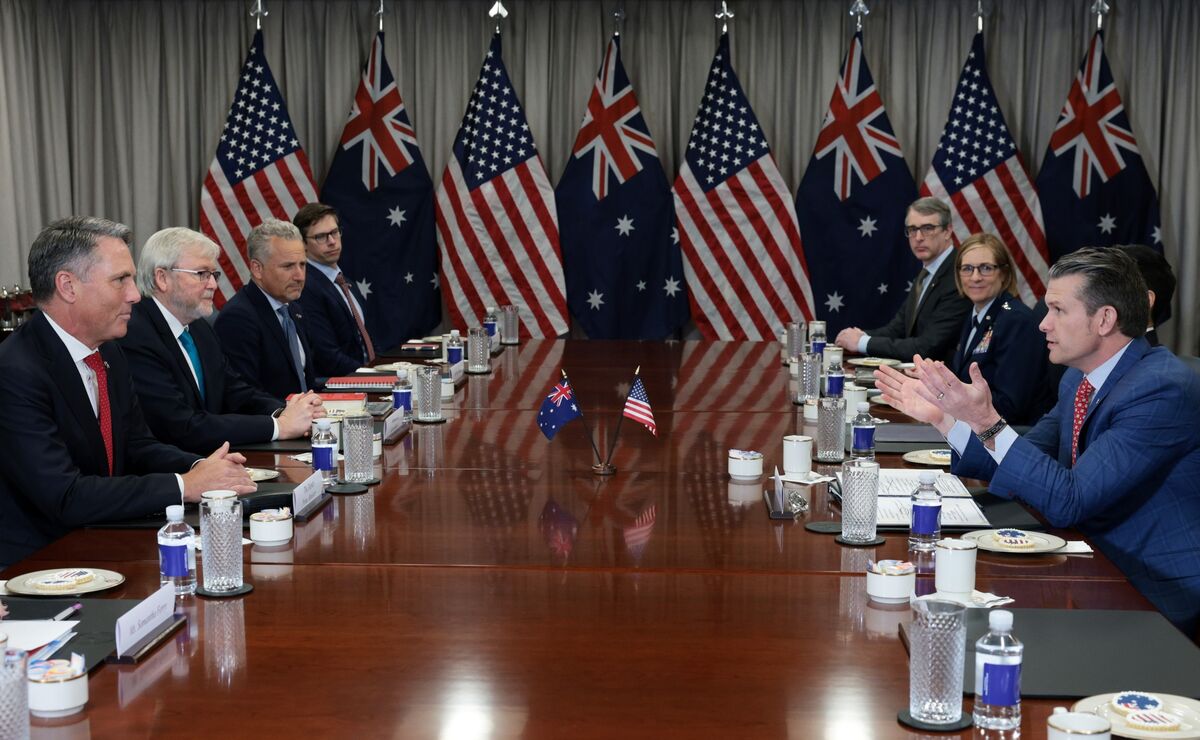
U.S. Secretary of Defense Pete Hegseth has formally requested that Australia increase its defense spending to 3.5% of GDP, a significant increase from Australia's current trajectory of 2.4% by the mid-2030s. The request was made during Hegseth's meeting with Defence Minister Richard Marles on Friday, with Hegseth also urging other U.S. partners in Asia to boost defense spending to prepare for potential Chinese aggression.
The United States has formally requested Australia to increase its defense spending to 3.5% of GDP, a significant uplift from Australia's current trajectory of reaching 2.4% by the mid-2030s. This request, delivered by US Secretary of Defense Pete Hegseth to Australian Defence Minister Richard Marles, reflects a broader US strategy to encourage Asian allies to bolster their defense capabilities, with Hegseth advocating for spending towards 5% of GDP due to concerns over a potential Chinese invasion of Taiwan. This development signals a substantial potential shift in Australian fiscal priorities, which could necessitate significant budgetary reallocations and impact national economic planning. The associated mildly negative sentiment and defensive tone, coupled with a moderate market impact score of 0.5, underscore the geopolitical tensions and the considerable financial implications of such a policy change, impacting themes of Geopolitics & War, Infrastructure & Defense, and Fiscal Policy & Budget.
AI-powered research, real-time alerts, and portfolio analytics for institutional investors.
Request DemoOverall Sentiment
mildly negative
Sentiment Score
-0.30
