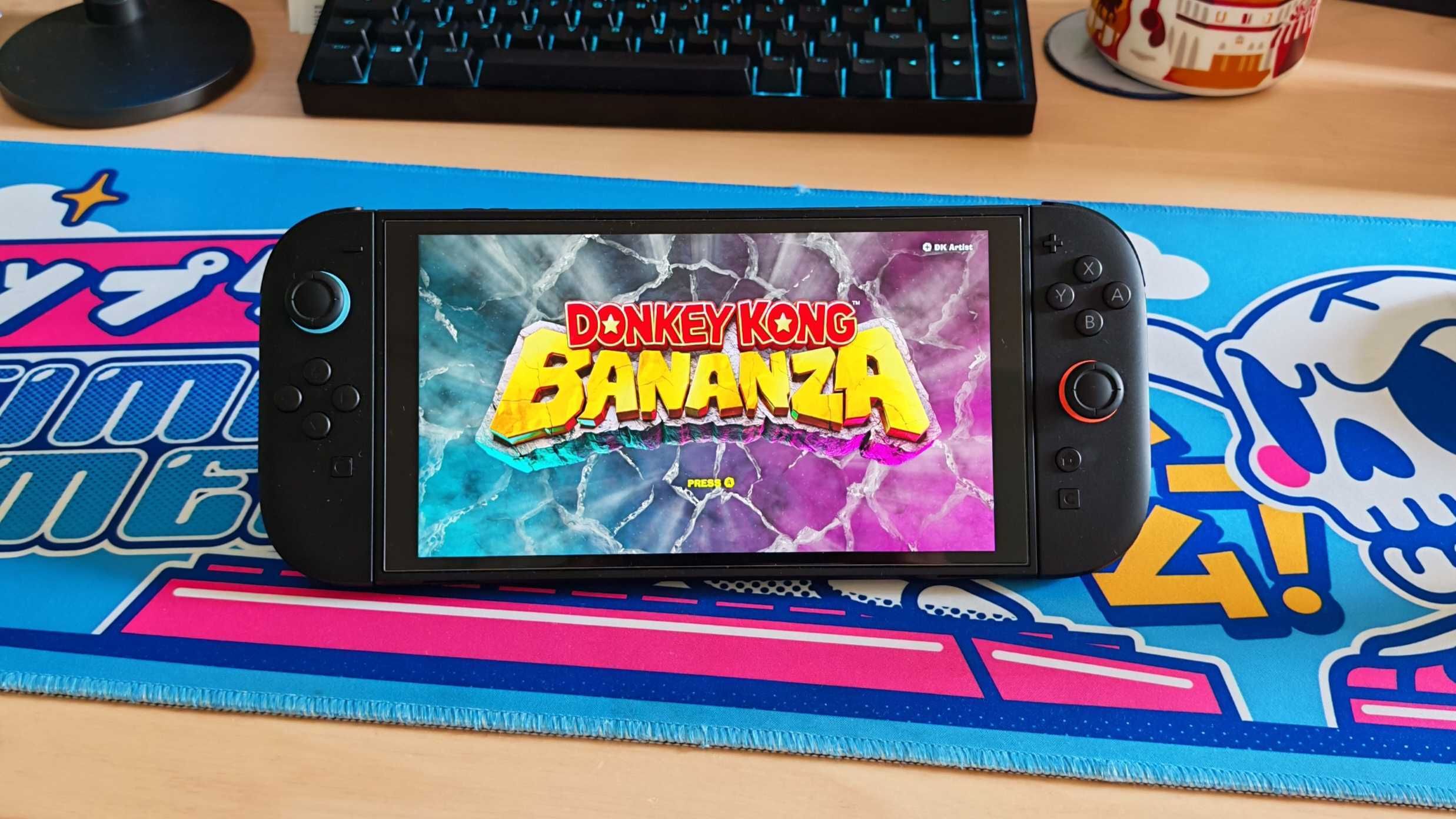
Nintendo launched the Switch 2 on June 5, 2025, and early indicators point to promising hardware sales and a strong launch lineup — including Mario Kart World and significant third-party releases such as Cyberpunk 2077: Ultimate Edition — which are driving consumer uptake. Risks to execution have emerged, however: inconsistent paid upgrade offerings for legacy titles and delays of high-profile ports (Borderlands 4, Elden Ring: Tarnished Edition pushed into 2026) highlight potential hardware/porting limitations even as a substantial slate of third-party and first-party titles remains scheduled to sustain momentum.
Market structure: A strong Switch 2 launch shifts near-term share toward console-first ecosystems and benefits upstream semiconductor and memory suppliers. Expect 6–12 month revenue upside concentrated in Nintendo (NTDOY/7974.T) and component vendors if sell-through exceeds 5–10M units in year one; conversely handheld-PC makers and niche portable hardware entrants face compression. Pricing power for Nintendo on first-party bundles and paid upgrades supports higher ASPs but weakens PC/mobile cross-sell for peers.
Risk assessment: Tail risks include major third-party ports failing performance (quality-driven returns/patch costs), component supply shocks (memory price spikes >20%), and a content drought that forces guidance cuts; such events could erase 20–30% of near-term upside. Immediate (days–weeks): market reaction to launch-week sell-through; short-term (1–3 months): Q/Q guidance updates and reported delays; long-term (6–24 months): software pipeline and IP refresh cadence. Hidden dependencies: supplier mix (NVIDIA vs custom silicon) and paid-upgrade consumer acceptance.
Trade implications: Direct plays are long NTDOY (hardware/software attach) and selective longs in NVDA and MU for SoC/memory exposure, with 6–12 month horizons. Use pair trades to long NTDOY and short TTWO (Take-Two) for relative alpha given TTWO exposure to delayed Borderlands; implement options (3–6 month call spreads on NVDA, put spreads on TTWO) to control cost. Rotate 1–3% portfolio weight from pure PC gaming peripherals into semiconductors and consumer electronics retailers benefiting from console accessories.
Contrarian angles: Consensus anxiety about Switch 2 performance may be overdone — Nintendo historically monetizes software lifecycles and IP longevity, so market could underprice multi-year attach rates; the bigger risk is pipeline cadence, not hardware. Historical parallel: original Switch overcame weaker silicon by unique form factor and software; if Switch 2 keeps strong exclusives, underwriters of small-cap handhelds and speculative retailers may be mispriced to downside. Watch for unexpected upside if 3rd-party ports perform well, which would be a catalyst for valuation rerating.
AI-powered research, real-time alerts, and portfolio analytics for institutional investors.
Request DemoOverall Sentiment
mildly positive
Sentiment Score
0.32
Ticker Sentiment
