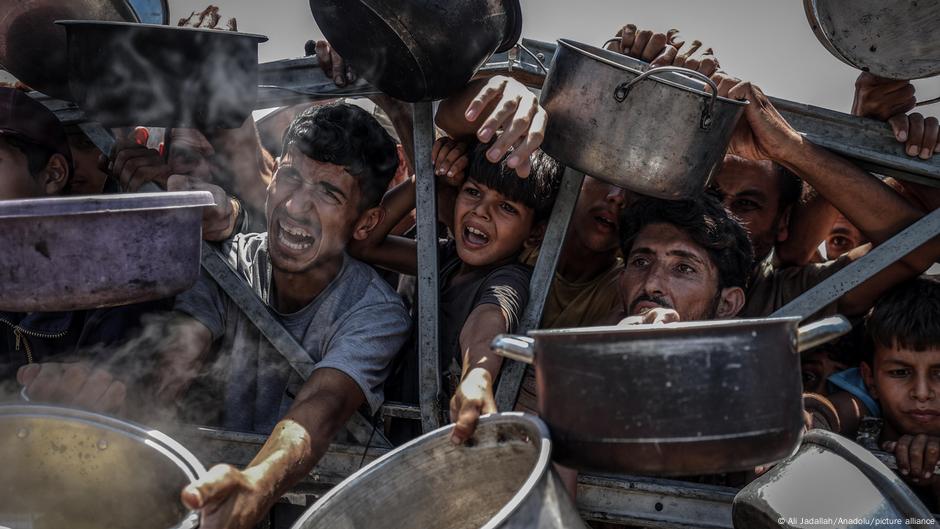
France's decision to formally recognize a Palestinian state in September signals a significant diplomatic divergence among Western allies, drawing praise from Arab nations and Spain but sharp opposition from the US and Israel, and exposing divisions within the E3 bloc. This geopolitical shift intensifies pressure on Israel regarding Gaza's severe humanitarian crisis, which is marked by accusations of deliberate starvation and ongoing, tenuous ceasefire negotiations. Separately, Iran's 'frank' nuclear talks with the E3 and potential IAEA inspections underscore the region's complex and evolving security dynamics.
A significant diplomatic fracture is emerging among Western powers, centered on France's decision to recognize a Palestinian state by September. This move, which has drawn sharp opposition from the U.S. and Israel, explicitly breaks from the unified stance of the E3 bloc, as Germany has stated it has no short-term plans to follow suit. The coordinated E3 statement calling the situation in Gaza a "humanitarian catastrophe" and demanding unrestricted aid underscores the mounting pressure on Israel, which is further intensified by severe allegations from Doctors Without Borders (MSF) of "deliberate starvation" and a U.S. government analysis reportedly finding no evidence of systematic Hamas aid theft. These developments occur amid a fragile security backdrop, with Gaza ceasefire negotiations set to resume next week despite ongoing accusations between Israel and Hamas. Concurrently, "frank and detailed" nuclear talks between Iran and the E3, alongside a potential, albeit limited, IAEA inspection visit, signal that multiple layers of regional tension are being addressed, though resolutions remain distant and uncertain.
AI-powered research, real-time alerts, and portfolio analytics for institutional investors.
Request DemoOverall Sentiment
moderately negative
Sentiment Score
-0.40
