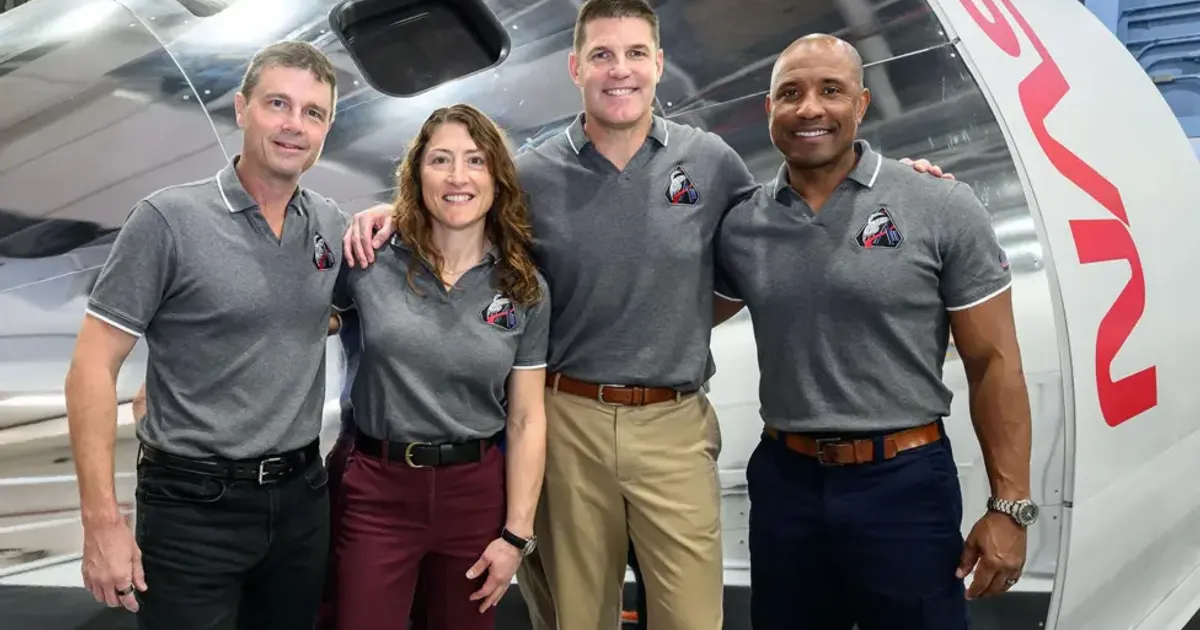
Crew for Artemis II, including Christina Koch, entered a 14-day Health Stabilization Program ahead of the planned April 1 launch to limit infection risk before transfer to Kennedy Space Center crew quarters. At KSC they will remain in controlled crew quarters with limited contact and dedicated medical support; NASA emphasizes strict preflight controls after historical disruptions (e.g., Apollo 13 exposure) and notes post-Apollo 11 quarantine of ~21 days. These are precautionary operational measures with minimal market implications.
The visible tightening of pre-flight health protocols is a recurring-cost story, not a one-off PR cadence. As crewed missions (government and commercial) scale over the next 3–5 years, demand will shift from episodic PPE buys to steady streams of diagnostics reagents, wearable monitoring, and certified HVAC/filtration services — the economic profile favors suppliers of consumables and service contracts over one‑time integrators.
Winners will be those with recurring revenue and regulatory-certified product footprints: diagnostic platform vendors and lab-reagent suppliers capture per-mission margins every flight; building systems vendors capture larger but lumpy capex and long service contracts. Defense/aerospace primes with facilities management and life‑support expertise can cross-sell into commercial operators, but their exposure is diluted across large businesses and thus politically safer for risk-averse allocators.
Key risks are operational: a new infectious-wave or new regulation could extend quarantines from days to weeks, compressing flight cadence and producing near-term revenue volatility (days–months). Conversely, faster adoption of on-site rapid molecular testing and wearable biosensors could shorten effective quarantine durations, shifting value to technology providers and reducing the market for long-term facility upgrades. The consensus underestimates the stickiness of consumables and monitoring services; it overestimates one-time retrofit spend and underweights insurance/underwriting repricing that will materialize as commercial crew volumes grow.
AI-powered research, real-time alerts, and portfolio analytics for institutional investors.
Request DemoOverall Sentiment
neutral
Sentiment Score
0.00
