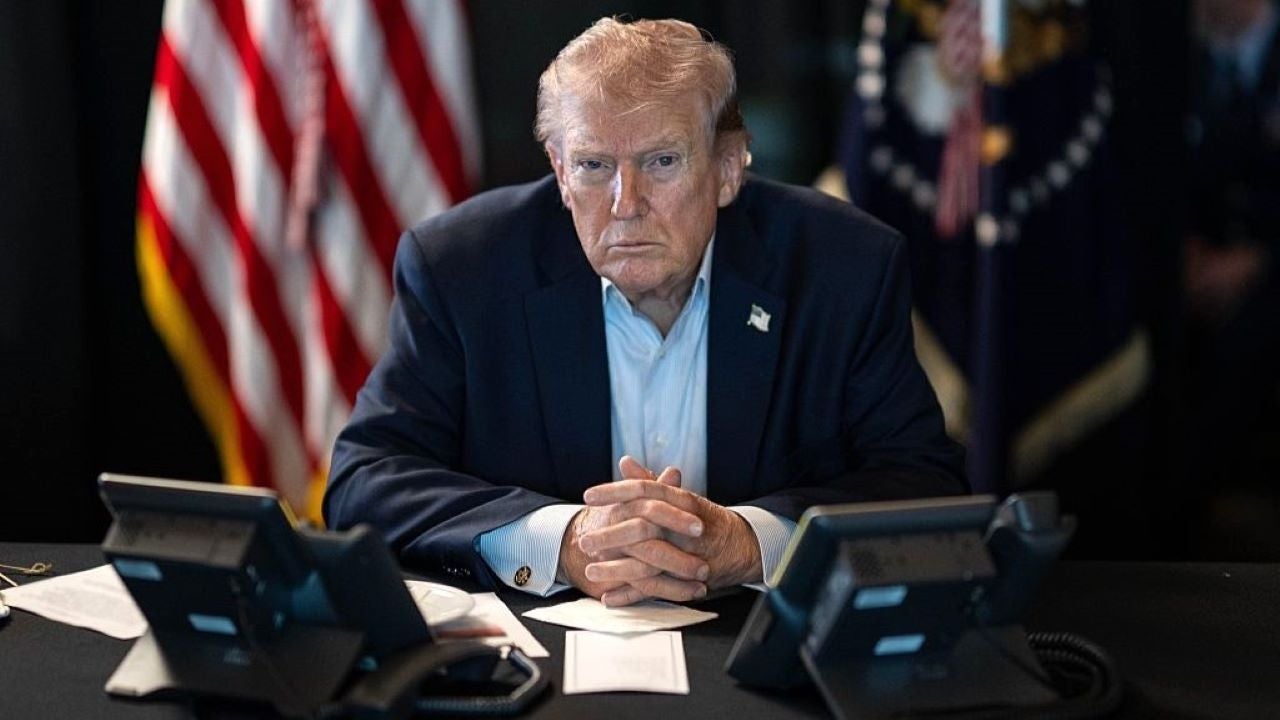
Trump is expected to convene a Situation Room meeting on Tuesday as the U.S.-Iran standoff escalates, with the president warning that "the clock is ticking" and that there may soon be "nothing left" if Tehran does not move on a deal. CENTCOM says 85 commercial vessels have been redirected and 4 disabled amid the Strait of Hormuz blockade, while Treasury issued a temporary 30-day license to help vulnerable countries access stranded Russian oil and stabilize crude flows. The article points to elevated geopolitical risk for oil, shipping, and defense markets.
The market is now pricing not just a regional skirmish but a sanctions-plus-shipping regime change: if the Hormuz corridor remains constrained, the binding constraint shifts from crude availability to insurability, clearance, and legal transferability. That tends to benefit assets with domestic feedstock exposure and balance-sheet flexibility while hurting companies dependent on imported energy, just-in-time inventory, or Middle East transit. The first-order oil spike matters, but the second-order effect is that freight, tankers, refiners, and commodity traders can all reprice on basis dislocations even if headline Brent only moves moderately.
The most important near-term catalyst is not a formal escalation decision, but whether the U.S. converts rhetoric into a sustained enforcement posture. A 7-14 day window is enough for charter rates, war-risk premia, and spot diesel cracks to move sharply; a 1-3 month window is where broader inflation expectations and rate-cut odds can be marked down. If the blockade is real and durable, the losers are not just airlines and transports — it's also chemical, industrial, and retail names with high energy pass-through lag, because margin compression typically shows up before end-demand weakness is visible.
There is also a political asymmetry: any sign of de-escalation likely compresses the risk premium faster than it was built, because positioning tends to chase headline risk more aggressively than it discounts diplomatic backchannels. That makes outright long oil tactically attractive only if paired with defined downside; otherwise the better expression is relative-value versus sectors with high energy beta. The broader contrarian point is that the market may be underestimating how quickly Washington will use licensing, waivers, and naval escort mechanisms to prevent a true supply shock from turning into a consumer inflation event.
AI-powered research, real-time alerts, and portfolio analytics for institutional investors.
Request DemoOverall Sentiment
strongly negative
Sentiment Score
-0.72
Ticker Sentiment
