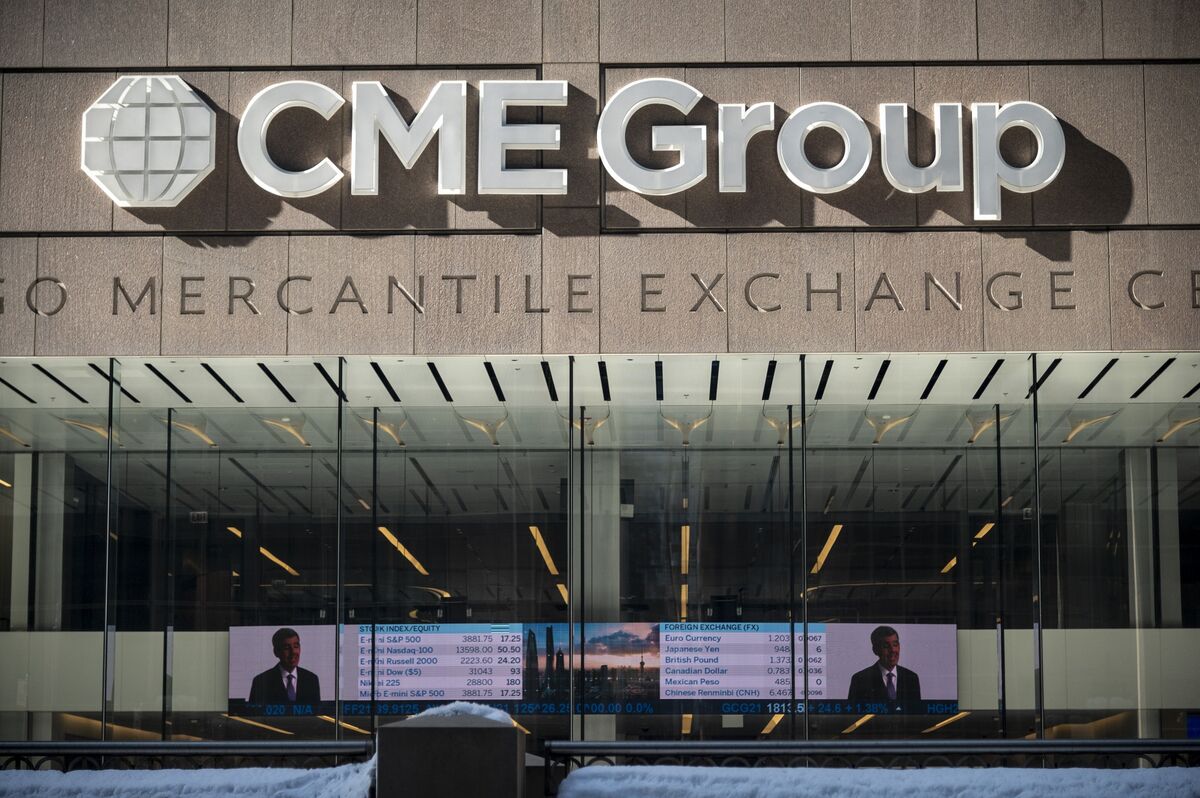
Trading of commodities futures and options on the Chicago Mercantile Exchange was halted Friday after a cooling issue at CyrusOne data centers disrupted CME Group market infrastructure. CME confirmed markets were halted while support worked to resolve the data-center issue and said clients would be advised on Pre-Open details when available. The outage interrupts price discovery and hedging activity across commodity derivatives and could prompt short‑term volatility and operational/margining complications for market participants until normal trading resumes.
Market structure: A multi-hour halt at CME (CME) hands a short-term win to competing venues (ICE) and brokers with multi-venue smart-routing; expect a measurable intraday liquidity bleed—front-month futures spreads and bid-offer widths can widen 20–50% during re-openings. Clearing/collateral frictions increase hedging costs; commodity producers/importers face basis risk and will pay up for guaranteed fills, raising short-dated implied volatility across commodity options by an estimated 10–30% for 24–72 hours. Cross-asset, safe-haven flows (USD, Treasuries) can spike for hours, pressuring risk assets and widening FX and cash-futures basis trades.
Risk assessment: Tail risks include a systemic clearing interruption or cascade of failed margin calls if the outage persists >24–48 hours, which would trigger regulatory scrutiny and potential fines (weeks–months) and client re-routing (quarters). Immediate risk (hours–days) is execution and reputational damage; short-term (30–90 days) risk is client fee leakage; long-term (6–18 months) is structural capex and higher SLAs that compress gatekeeper margins. Hidden dependency: concentration in a few colo/data centers (CyrusOne/CONE) and single-route FIX links—repeat events are the key catalyst for durable market share shifts.
Trade implications: Favor long ICE (ICE) as a relative winner and short-duration protection on CME (CME) via options; implement a pared trade: long ICE equity (1–2% portfolio) vs short CME via 3-month put spread sized 1% notional to limit downside. Use options to play elevated volatility in commodities: buy 1–3 month vega on liquid commodity ETFs (GLD, USO) selectively for 10–30% expected IV lift around re-open. Timing: establish within 5 trading days and re-evaluate at 30/60/90-day milestones tied to outage recurrence.
Contrarian angle: The market may over-penalize CME—it runs a deep clearing franchise with sticky revenue; a >7–10% sell-off would likely be an overreaction and a tactical buying opportunity after a 60–90 day remediation window. Historical parallels (Knight Capital, exchange outages) show reputational blips rarely dislodge incumbents absent repeated failures; the actionable miss is betting on permanent share loss after a single outage. Unintended consequences: winners (ICE, CONE) may see short-term flow but face margin and integration costs; watch for regulatory interventions that could level fees or force redundancy spend, compressing industry ROIC over 12–24 months.
AI-powered research, real-time alerts, and portfolio analytics for institutional investors.
Request DemoOverall Sentiment
mildly negative
Sentiment Score
-0.25
Ticker Sentiment
