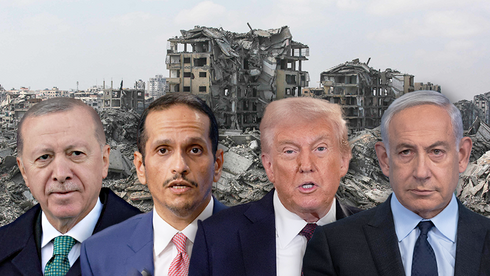
Diplomatic negotiations over Phase Two of the Gaza ceasefire remain unresolved, with Israel demanding immediate disarmament of Hamas while Qatar and Turkey press U.S. officials to allow alternatives such as transferring weapons to the Palestinian Authority or secure monitored storage; Israeli officials warn such proposals would preserve Hamas’ influence. The timetable is contested (Israel wants a matter of months; Qatar/Turkey reportedly propose a two‑year grace period), no Arab/Muslim troops have committed to an international stabilization force, and Netanyahu will press these issues during a Dec. 28–Jan. 1 Mar‑a‑Lago visit with former President Trump and senior U.S. officials. Jerusalem will also lobby Washington to block Turkish F‑35 sales and push tougher sanctions against Iran, citing intelligence of renewed nuclear and missile activity; Israeli assessments claim roughly 75% of Gaza residents no longer support Hamas.
Market structure: Near‑term winners are U.S. defense primes and defense ETFs (LMT, NOC, RTX, ITA) and commodity exporters (XOM, CVX) as risk of protracted Gaza instability increases defense procurement and oil risk premia; losers include EM/MENA equities (TUR, EEM), regional airlines and tourism sectors. Pricing power shifts to large prime contractors and integrated oil majors; expect near‑term implied vol in defense names to rise 20–40% and bid for long‑dated supply contracts to push small‑cap contractors’ equity premium wider.
Risk assessment: Tail risks include a Turkey‑or Iran‑direct escalation (low probability, high impact) that could push Brent >$100/bbl and global risk premia spiking >5% on equities; immediate (days) effects are VIX spikes and USD/TRY weakness, short‑term (weeks/months) higher oil and defense order visibility, long‑term (quarters) reconstruction flows benefiting construction/materials. Hidden dependencies: U.S. political reconciliation with Turkey/Qatar and the Netanyahu‑Trump meeting (Dec 28–Jan 1) are binary catalysts that can reverse pricing quickly.
Trade implications: Favor convex, time‑limited exposure: buy 3–6 month call spreads on LMT/NOC and a 3% overweight in ITA for broad capture; pair with 0.5–1% short positions in TUR or 3‑month EEM puts to hedge EM contagion. Tactical commodity plays: 1–2% long in XOM/CVX and 1–2% in GLD; add if Brent>85/bbl or S&P500 drops 4% in a week. Increase cash/quality duration (2–5% into TLT) if escalation persists beyond 4 weeks.
Contrarian angles: The market underestimates the probability of a quick, enforceable disarmament outcome — if Hamas is rapidly neutralized, defense rerating may be capped and cyclical reconstruction names (CAT, DE) will outperform primes; the 2006 Lebanon cycle shows defense rallies can fade within 3–6 months while reconstruction contractors sustain secular wins. Therefore favor option structures (spreads) with defined risk and limit single‑name exposure to 2–3% of portfolio.
AI-powered research, real-time alerts, and portfolio analytics for institutional investors.
Request DemoOverall Sentiment
moderately negative
Sentiment Score
-0.50
