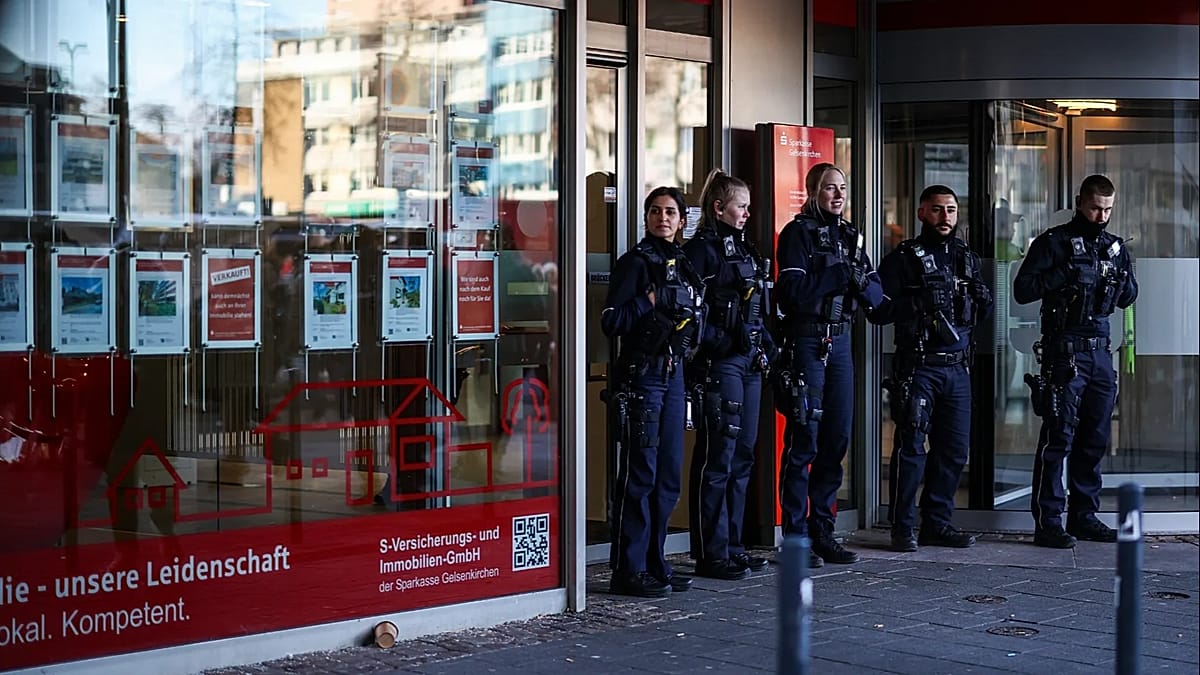
Thieves drilled into the basement vault of a Sparkasse branch in Gelsenkirchen during the holiday lull, stealing property from safety deposit boxes and affecting about 2,700 customers; police estimate the haul at between €10 million and €90 million. Authorities were alerted by a fire alarm shortly before 4 a.m., found a hole in the wall and video of masked suspects in a stolen vehicle; the bank remained closed amid demand from customers and the incident may prompt insurance claims, regulatory scrutiny and reputational damage for the institution.
Market structure: The heist is a concentrated operational shock to retail trust in physical safe-deposit services (Sparkassen/local banks) rather than systemic credit risk; winners are security/armoured-transport and specialty insurance providers who can pick up 1–3% incremental revenue in 12–24 months, losers are regional savings banks (reputational hit) and SMT/branch-footprint economics. Competitive dynamics shift marginally toward private vault operators and third‑party insured custodians; pricing power for secure storage and insurance should rise (premiums +10–30% possible for bespoke vault products). Cross‑asset: expect small widening of regional bank credit spreads (50–150bp worst-case for tiny lenders), a spike in put implied volatility on European financials for 1–6 weeks, and a modest EUR softening (<1%) into safe‑haven flows; commodities unaffected.
Risk assessment: Tail risks include a large legal/regulatory ruling that forces banks to fully compensate customers (loss >€50m) or mandates costly retrofits across German banks, which could knock 5–15% off small-bank equity values over quarters. Near term (days) watch headline flow and local depositor behavior; short term (weeks–months) litigation, insurance recoveries and police findings will set realized losses; long term (quarters) higher insurance costs and capital expenditures to harden vaults. Hidden dependencies: uninsured customer concentration, non‑banked valuables customers shifting to cash/crypto, and potential contagion to trust metrics for retail deposits. Catalysts: police recovery, insurer payouts, BaFin/ECB statements, or further copycat incidents.
Trade implications: Tactical hedges and selective longs dominate. Short-duration protection on European financials (1–3 month puts or put spreads) can capture headline-driven vol; selective longs in security services and specialty insurers capture structural re-pricing of risk. Avoid broad, permanent shorts on major banks (Deutsche, Commerzbank) absent balance‑sheet signals; focus on regional-bank/SME-exposed names and ETFs. Entry: execute hedges within 72 hours of news; scale long-security positions over 1–3 months as contractual wins become visible.
Contrarian angles: Consensus will overestimate systemic risk and oversell large-cap bank equities while underpricing durable revenue gains for security/insurer vendors; historically (e.g., vault thefts in UK/US) banks absorbed direct losses with limited equity damage beyond affected branches. Mispricings: security services like BRINKS can rerate +15–30% on sustained contract wins, while Europe-financial ETFs may drop 5–12% on panic but recover absent balance‑sheet impact. Monitor insurance claims and BaFin guidance — a non-actionable recovery of assets or insurer full coverage would reverse financials weakness quickly.
AI-powered research, real-time alerts, and portfolio analytics for institutional investors.
Request DemoOverall Sentiment
moderately negative
Sentiment Score
-0.45
