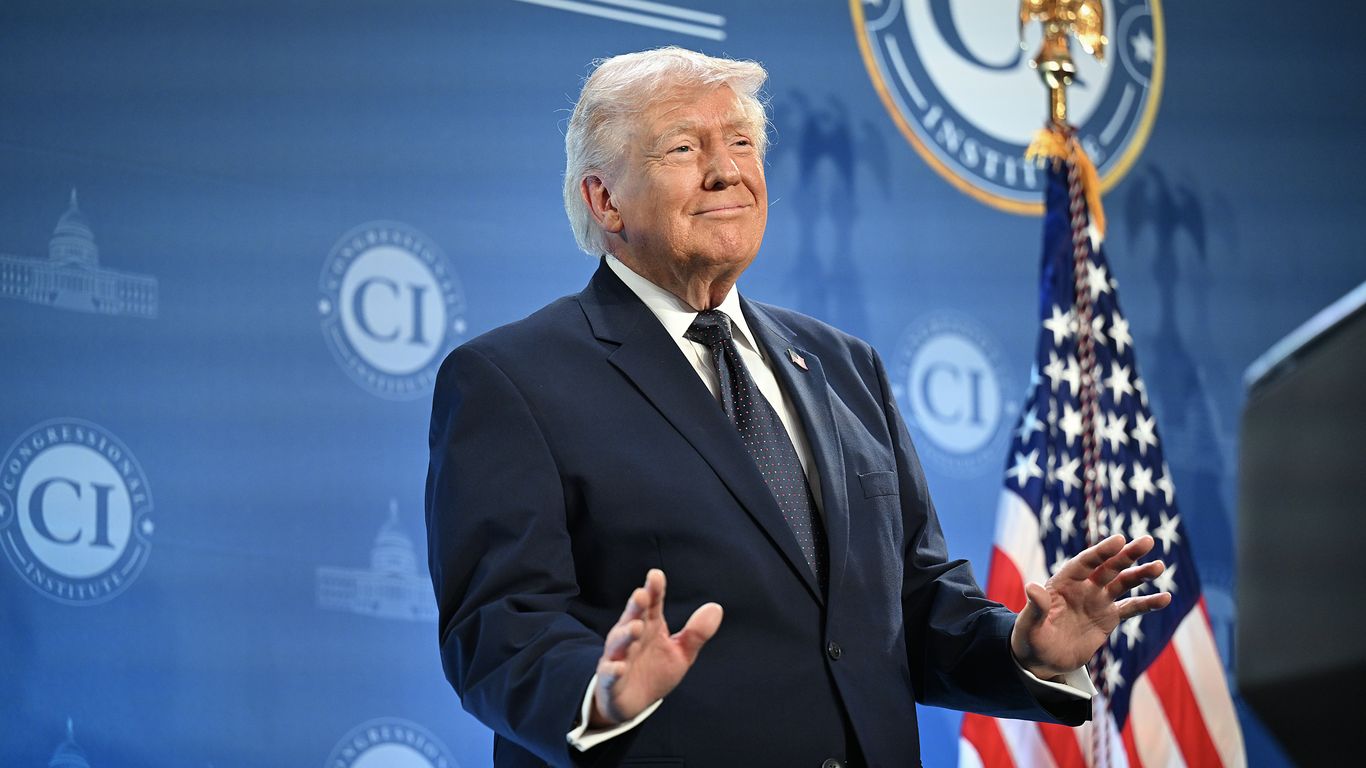
50,000 U.S. troops are deployed to the Middle East and the conflict is in its fifth week versus President Trump's original 4–5 week timeline. Trump has repeatedly and inconsistently claimed the war is 'over' or 'ending soon' while also threatening to 'obliterate' Iran's energy and water infrastructure and pressing to reopen the Hormuz Strait. The mixed messaging raises geopolitical uncertainty that could increase volatility in oil prices and lift defense-sector flows; monitor energy markets, defense contractors, and risk premia for near-term moves.
Political messaging that oscillates between imminent victory and conditional escalation creates predictable markets behavior: compress short-dated risk premia then spike realized volatility when statements diverge from on-the-ground timelines. That dynamic favors strategies that sell time when headlines are calm but buy convexity (options, tankers, war-risk-linked securities) ahead of potential escalations that would repricing oil, freight and insurance within days.
Second-order winners are not just prime defense primes but the specialized suppliers and service providers with constrained capacity — precision ordnance makers, tactical communications semiconductor suppliers, and MRO spares vendors — where order-book elasticity is low and pricing power rises within 1–6 months. Conversely, industries sensitive to higher energy and insurance costs (global fertilizer names, container lines routing around chokepoints, and regional airlines) face margin compression on a 1–3 month horizon as war-risk premia and freight rerouting persist.
Key catalysts that will re-rate these buckets are discrete and fast: a diplomatic de-escalation (days–weeks) would collapse defense sentiment and freight/insurance premia, while an attack on energy chokepoints or major infra would lift Brent by $10–25 within hours and sustain elevated shipping rates for months. Election-cycle political incentives raise the probability of near-term narrative-driven ceasefires, but procurement and capex cycles mean defense revenue recognition can remain elevated for 6–18 months even if shooting subsides — creating asymmetric outcomes for equity owners vs headline traders.
AI-powered research, real-time alerts, and portfolio analytics for institutional investors.
Overall Sentiment
mixed
Sentiment Score
-0.10
