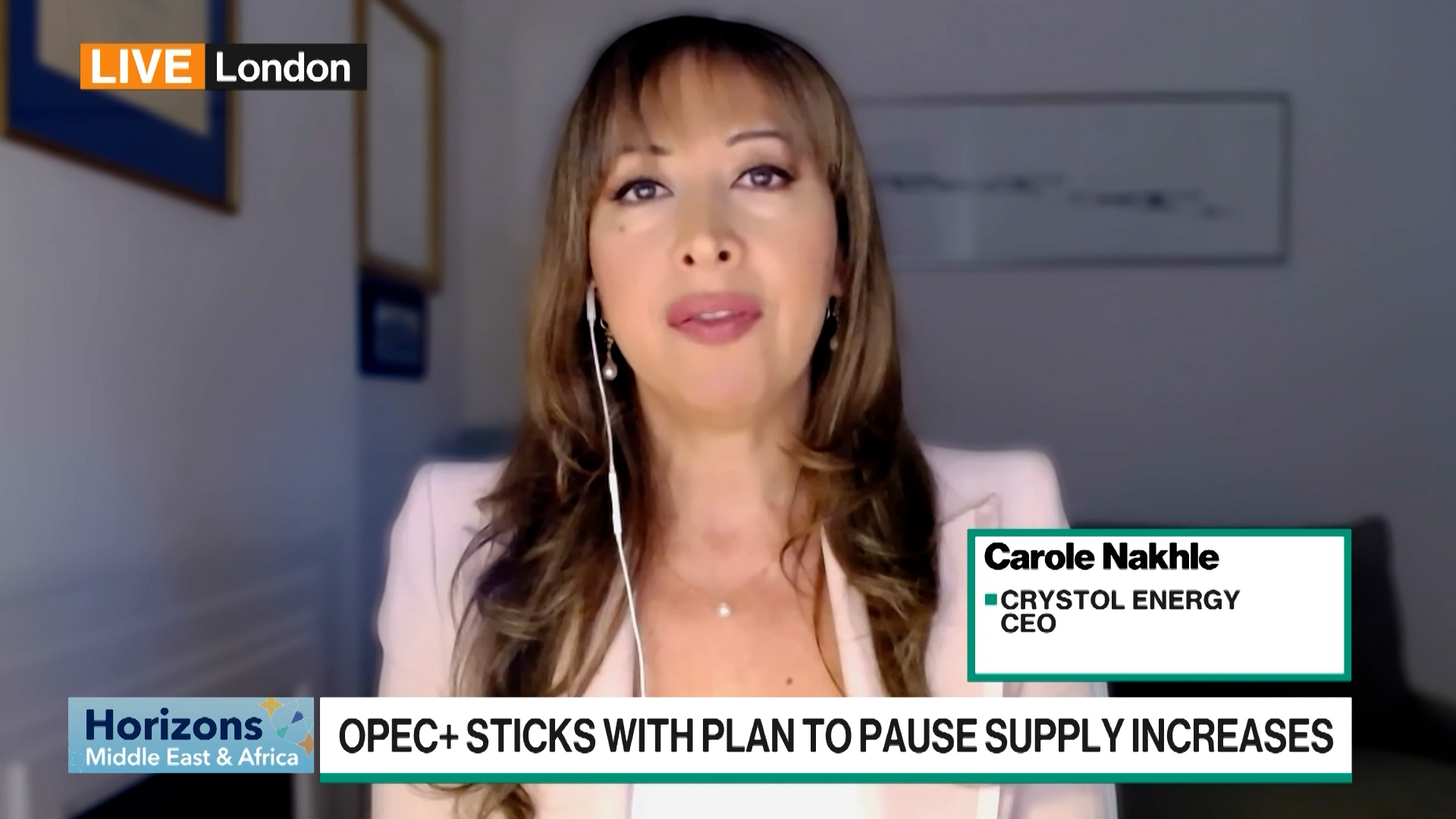
OPEC+ has paused its planned production increases into the first quarter to avoid further downside pressure on an already well-supplied oil market, a move intended to help establish a price floor amid weakening seasonal demand. Key geopolitical risks — chiefly the Russia‑Ukraine war and tensions around Venezuela — and China’s stockbuilding remain the main wild cards for supply and demand; while a resolution in Ukraine would ease the geopolitical risk premium, Russian barrels have largely been redirected rather than removed, and Venezuela lacks near‑term spare capacity. Market analysts warning of a deep bearish scenario (some citing potential Brent downside toward $40/bbl) could prompt OPEC+ to intervene again if prices fall sharply.
Market structure: OPEC+ pausing raises the floor for Brent in the near term (support around $65–75/bbl implied by producers’ behaviour) which benefits integrated majors (XOM, CVX) and midstream fee-based cash flows, while pressuring high‑cost US shale (PXD, MRO, OXY) that needs sustained>$70/bbl to reaccelerate capex. Pricing power remains concentrated in OPEC+; if seasonal demand weakens into Q1 and China’s buying subsides, expect downward pressure and rangebound crude rather than a crash absent a large supply shock.
Risk assessment: Tail risks include a rapid sanctions unwind on Russia (limited incremental barrels; expect <0.5–1.0 mb/d re‑entry over 3–6 months) which would shave $3–$8/bbl, or Venezuela escalation removing 0.2–0.6 mb/d which could add $5–$12/bbl. Near term (days–weeks) volatility will spike on headlines; medium (3–6 months) is driven by China SPR flows and OPEC+ policy; long term (>12 months) depends on investment in Venezuela and non‑OPEC capex cycles.
Trade implications: Favor defensive energy exposure (integrated majors and pipelines) and underweight pure‑play shale and exploration names. Use relative trades (long integrated vs short shale) and volatility-selling around OPEC+ meetings where informational edges exist. Options: buy limited-risk call spreads on XOM/CVX for a 3–9 month horizon; buy put spreads on PXD if Brent closes < $60 for 30 consecutive trading days.
Contrarian angles: Consensus underestimates persistence of redirected Russian flows and the slow ramp in Venezuela — a peace deal likely reduces risk premium more than volumes, capping downside to majors. The market may be overpricing a deep $40 Brent tail; if Brent stays >$65 for 90 days, re‑rate cyclicals higher. Watch refining margins (2–4 week lead on refined product cracks) as an early signal that demand is diverging from crude price moves.
AI-powered research, real-time alerts, and portfolio analytics for institutional investors.
Request DemoOverall Sentiment
moderately negative
Sentiment Score
-0.30
