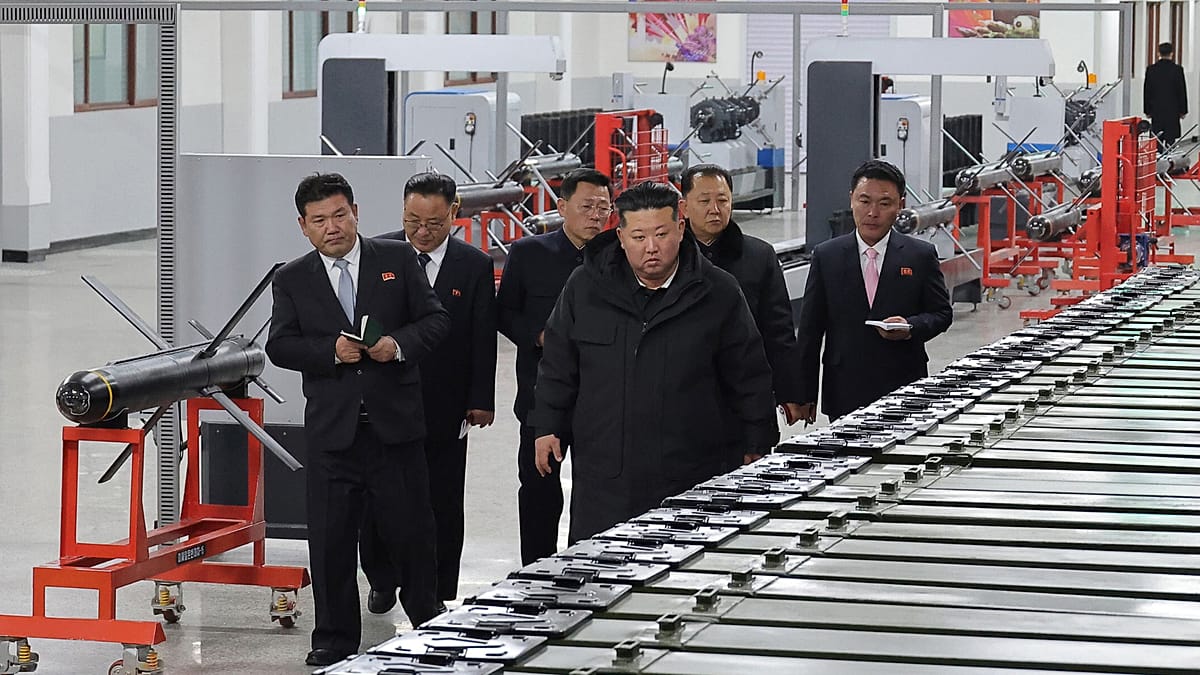
North Korea fired multiple ballistic missiles from the Pyongyang area early Sunday, with the projectiles flying roughly 900 km; South Korean and US authorities are analysing the launches, which Seoul says violated UN Security Council resolutions. The launches occurred hours before South Korean President Lee Jae Myung's trip to Beijing for talks with Xi Jinping and prompted an emergency national security council meeting in Seoul; analysts see the demonstrations as a weapons review ahead of an expected Workers' Party congress. The incident raises regional geopolitical risk, may pressure defense stocks and regional FX, and highlights limits to China’s leverage given Beijing and Moscow’s historical resistance to tougher sanctions.
Market structure: Immediate winners are defence primes and ETFs (US names LMT/RTX/NOC, ETFs ITA/XAR) and safe-haven assets (gold, JPY, long-duration Treasuries). Direct losers are South Korean equities and tourism-related sectors — expect a KOSPI knee-jerk decline of 2–5% in the next 48–72 hours and Seoul-listed defense suppliers to rerate +5–12% on headline buying. Trade flows will increase bid for insurance instruments (options, TLT, GLD) and widen credit spreads for Korean sovereign/corporate paper by +10–50bp if tensions persist.
Risk assessment: Tail risks include miscalculation triggering US involvement or strikes on assets, creating a supply-shock in electronics (chips) with semiconductor capex and production disruption risk for 1–3 months; oil could spike $5–12/bbl under a regional escalation. Time horizons: days (headline-driven volatility), weeks–months (policy/diplomatic moves around the Workers’ Party congress in Jan–Feb), and quarters (sustained higher defense budgets). Hidden dependencies: China’s leverage on Pyongyang is limited — summit outcomes could instead drive short-term risk-on/off swings rather than durable détente.
Trade implications: Favor short-dated protection on Korea (buy EWY or KOSPI 1-month put spreads) and tactical longs in defence ETFs (ITA/XAR 1–3 month call spreads). Hedge macro exposure with 0.5–1% portfolio in GLD and 0.5% in FXY (JPY) as insurance; use TLT exposure (1–2%) if 10y UST yields drop >10bp. Entry/exit: initiate within 72 hours; trim half of defence longs on a move up +8% or after 2–4 weeks.
Contrarian angles: The market often overprices durable escalation — past NK launches produced 5–10 day risk-off spikes then mean-reversion. If South Korea–China talks produce modest de-escalation, defence names could retrace 30–50% of initial gains; size positions accordingly and prefer option-defined risk to outright longs.
AI-powered research, real-time alerts, and portfolio analytics for institutional investors.
Request DemoOverall Sentiment
strongly negative
Sentiment Score
-0.60
