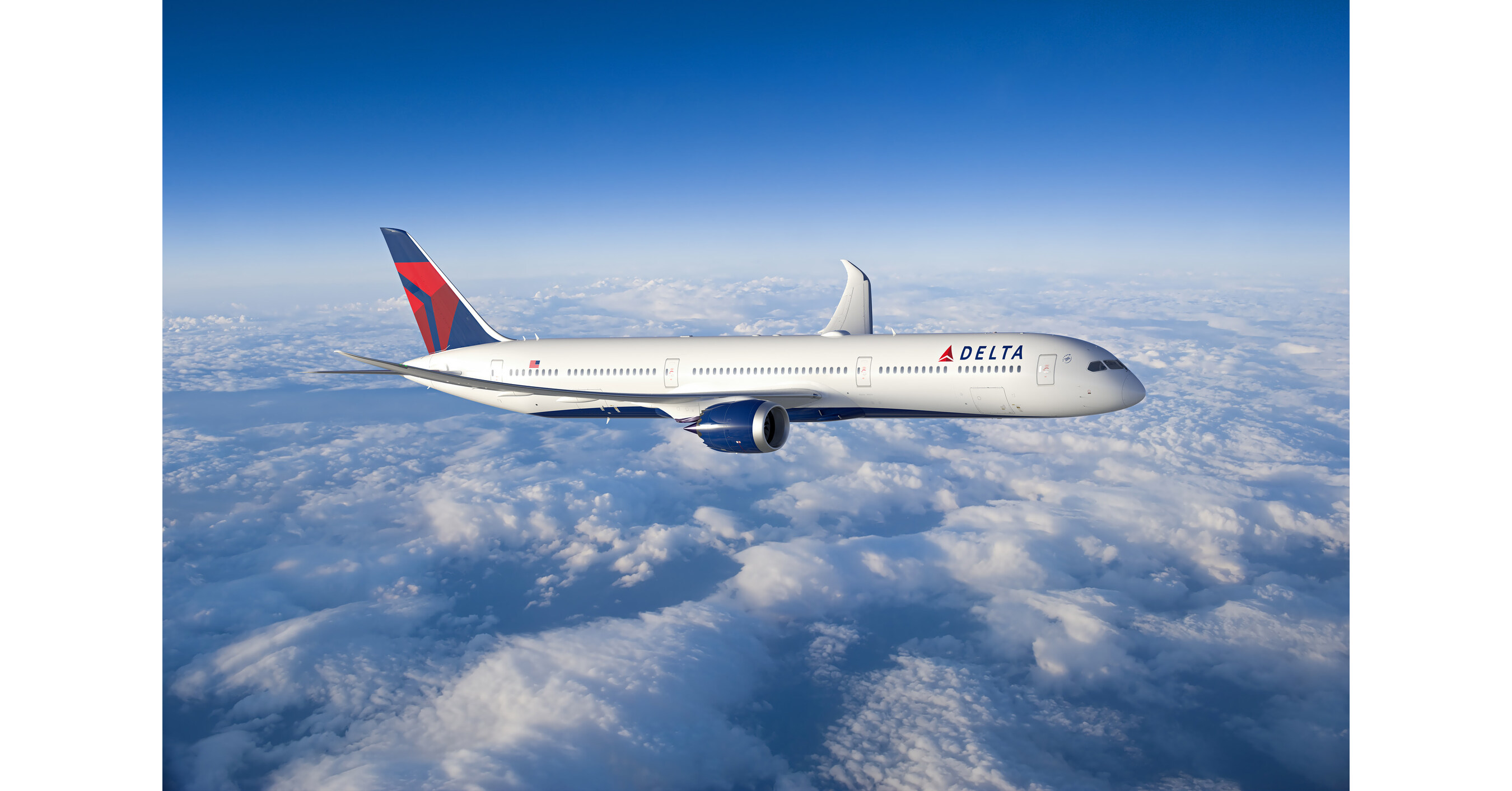
Delta Air Lines placed a direct order for 30 Boeing 787-10 Dreamliners with options for 30 more, expanding its widebody fleet to support long-haul transatlantic and South American growth; the 787-10 seats up to 336 and offers ~25% lower fuel use versus the aircraft it replaces. The purchase brings Delta's firm Boeing order book to 130 aircraft (including 100 737-10s), reinforcing Boeing's commercial backlog and U.S. aerospace supply-chain manufacturing, while advancing Delta's fleet modernization and sustainability goals.
Market structure: Delta (DAL) and Boeing (BA) are clear direct beneficiaries — DAL gains a durable unit‑cost advantage on long‑haul transatlantic and South America routes (787‑10: ~25% fuel/seat improvement) while BA locks forward revenue and supplier work. Competitive pressure will rise on airlines with older widebodies (UAL, IAG, lessor earnings) as used widebody supply increases and yields on legacy premium cabins may compress; engine and MRO suppliers (GE) are secondary beneficiaries. The order signals healthy long‑haul demand but also longer delivery tails: Boeing’s backlog improves forward visibility while immediate margin impact for BA is multi‑year.
Risk assessment: Tail risks include a Boeing production setback or regulatory groundings (FAA/EASA) that could delay deliveries and spike BA volatility, and a macro downturn that collapses long‑haul leisure/business demand (RPKs down >10% YoY). Time horizons: immediate (days) — sentiment/volatility; short (weeks–months) — order confirmation, delivery timing, Q1 traffic prints; long (years) — fleet replacement economics and residual values. Hidden dependencies: lessor financing markets, supplier capacity (composites, engines) and fuel price swings; catalysts include BA monthly delivery cadence, DAL traffic (ASKs/RPKs) and oil price moves (>+20% shifts matter).
Trade implications: Consider a 3% long position in DAL (NY: DAL) with a 12‑month target +20% and stop‑loss −12%; scale in over 0–3 months as Delta publishes delivery cadence and 1st delivery timing. For BA, prefer structured exposure: buy a 9–12 month bull call spread (limited cost, capture backlog rerating) sized ~2% of portfolio and concurrently buy a 6‑month 8–12% OTM put (tail hedge). Pair trade: long DAL / short AAL (American, NY: AAL) 1:1 for 6–12 months to exploit expected relative CASM gap; close if AAL narrows ex‑fuel CASM by >150 bps over two quarters.
Contrarian angles: The market may be overrating immediate EPS impact for BA — order translates to revenue over many years, so BA upside is likely back‑loaded; buying equity outright without delivery visibility is risky. Historical precedent: 2008/09 fleet orders were deferred after macro shocks — a similar recession would force deferrals and depress supplier stocks and lessor values. Unintended consequence: accelerated retirements will flood the used widebody market, pressuring lessors and used‑aircraft price indices (monitor AirCap/ILFC metrics); hedge BA/airline exposure if monthly deliveries fall >20% vs plan.
AI-powered research, real-time alerts, and portfolio analytics for institutional investors.
Request DemoOverall Sentiment
moderately positive
Sentiment Score
0.45
Ticker Sentiment
