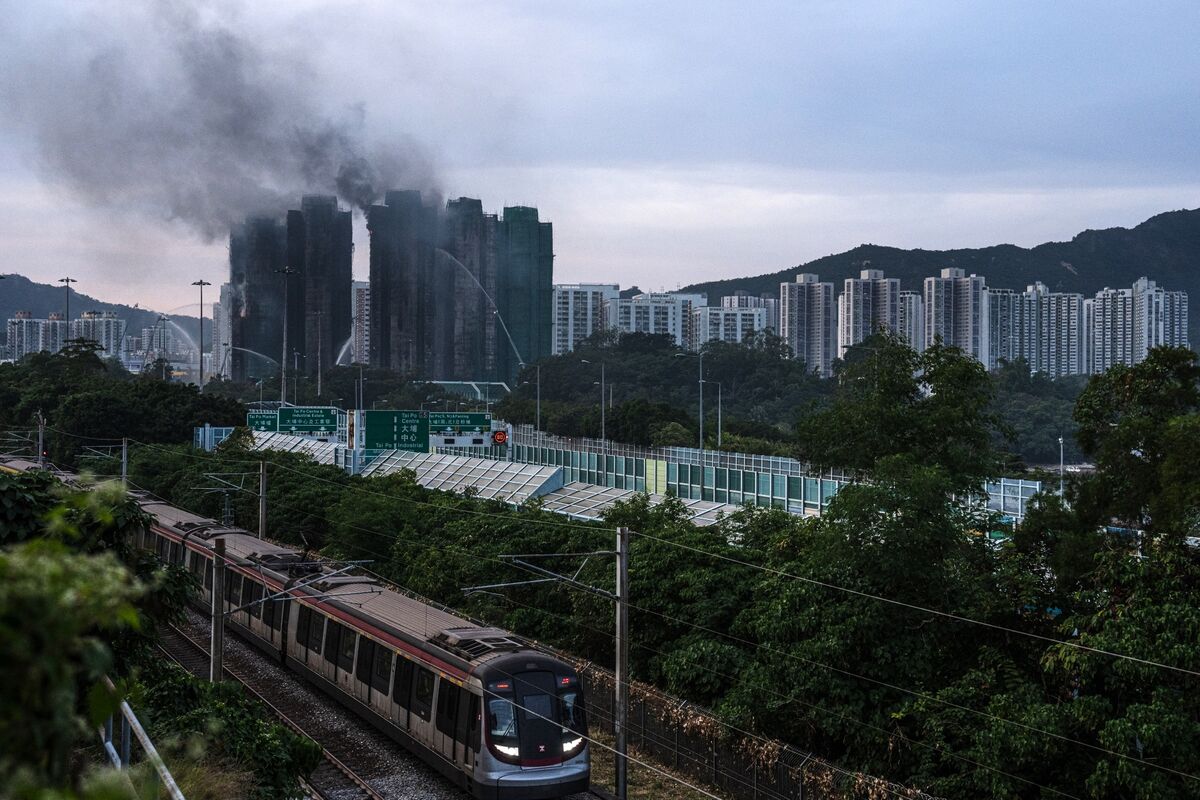
A deadly fire in Hong Kong has pushed the death toll higher, creating local humanitarian and potential short-term economic disruption risks. Russia signaled only limited hope for a Ukraine deal, keeping geopolitical and energy-market uncertainty elevated. Separately, China’s expressed concerns about humanoid robots highlights potential regulatory and societal headwinds for AI and robotics firms.
Market structure: immediate winners are defense contractors and safe-havens (gold, USD, JPY) while Hong Kong real-estate, local insurers and tourism-linked retail/transport will see demand shock and potential claims pressure. Expect Hong Kong equity ETFs (EWH/2800.HK) to underperform Asia ex-Japan by ~1–3% over the next 2–4 weeks as risk-off and reduced foot traffic compress local cash flows; AI/hardware names (NVDA, ABB/FANUY) remain multi-quarter winners as long-term capex persists.
Risk assessment: tail risks include a regulatory clampdown on building safety in HK (raising capex/retrofit costs by 5–15% for developers) and renewed Russia-Ukraine escalation that could spike Brent crude +15–30% in 1–3 months, pressuring European equities and inflation. Hidden dependencies: HK property valuations depend on tourist/expat return—if travel restrictions or reputational damage last >3 months, vacancy and lease renewals will reprice rents by double digits.
Trade implications: tactically short Hong Kong beta and long AI/defense and safe-haven bonds/commodities; use options to express skew—buy puts on EWH for 2–4 week windows and buy 6–9 month call spreads on NVDA to capture structural upside while controlling premium. FX: expect USD/JPY strength and HKD peg pressure to increase demand for USD liquidity—hold 1–3% allocation in short-term USD cash or bill ETFs as liquidity buffer.
Contrarian angles: consensus may overstate permanent damage to HK—historical parallels (SARS 2003) show a sharp drawdown and a rebound in 3–9 months, so selective long on well-capitalized developers with <40% LTV could be opportunistic. Also, China’s verbal concern on humanoid robots is likely to produce noise not immediate bans; underwrite AI hardware exposure for 12+ months rather than capitulate to short-term headlines.
AI-powered research, real-time alerts, and portfolio analytics for institutional investors.
Request DemoOverall Sentiment
moderately negative
Sentiment Score
-0.40
