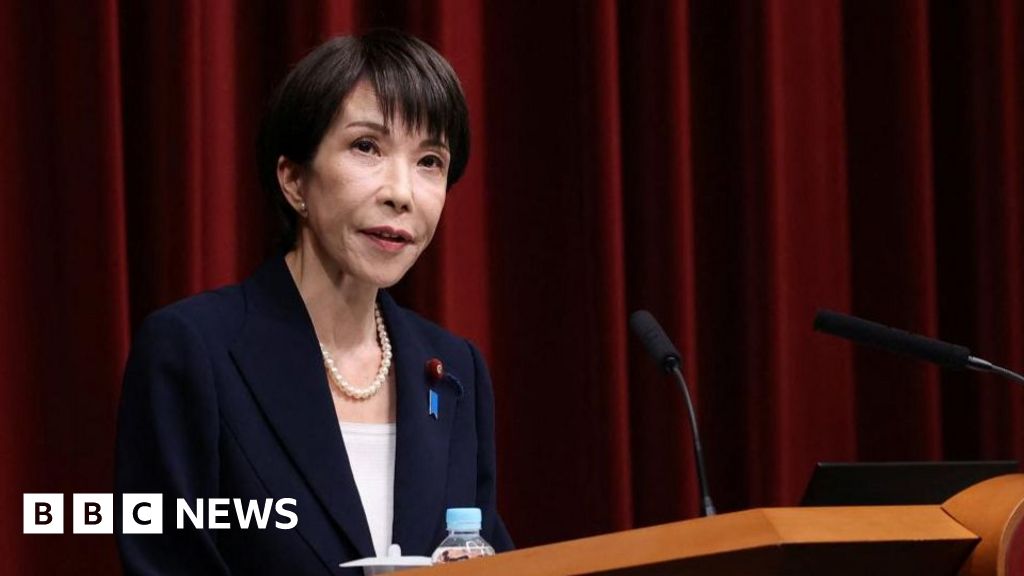
Prime Minister Sanae Takaichi dissolved Japan's parliament to trigger a snap lower-house election on 8 February (campaigning from 27 January) seeking a public mandate to convert high personal approval into a larger LDP majority; the LDP currently holds 199 of 465 lower-house seats and governs with a fragile coalition. Takaichi advocates heavy government-led stimulus and her cabinet approved a record ¥9 trillion defence budget (~$57bn) in December amid heightened tensions with China and closer US ties (including a rare-earths deal), meaning the election outcome will influence Japan's fiscal trajectory, defence spending and geopolitical posture while presenting near-term political uncertainty for markets.
Market structure: An early election with a pro-stimulus, pro-defence PM raises probability of near-term fiscal expansion (incremental fiscal impulse likely in the next 3–12 months) and permanent lift to defence procurement (¥9tn budget already approved). Winners: Japanese defence primes, heavy civil contractors, and rare-earth supply chains tied to Japan-US deals; losers: domestic discretionary retailers and exporters sensitive to a stronger USD/JPY or supply-chain retaliation from China. Cross-asset: expect JGB yields to steepen (10y +10–30bp risk), JPY to weaken vs USD on fiscal loosening and US-Japan strategic alignment, and elevated event volatility in Nikkei and FX into election (2–4 week window).
Risk assessment: Tail risks include Sino-Japanese trade retaliation or escalation that disrupts supply chains and rare-earth flows (low probability, high impact within 0–12 months) and a surprise LDP defeat that would extend political fragmentation and stall stimulus. Short-term (days–weeks) risk is event-driven volatility around campaigning (27 Jan) and election day (8 Feb); medium-term (3–12 months) is policy execution risk that changes JGB curve and corporate order books. Hidden dependency: stimulus efficacy depends on capex contracting timelines — construction/defense benefits lag 6–18 months while FX and yields move quickly. Catalysts: pre-election polls, China diplomatic actions, US-Japan security announcements, and budget details.
Trade implications: Near-term tactical trades: long selective defence/engineering names and construction contractors into the election while hedging political outcome via options; short consumer discretionary exposure that is most dependent on household real income. Use USD/JPY directional exposure to capture potential weakening JPY; express bond views via short 10y JGB futures or steepener positions. Time trades to open before campaign start (by 26 Jan) to capture appointment-based repositioning, and trim/reassess within 1–2 weeks after the 8 Feb result.
Contrarian angles: Consensus assumes stimulus = broad risk-on for Japan; that underestimates distributional effects — defence and infrastructure will outperform consumer staples and globaI-exporters if tariffs/Chinese retaliation rise. Markets may underprice sustained JGB yield rise (if stimulus is large) and overprice a clean political mandate; a narrow win could increase policy risk and spike volatility. Historical analogy: snap election gambits in Japan have previously backfired (prior LDP snap led to loss of majority), so size positions (especially longs) should be limited and hedged.
AI-powered research, real-time alerts, and portfolio analytics for institutional investors.
Request DemoOverall Sentiment
mixed
Sentiment Score
0.00
