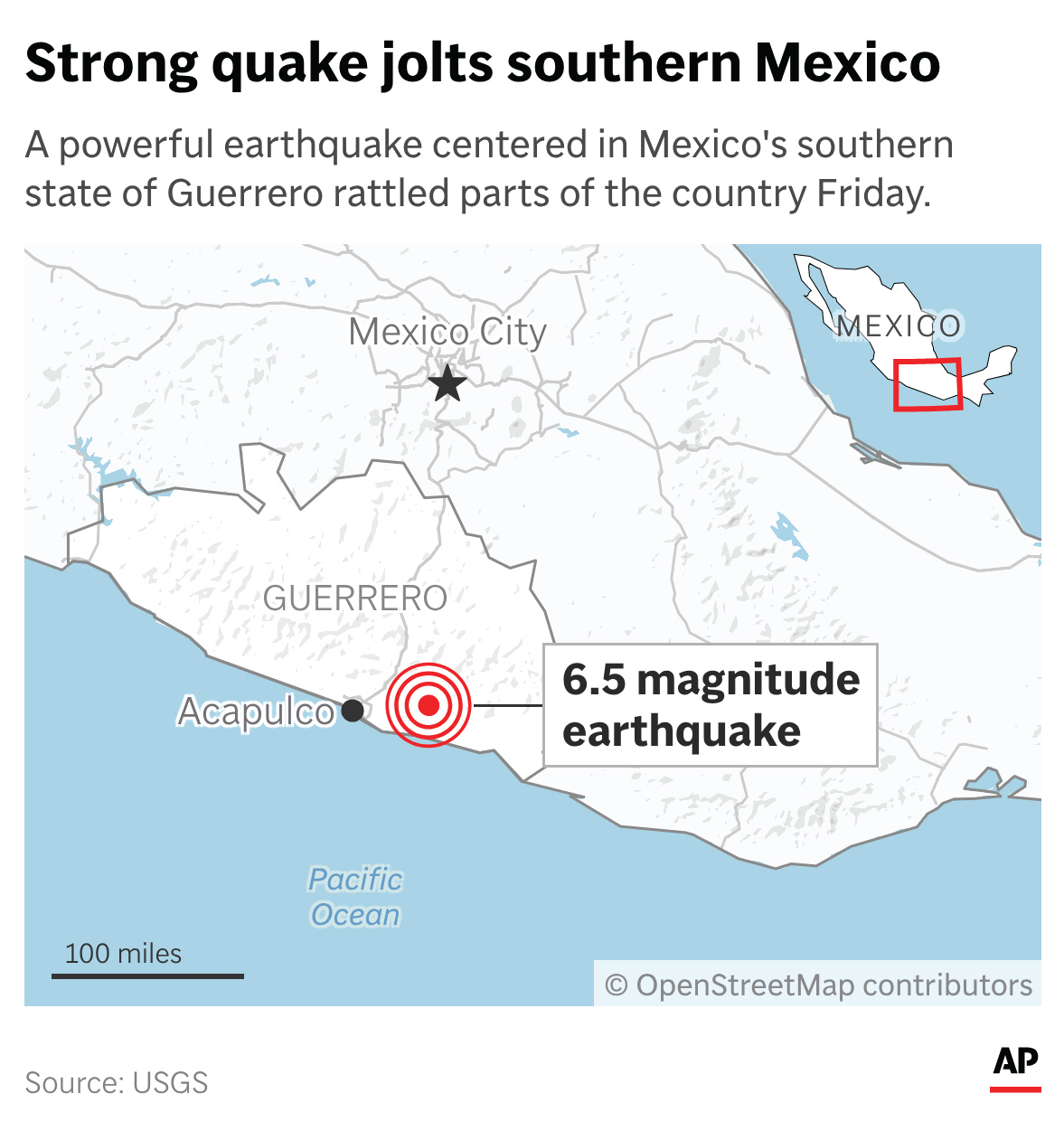
A magnitude‑6.5 earthquake struck southern Mexico with an epicenter near San Marcos, Guerrero (USGS: depth 35 km / 21.7 miles; ~2.5 miles NNW of Rancho Viejo, ~57 miles NE of Acapulco), triggering seismic alarms, evacuations and reported landslides on highways around Acapulco. Federal and state officials report no major structural damage so far, but communications outages in parts of the Costa Chica and ongoing aftershocks pose near‑term risks to tourism, local transport infrastructure and regional supply links; monitor potential insurance claims, road closures and tourism booking impacts for localized economic effects.
Market structure: A shallow-to-moderate (M6.5, 35km) quake centered near Acapulco creates asymmetric impacts — near-term losers are tourism, local transport/logistics and small-business cashflows in Guerrero (expect hotel occupancy declines of ~5–15% in affected micro-regions for 2–8 weeks). Winners include materials and heavy-equipment suppliers plus global reinsurers if losses escalate; reconstruction demand can lift cement/aggregate volumes by low-double-digits over 3–12 months. Cross-asset: anticipate a knee-jerk MXN sell-off (1–3% intraday), 10y MXN sovereign +10–30bp widening, and elevated short-term implied volatility in Mexico-focused equity/FX options.
Risk assessment: Tail risk is a larger sequence (M7+) or significant infrastructure failures that force federal reconstruction spending and fiscal strain — low probability in days but high fiscal/credit impact over quarters. Immediate (0–7 days): volatility and liquidity risk in MXN/EWW; short (1–3 months): tourism revenue hit and insurance claims; long (3–18 months): reconstruction-driven demand for CX-like names. Hidden dependency: low insurance penetration means larger sovereign/fiscal burden and potential CDS widening if losses exceed government-visible thresholds (>USD 500M insured losses).
Trade implications: Tactical hedges and selective longs are optimal — buy short-dated downside protection on Mexico exposure and initiate small long exposure to Mexican building-materials (Cemex, NYSE: CX) conditional on reconstruction signals. Use options to isolate event risk: 1-month puts on EWW to cap downside; FX calls on USD/MXN as a directional hedge if MXN weakens >1.5% intraday. Rotate 0.5–2% portfolio weight from tourism/hospitality to construction/materials and global reinsurers (size per risk budget).
Contrarian angles: Consensus will overweight short-term tourism losses and MXN risk; markets may underprice reconstruction upside for CX and local suppliers where contracts and government spending create multi-quarter revenue visibility. Historical parallels (Mexico quakes 2017) show a sharp MXN move then reversion within 2–6 weeks; if sovereign spreads spike >20–25bps, the repricing could be overdone and offer a mean-reversion buy on MXN/EM debt within 30–60 days. Watch for government aid announcements and insurer loss estimates as catalysts to either add or trim positions.
AI-powered research, real-time alerts, and portfolio analytics for institutional investors.
Request DemoOverall Sentiment
mildly negative
Sentiment Score
-0.25
