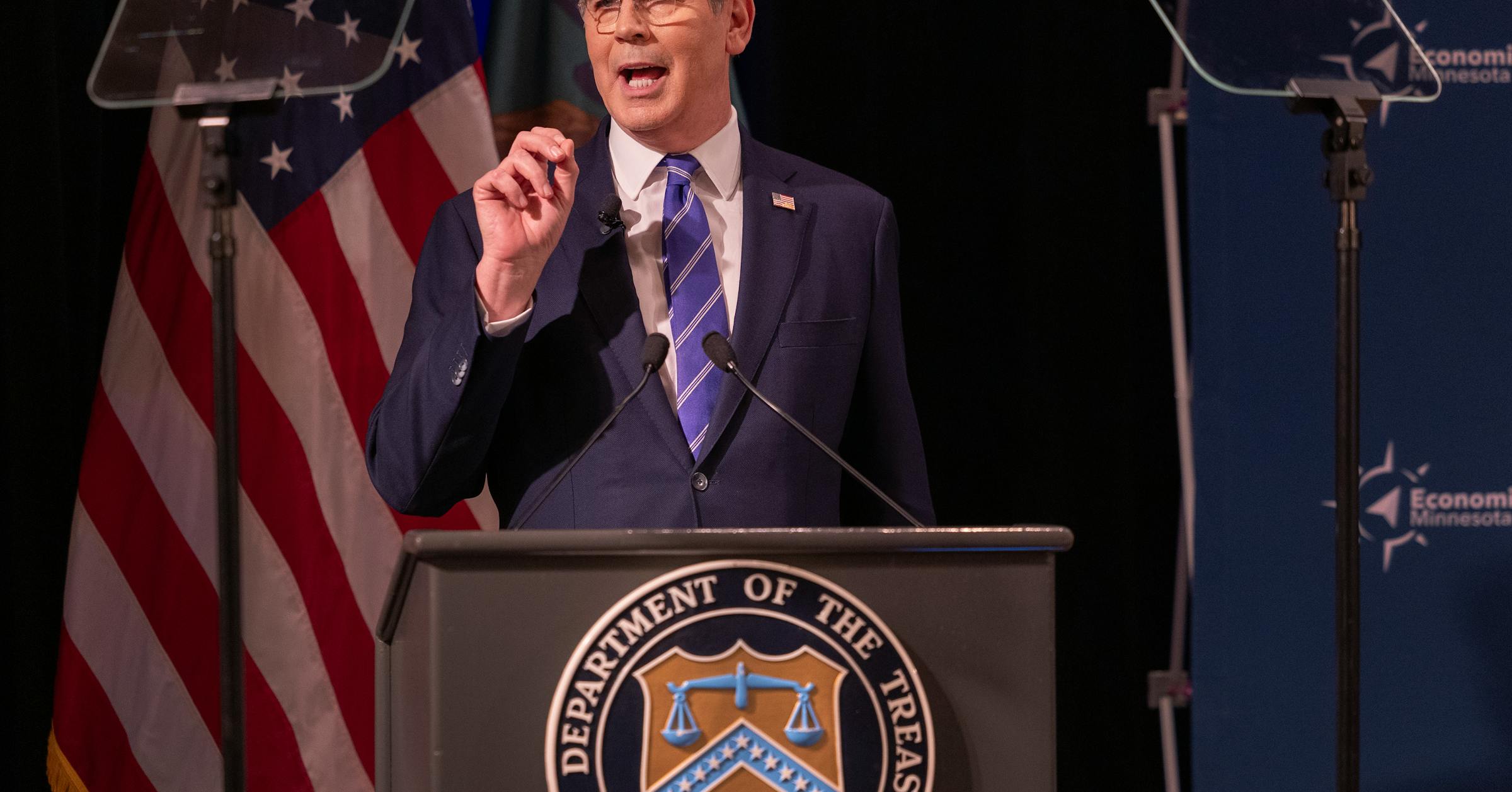
U.S. Treasury Secretary Scott Bessent publicly blamed Minnesota Gov. Tim Walz for 'hundreds of millions' in taxpayer funds lost to fraud and announced steps by the Treasury, including FinCEN and IRS inquiries, to root out fraud and probe whether financial institutions met anti-money-laundering obligations. The dispute, sparked by viral allegations and state probes of about 55 daycare providers and halted payments across 14 Medicaid programs, has prompted state defensive statements about prior anti-fraud actions and escalated federal scrutiny that could lead to recoveries and enforcement actions but is unlikely to be materially market-moving.
Market structure: Enforcement and high-profile fraud headlines are a net positive for compliance/AML vendors (consider FISV, NICE, FIS) and government-IT contractors (PLTR, CACI) who can win state and federal contracts; regional banks with concentrated Minnesota/Midwest footprints (U.S. Bancorp USB, regional-bank ETF KRE) and Medicaid-focused providers/MCOs (Molina MOH, Centene CNC) are direct near-term losers due to deposit/revenue reputational risk and payment holds. Competitive dynamics will shift spending toward compliance SaaS and third-party auditors, raising pricing power for incumbents able to deliver AML automation; smaller community banks face higher origination costs and de-risking by correspondent banks.
Risk assessment: Tail risks include large civil money penalties (> $100m per institution) and localized deposit flight producing short-term liquidity stress for exposed regional banks; worst-case regulatory cascades across other states could trigger a 10–25% re-pricing of KRE over 1–3 months. Immediate catalysts are FinCEN/IRS subpoenas and state audit announcements (days–weeks); material enforcement actions and recovery/recoupment programs will play out over 3–12 months. Hidden dependencies: correspondent-banking relationships and federal reimbursements amplify second-order impacts on non-bank payment processors.
Trade implications: Tactical trades include shorting KRE or buying 3-month put protection sized 1–2% of portfolio to hedge bank-concentration risk, and establishing a 1–2% long in PLTR and 1% long in FISV as 6–12 month plays on federal/state contract reallocation; reduce Minnesota muni exposure by ~50% of current allocation for 90 days to avoid budget/recovery uncertainty. Options: buy 3-month USB 5% OTM puts as a targeted hedge (target 20% payoff if USB drops 15%); use 2× put spreads to cap premium.
Contrarian angle: The market may over-penalize large, well-capitalized banks with diversified footprints—if no $100m+ penalties emerge within 60–90 days these names could bounce 10–20% as headlines fade; conversely, compliance vendors are priced for growth but already embed elevated multiples. Historical parallels to past state-level fraud crackdowns show peak market fear in 1–3 months followed by re-rating; unintended consequence: aggressive enforcement could accelerate consolidation (M&A) among regional banks and vendors, creating buyable entry points.
AI-powered research, real-time alerts, and portfolio analytics for institutional investors.
Request DemoOverall Sentiment
moderately negative
Sentiment Score
-0.45
