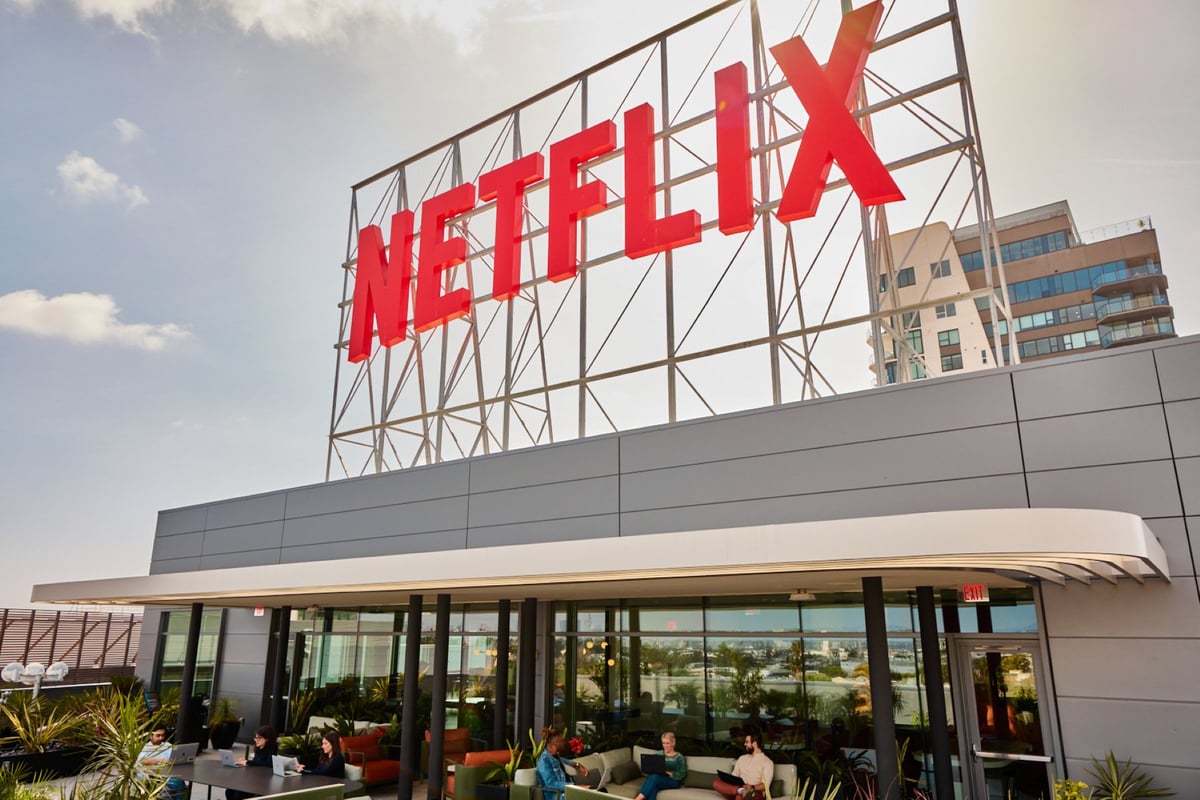
The author cautions against concentrated AI exposure and recommends two non‑AI growth stocks: Netflix (market cap ~$426B) and Casey's General Stores (~$21.1B). Netflix reported Q3 revenue up 17% to $11.51B, EPS +8.7% YoY, free cash flow +21% to $2.66B, and guided Q4 revenue growth of 17% with EPS up 28%; it also announced a pending ~$72B acquisition of Warner Bros. TV/film assets and HBO/HBO Max (expected to close in 12–18 months). Casey's FY Q1 2026 revenue rose 11% to $4.57B, net income and EPS +20% YoY, operates 2,895 stores, pays a 0.4% dividend, and its mix (gas, grocery, strong prepared-food margins) should leave it largely insulated from an AI-led market pullback.
Market structure: The Netflix–Warner deal concentrates premium content & franchises (Harry Potter, Superman) under NFLX, increasing Netflix’s pricing power, global retention and FCF conversion (FCF +21% yoY to $2.66B). Winners: NFLX (scale, ad/sub leverage), content-rights owners (near-term sell-side beneficiaries); Losers: independent streamers and smaller content licensors who lose bargaining power; WBD equity holders face deal uncertainty. Casey’s (CASY) benefits from inelastic local demand for fuel/food and high-margin pizza/grocery lines (prepared foods gross ~58%), acting as a defensive consumer compounder.
Risk assessment: Key tail risks are regulatory/antitrust rejection of NFLX–WBD (probability meaningful within 12–18 months), deal financing dilution or covenant-driven capex cuts, and macro-driven subs churn in a severe recession (>5% unemployment shock). For CASY, fuel price shocks (>±10% in 90 days) and faster EV adoption (multi-year) are second-order risks. Catalysts: DOJ/FTC filings, Q4 revenue/EPS (Netflix guided +17%/+28%), and oil moves ±10% within 3 months.
Trade implications: Tactical: establish modest long exposure to NFLX (1–2% portfolio) but hedge regulatory/drawdown risk with 12–18 month 25% OTM protective puts; size CASY as a 1–2% defensive growth holding and monetize with 6–9 month covered calls at ~10% OTM to capture yield. Pair: long CASY vs short a concentrated AI-growth basket (small 0.5% hedge) to reduce beta to AI froth. Rotate 5–10% from highest-P/E AI names into these two over 2–6 weeks; trim positions on >25% rally or adverse regulatory filings.
Contrarian angles: Consensus underprices integration & financing risk for NFLX and underestimates CASY’s structural margin advantage from scratch pizza and loyalty (high LTV). The market may be under-allocating to durable FCF generators; historical parallel: media consolidation (post-2000) produced sustained winners when rights were owned. Unintended consequence: a blocked deal could produce a 20–35% NFLX drawdown; conversely, deal close could compress returns if leverage forces capex reduction.
AI-powered research, real-time alerts, and portfolio analytics for institutional investors.
Request DemoOverall Sentiment
moderately positive
Sentiment Score
0.48
Ticker Sentiment
