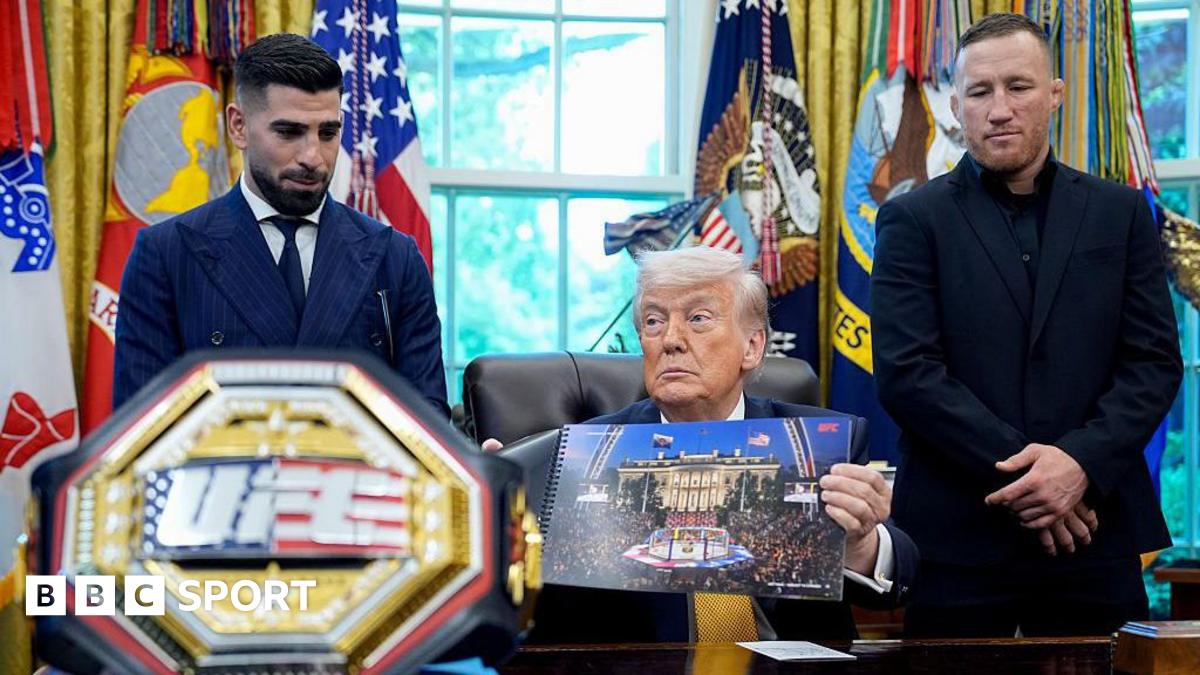
The UFC's White House event is expected to cost about $60m, with some luxury ticket packages reportedly priced at $1.5m and 85,000 free public tickets planned for the Ellipse. The show, UFC Freedom 250, will feature Ilia Topuria vs. Justin Gaethje and Alex Pereira vs. Ciryl Gane, marking the first professional live sporting event on White House grounds. The article is primarily event and pricing news with limited direct market impact.
The monetization signal is less about UFC economics and more about scarcity pricing for political-access entertainment. A six-figure-plus hospitality package tied to federal-symbolic content implies demand from ultra-high-net-worth buyers for proximity, status, and optionality—not just fight content—which benefits premium event producers, private aviation, luxury hospitality, and adjacent media platforms that can package “experience” inventory at higher margins. The second-order winner is likely not the UFC itself so much as whoever controls distribution of exclusivity: venue logistics, premium travel, security, and brand partners that can convert a one-night spectacle into recurring client entertainment spend.
The larger risk is execution, not demand. This kind of event concentration creates a binary operational stack: security, permitting, weather, talent availability, and political optics all need to clear simultaneously, so the market should think in terms of tail-risk rather than base rates. Any controversy around commercialization of a national-symbol venue could force sponsor pullbacks or constrain future event monetization, and that would matter more for the premium-package thesis than for headline viewership.
From a trading perspective, this is more interesting as a sentiment catalyst for the broader live-events complex than as a clean UFC single-name story. The near-term reflexive trade is to lean long companies with pricing power in premium experiences and short those exposed to rising event-production costs if this becomes a template for one-off “destination” spectacles. The contrarian view is that the $1.5m price point may be more marketing theater than scalable demand; if the buyer pool is tiny, the event is a brand halo, not a repeatable revenue stream, so any multiple expansion in live entertainment should be faded after the novelty premium fades.
AI-powered research, real-time alerts, and portfolio analytics for institutional investors.
Request DemoOverall Sentiment
neutral
Sentiment Score
0.05
