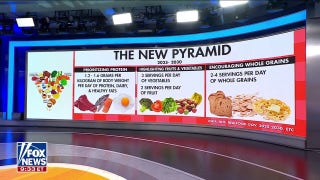
HHS released the 2025-2030 Dietary Guidelines emphasizing ‘high-quality proteins’ (including red meat and eggs), full-fat dairy and a shift away from highly processed foods, while retaining a recommended cap that saturated fat should not exceed 10% of total daily calories. Administration officials framed the change as ending the ‘war on saturated fats,’ but health experts cautioned that individual risk varies (the American Heart Association recommends <6% for those at higher cardiovascular risk) and warned about processed meats, sodium and displacement of fiber/unsaturated fats. The guidance could modestly influence consumer demand across meat, dairy and processed-food categories, but it is policy guidance rather than a regulatory or fiscal change and is unlikely to be materially market-moving in the near term.
Market Structure: The guideline tilt toward unprocessed red meat and full-fat dairy is a positive demand shock for integrated meat processors (Tyson TSN, Hormel HRL) and regional dairy suppliers (Cal-Maine CALM) over 3–18 months, while plant-based meat names (Beyond Meat BYND) and ultra-processed snack producers risk demand headwinds. Pricing power will favor vertically integrated players who can pass higher farm input costs to retail; expect live-cattle and Class III milk futures to lead price discovery with potential 5–20% moves in 3–9 months if consumption shifts materialize.
Risk Assessment: Tail risks include a regulatory reversal, aggressive AHA/medical pushback, or a media-driven consumer backlash that could reverse flows within weeks; conversely, sustained consumer adoption is slow — behavioral change typically takes 12–36 months. Hidden dependencies: higher dairy/meat demand lifts feed and freight inflation, which can compress packer margins despite top-line gains; monitor cattle slaughter rates and Class III milk inventories as second-order signals.
Trade Implications: Direct plays: long TSN/HRL and Cal-Maine for 6–12 months, short BYND and processed-meat-focused small caps; consider long Class III milk and live-cattle futures as commodity exposure. Use 3–6 month call spreads on TSN to express upside with defined risk, and 3–6 month put spreads on BYND to benefit from downside while limiting premium spend. Rotate 3–12% of consumer staples/food allocation into protein/dairy-focused names and reduce plant-based/ultra-processed exposure.
Contrarian Angles: The consensus overstates behavioral impact of guidelines — retail shelf momentum, pricing, and ESG trends still favor plant-based growth; a sharp rally in meat/dairy equities that exceeds 25% in 3 months would be suspect. Unintended consequences include policy focus on agricultural emissions leading to taxes/subsidies against meat/dairy over 12–36 months; size positions accordingly and set hard stop-loss thresholds (10% for equities, 15% for small caps).
AI-powered research, real-time alerts, and portfolio analytics for institutional investors.
Request DemoOverall Sentiment
mixed
Sentiment Score
0.05
