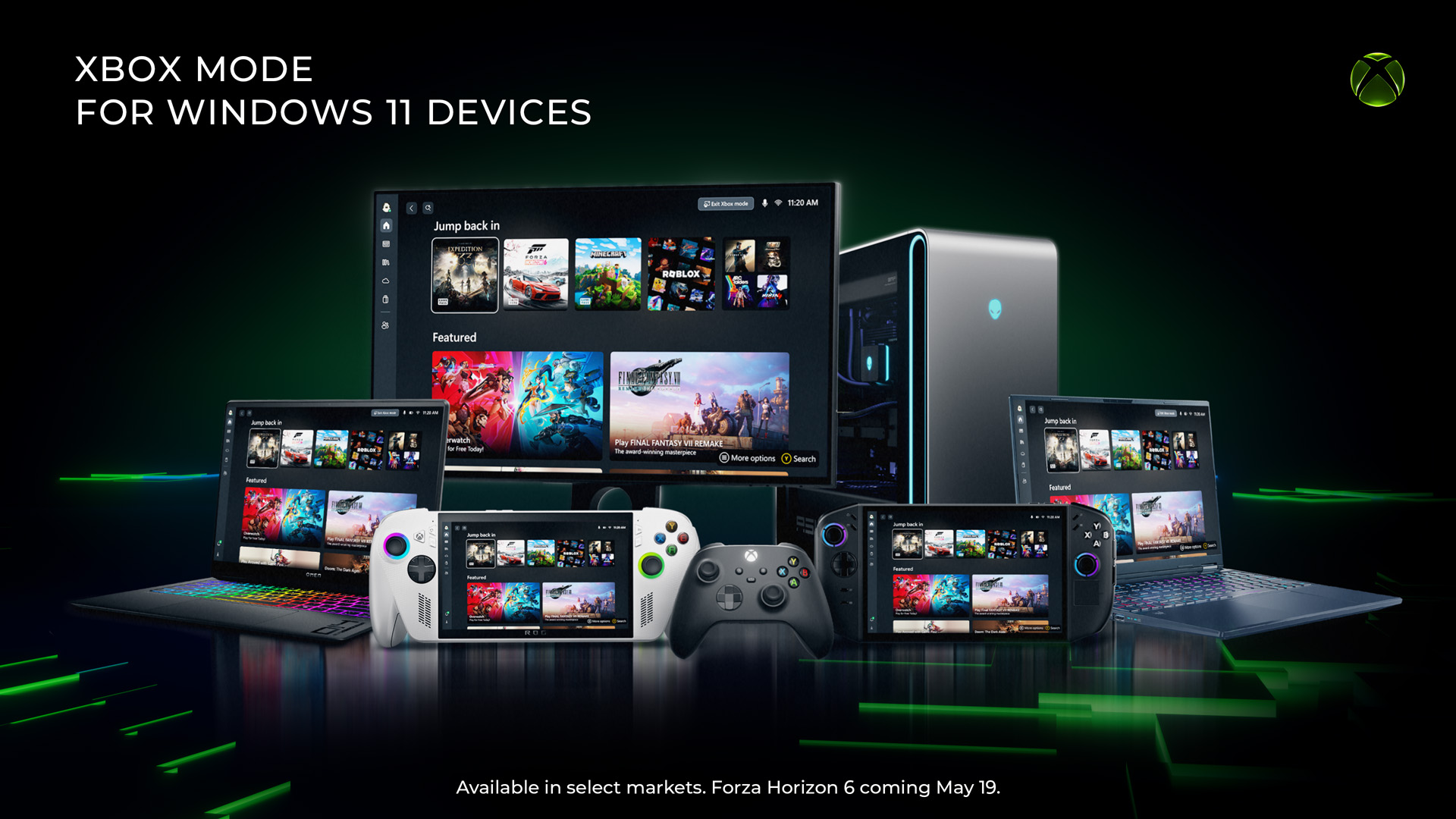
Xbox mode is rolling out today on select Windows 11 PCs in select markets, with broader availability expected over the next several weeks. The new controller-optimized, full-screen experience aggregates Game Pass titles and installed games from major PC storefronts, making PC gaming more console-like and immersive. The announcement is product-focused and positive for the Xbox/Windows gaming ecosystem, but it is unlikely to have a meaningful near-term market impact.
This is less a headline about gaming and more a distribution-power move: Microsoft is trying to convert Windows from an open platform into a default gaming shell without giving up openness. The second-order effect is higher engagement time and lower churn into competing ecosystems, especially on handhelds where a console-like launcher can materially reduce friction versus Steam-first or OEM-layered experiences. If adoption is real, the monetization vector is not hardware margin but higher Game Pass attach, more frequent first-party content consumption, and a stickier Windows gaming layer that makes third-party storefronts feel more “inside” the Microsoft stack. The likely winners are the obvious one and the adjacent ones: Microsoft’s gaming ecosystem, Windows handheld OEMs, and any accessory/peripheral vendors that benefit from controller-first usage. The less obvious loser is any PC gaming distribution layer that relies on users tolerating a messy desktop workflow; a native full-screen entry point lowers the value of third-party launchers as the primary navigation layer. Over 6-18 months, this could also reinforce premium Windows gaming device ASPs if consumers start valuing “console-like” UX as a feature, not just raw specs. Near term, the catalyst is adoption telemetry: if Microsoft surfaces usage conversion from handhelds to PCs, that’s evidence the product is becoming a default entry point rather than a niche mode. The main risk is execution and fragmentation—if performance, update friction, or app/library coverage disappoints, usage will stay cosmetic. The contrarian view is that the market may underappreciate this as a retention tool rather than a launch story; the real upside is reducing substitution away from Windows gaming over multiple content cycles, not immediate revenue.
AI-powered research, real-time alerts, and portfolio analytics for institutional investors.
Request DemoOverall Sentiment
mildly positive
Sentiment Score
0.35
